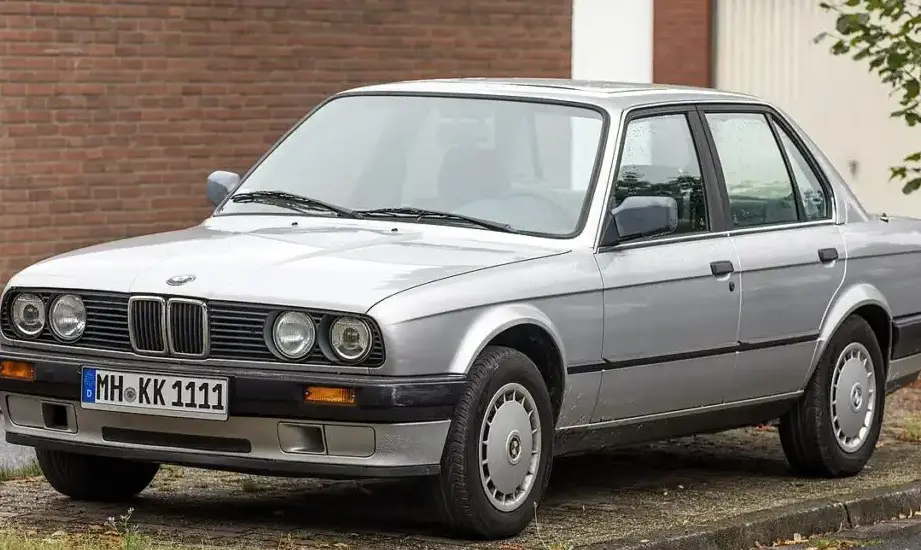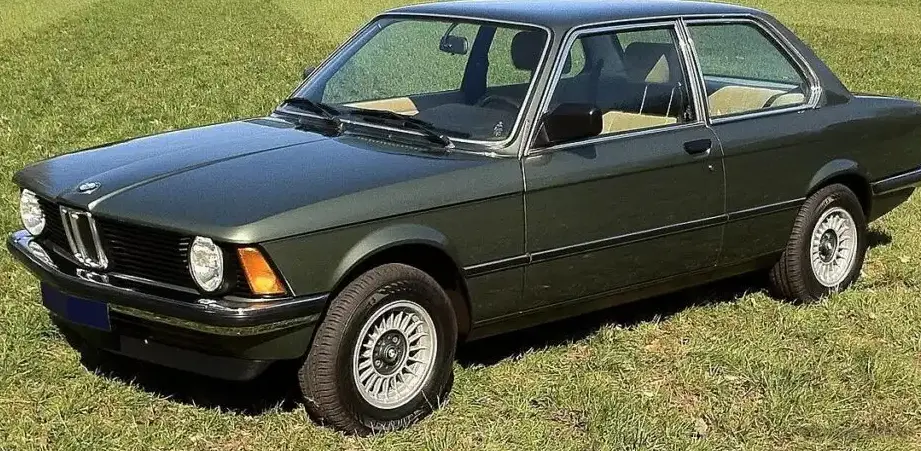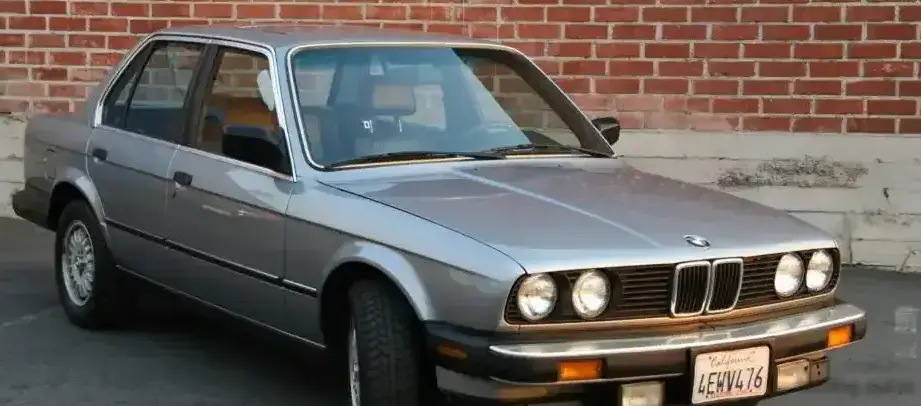
The BMW 3 Series Sedan (E30) 325i, produced from 1983 to 1987, represents a pivotal point in the evolution of BMW’s compact executive car lineage. Positioned as a performance-oriented variant within the E30 generation (which spanned 1982-1990), the 325i offered a significant step up in power and refinement compared to the base 318i models. It quickly became a benchmark for handling and driver engagement in its class, establishing the 3 Series as a desirable and sporty sedan. The E30 platform itself was a revolutionary design for BMW, moving to a lighter, more aerodynamic body and incorporating modern suspension technology.
Technical Specifications
| Brand | BMW |
| Model | 3 Series |
| Generation | 3 Series Sedan (E30) |
| Type (Engine) | 325i (171 Hp) |
| Start of production | 1983 |
| End of production | 1987 |
| Powertrain Architecture | Internal Combustion engine |
| Body type | Sedan |
| Seats | 5 |
| Doors | 4 |
| Fuel consumption (economy) – urban | 12.2 l/100 km (19.3 US mpg) |
| Fuel consumption (economy) – extra urban | 6.4 l/100 km (36.8 US mpg) |
| Fuel Type | Petrol (Gasoline) |
| Acceleration 0 – 100 km/h | 8.3 sec |
| Acceleration 0 – 62 mph | 8.3 sec |
| Acceleration 0 – 60 mph | 7.9 sec |
| Maximum speed | 217 km/h (134.84 mph) |
| Weight-to-power ratio | 7 kg/Hp |
| Weight-to-torque ratio | 5.3 kg/Nm |
| Power | 171 Hp @ 5800 rpm |
| Torque | 226 Nm @ 4000 rpm (166.69 lb.-ft. @ 4000 rpm) |
| Engine layout | Front, Longitudinal |
| Engine Model/Code | M20B25 |
| Engine displacement | 2494 cm3 (152.19 cu. in.) |
| Number of cylinders | 6 |
| Engine configuration | Inline |
| Cylinder Bore | 84 mm (3.31 in.) |
| Piston Stroke | 75 mm (2.95 in.) |
| Compression ratio | 9.7:1 |
| Number of valves per cylinder | 2 |
| Fuel injection system | Multi-port manifold injection |
| Engine aspiration | Naturally aspirated engine |
| Valvetrain | SOHC |
| Engine oil capacity | 4.25 l (4.49 US qt | 3.74 UK qt) |
| Coolant | 10.5 l (11.1 US qt | 9.24 UK qt) |
| Kerb Weight | 1200 kg (2645.55 lbs.) |
| Max. weight | 1660 kg (3659.67 lbs.) |
| Max load | 460 kg (1014.13 lbs.) |
| Trunk (boot) space – minimum | 404 l (14.27 cu. ft.) |
| Fuel tank capacity | 55 l (14.53 US gal | 12.1 UK gal) |
| Max. roof load | 75 kg (165.35 lbs.) |
| Permitted trailer load with brakes (12%) | 1200 kg (2645.55 lbs.) |
| Permitted trailer load without brakes | 500 kg (1102.31 lbs.) |
| Length | 4325 mm (170.28 in.) |
| Width | 1645 mm (64.76 in.) |
| Height | 1380 mm (54.33 in.) |
| Wheelbase | 2570 mm (101.18 in.) |
| Front track | 1407 mm (55.39 in.) |
| Rear (Back) track | 1415 mm (55.71 in.) |
| Front overhang | 761 mm (29.96 in.) |
| Rear overhang | 994 mm (39.13 in.) |
| Ride height (ground clearance) | 140 mm (5.51 in.) |
| Drag coefficient (Cd) | 0.35 |
| Drivetrain Architecture | Rear wheel drive |
| Drive wheel | Rear wheel drive |
| Number of gears and type of gearbox | 5 gears, manual transmission |
| Front suspension | Independent type McPherson |
| Rear suspension | Wishbone |
| Front brakes | Ventilated discs |
| Rear brakes | Disc |
| Steering type | Steering rack and pinion |
| Power steering | Hydraulic Steering |
| Tires size | 195/65 R14 |
| Wheel rims size | 14 |
Powertrain & Engine Architecture
The heart of the 325i is the M20B25 engine, a 2.5-liter inline-six cylinder powerplant. This engine, a cornerstone of BMW’s engineering prowess during the 1980s, featured a single overhead camshaft (SOHC) design and multi-port fuel injection. The M20 engine family was known for its smooth power delivery and robust construction. The 325i’s version produced 171 horsepower at 5800 rpm and 226 Nm (166.69 lb-ft) of torque at 4000 rpm. The engine’s longitudinal mounting and rear-wheel drive configuration contributed to the car’s balanced handling characteristics. The standard transmission was a Getrag 265 five-speed manual, though a four-speed automatic transmission was also available, albeit less common and generally considered to diminish the driving experience.
Driving Characteristics
The 325i, particularly with the five-speed manual transmission, offered a remarkably engaging driving experience. The engine’s powerband was broad and usable, providing strong acceleration throughout the rev range. The rear-wheel drive layout and well-tuned suspension – featuring independent McPherson struts at the front and a semi-trailing arm rear suspension – delivered precise steering and minimal body roll. The automatic transmission, while offering convenience, noticeably dulled the car’s responsiveness. Gear ratios were optimized for a balance of acceleration and fuel economy, but the automatic lacked the direct connection and control of the manual. Compared to the 318i, the 325i felt significantly more powerful and capable, while the later 325es (with a different engine variant) offered a more luxurious, but less sporty, experience.
Equipment & Trim Levels
The 325i typically came equipped with a relatively basic, yet functional, interior. Standard features included cloth upholstery, manual windows and locks, and a simple stereo system. However, a range of options were available, including leather upholstery, sunroof, air conditioning, and upgraded sound systems. The dashboard layout was straightforward and driver-focused, with clearly marked gauges and controls. Trim levels were relatively limited; the 325i was positioned as a step above the base 318i, and options were largely chosen à la carte. Sport packages, including upgraded suspension components and sport seats, were popular choices for enthusiasts.
Chassis & Braking
The E30 325i featured a robust chassis with a MacPherson strut front suspension and a semi-trailing arm rear suspension. This setup provided a good balance of ride comfort and handling precision. Braking duties were handled by ventilated disc brakes at the front and solid discs at the rear. Power steering was standard, providing a reasonable level of assistance without sacrificing road feel. The car’s relatively light weight (around 2645 lbs) contributed to its agility and responsiveness. Stabilizer bars were fitted front and rear to further reduce body roll during cornering.
Market Reception & Comparison
The 325i was widely praised by automotive critics for its handling, performance, and overall driving experience. It was often compared favorably to rivals such as the Mercedes-Benz 190E and the Audi 80. While the 318i offered a more affordable entry point into the 3 Series range, the 325i appealed to drivers who prioritized performance and driving enjoyment. The automatic transmission version received mixed reviews, with many critics preferring the engagement of the manual gearbox. Fuel economy was reasonable for the time, but not exceptional. Reliability was generally good, although maintenance costs could be higher than some competitors due to the car’s German engineering.
Legacy
The E30 325i has become a highly sought-after classic car, particularly among BMW enthusiasts. Its combination of performance, handling, and timeless design has ensured its enduring appeal. The M20 engine, while aging, is known for its durability and relatively straightforward maintenance. However, finding well-maintained examples can be challenging, as many cars have been subjected to years of use and potential neglect. Today, the E30 325i represents a significant chapter in BMW’s history and remains a benchmark for compact sports sedans.