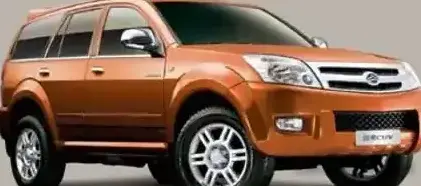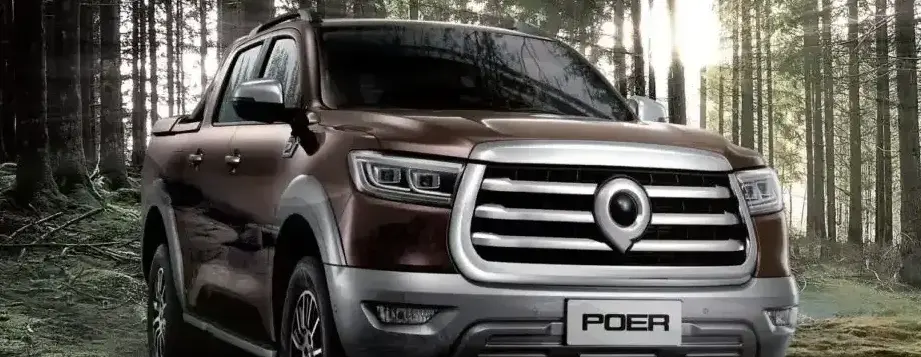
The Great Wall POER Passenger 2.0 GDIT (190 Hp) 4WD Automatic is a four-door, five-seat pickup truck introduced by Great Wall Motors in 2020. Representing a move towards a more refined and passenger-focused pickup experience, the POER (standing for Power, Off-road, Endurance, and Reliability) aimed to compete in a segment traditionally dominated by established global brands. This particular variant, equipped with the 2.0-liter turbocharged gasoline engine and an eight-speed automatic transmission, positioned itself as a mid-range offering within the POER lineup, balancing performance with fuel efficiency and comfort. It was primarily marketed towards buyers seeking a versatile vehicle capable of both work and family duties, with the added benefit of all-wheel drive capability.
Technical Specifications
| Brand | Great Wall |
| Model | POER |
| Generation | POER Passenger |
| Type (Engine) | 2.0 GDIT (190 Hp) 4WD Automatic |
| Start of production | 2020 |
| Powertrain Architecture | Internal Combustion engine |
| Body type | Pick-up |
| Seats | 5 |
| Doors | 4 |
| Fuel consumption (urban) | 14.9 l/100 km (15.8 US mpg, 19 UK mpg, 6.7 km/l) |
| Fuel consumption (extra urban) | 10.5 l/100 km (22.4 US mpg, 26.9 UK mpg, 9.5 km/l) |
| Fuel consumption (combined) | 12.2 l/100 km (19.3 US mpg, 23.2 UK mpg, 8.2 km/l) |
| Fuel Type | Petrol (Gasoline) |
| Emission standard | Euro 6 |
| Weight-to-power ratio | 10.8 kg/Hp, 92.9 Hp/tonne |
| Weight-to-torque ratio | 5.7 kg/Nm, 176 Nm/tonne |
| Power | 190 Hp @ 4000-5500 rpm |
| Power per litre | 96.6 Hp/l |
| Torque | 360 Nm @ 1800-3600 rpm (265.52 lb.-ft. @ 1800-3600 rpm) |
| Engine layout | Front, Longitudinal |
| Engine Model/Code | GW4C20B |
| Engine displacement | 1967 cm3 (120.03 cu. in.) |
| Number of cylinders | 4 |
| Engine configuration | Inline |
| Cylinder Bore | 82.5 mm (3.25 in.) |
| Piston Stroke | 92 mm (3.62 in.) |
| Number of valves per cylinder | 4 |
| Fuel injection system | Direct injection |
| Engine aspiration | Turbocharger, Intercooler |
| Valvetrain | DOHC |
| Engine oil capacity | 4.9 l (5.18 US qt | 4.31 UK qt) |
| Coolant capacity | 6.7 l (7.08 US qt | 5.9 UK qt) |
| Kerb Weight | 2045 kg (4508.45 lbs.) |
| Max. weight | 3095 kg (6823.31 lbs.) |
| Max load | 1050 kg (2314.85 lbs.) |
| Fuel tank capacity | 70 l (18.49 US gal | 15.4 UK gal) |
| Length | 5410 mm (212.99 in.) |
| Width | 1934 mm (76.14 in.) |
| Height | 1886 mm (74.25 in.) |
| Wheelbase | 3230 mm (127.17 in.) |
| Ride height (ground clearance) | 235 mm (9.25 in.) |
| Approach angle | 25° |
| Departure angle | 25° |
| Drivetrain Architecture | All wheel drive (4×4). ICE drives rear wheels, front wheels engaged via clutch. |
| Number of gears and type of gearbox | 8 gears, automatic transmission |
| Front suspension | Double wishbone, Transverse stabilizer |
| Rear suspension | Rigid axle suspension, Leaf spring |
| Front brakes | Disc |
| Rear brakes | Disc |
| Assisting systems | ABS (Anti-lock braking system) |
| Steering type | Steering rack and pinion |
| Power steering | Electric Steering |
| Tires size | 265/60 R18 |
| Wheel rims size | 18 |
Introduction
The Great Wall POER Passenger 2.0 GDIT 4WD Automatic, launched in 2020, represents Great Wall Motor’s attempt to modernize the pickup truck segment. The POER, built on the platform, aimed to offer a more comfortable and refined experience than traditional work-focused pickups, while still maintaining off-road capability. This variant, with its 2.0-liter turbocharged engine and automatic transmission, was positioned as a versatile option for both urban and rural drivers, appealing to those needing a practical vehicle for both daily commutes and occasional hauling or off-road adventures. It was a key model in Great Wall’s expansion strategy, particularly in markets outside of China where pickup trucks remain popular.
Powertrain & Engine Architecture
At the heart of the POER Passenger 2.0 GDIT 4WD Automatic lies the GW4C20B, a 1.967-liter (120.03 cubic inches) inline-four cylinder gasoline engine. This engine utilizes direct fuel injection and is coupled with a single turbocharger and intercooler to boost power and efficiency. The engine produces 190 horsepower at 4000-5500 rpm and 360 Nm (265.52 lb-ft) of torque between 1800-3600 rpm. The engine features a double overhead camshaft (DOHC) valvetrain with four valves per cylinder, contributing to its relatively high power output for its displacement. The engine is longitudinally mounted in the chassis. The eight-speed automatic transmission, sourced from ZF, provides smooth and efficient gear changes. This transmission was chosen for its ability to handle the engine’s torque output and provide a comfortable driving experience.
Driving Characteristics
The 2.0 GDIT engine paired with the eight-speed automatic delivers a respectable driving experience. While not a performance-oriented pickup, the engine provides adequate power for everyday driving and hauling moderate loads. The automatic transmission is well-tuned, offering smooth shifts and responsive acceleration. The all-wheel-drive system enhances traction in various conditions, making it suitable for both on-road and off-road use. Compared to lower-powered variants of the POER, this 190 hp version offers noticeably improved acceleration and highway passing power. However, it doesn’t quite match the performance of larger displacement engines found in some competing pickups. The gear ratios are optimized for a balance between fuel economy and towing capability, with lower gears providing ample torque for climbing hills or navigating rough terrain.
Equipment & Trim Levels
The POER Passenger 2.0 GDIT 4WD Automatic typically came equipped with a range of standard features designed to enhance comfort and convenience. These included air conditioning, power windows and locks, a touchscreen infotainment system with Bluetooth connectivity, and a rearview camera. Higher trim levels offered additional features such as leather upholstery, heated front seats, a sunroof, and advanced driver-assistance systems (ADAS) like lane departure warning and automatic emergency braking. The interior design focused on providing a comfortable and functional space for both driver and passengers. Optional extras often included upgraded sound systems, navigation systems, and various exterior styling enhancements.
Chassis & Braking
The POER Passenger features a robust chassis designed to handle the demands of pickup truck use. The front suspension utilizes a double wishbone setup with a transverse stabilizer bar, providing good handling and ride comfort. The rear suspension employs a traditional rigid axle with leaf springs, offering a good balance between load-carrying capacity and ride quality. The braking system consists of disc brakes on all four wheels, providing adequate stopping power. An Anti-lock Braking System (ABS) is standard, enhancing safety during emergency braking situations. The vehicle’s relatively high ground clearance (235 mm / 9.25 inches) contributes to its off-road capability.
Market Reception & Comparison
The Great Wall POER Passenger 2.0 GDIT 4WD Automatic received mixed reviews from automotive critics. While praised for its comfortable interior, modern features, and competitive pricing, it was sometimes criticized for its fuel economy, which at 12.2 l/100 km (19.3 US mpg) is relatively high compared to some competitors. Compared to other trims in the POER lineup, this variant offered a significant performance upgrade over the lower-powered diesel options, but at a slightly higher price point. It positioned itself as a strong contender against established brands like Toyota Hilux and Ford Ranger in certain markets, offering a compelling combination of features and value.
Legacy
The Great Wall POER Passenger 2.0 GDIT 4WD Automatic represents a significant step forward for Great Wall Motors in terms of design, technology, and overall refinement. While long-term reliability data is still emerging, the GW4C20B engine has proven to be generally reliable in other Great Wall models. On the used car market, these vehicles are becoming increasingly popular as buyers seek affordable and capable pickup trucks. The combination of a turbocharged engine, automatic transmission, and all-wheel drive makes it a versatile option for a wide range of buyers. Its success will likely influence future Great Wall pickup truck designs, pushing the brand further upmarket and challenging established players in the global pickup truck market.