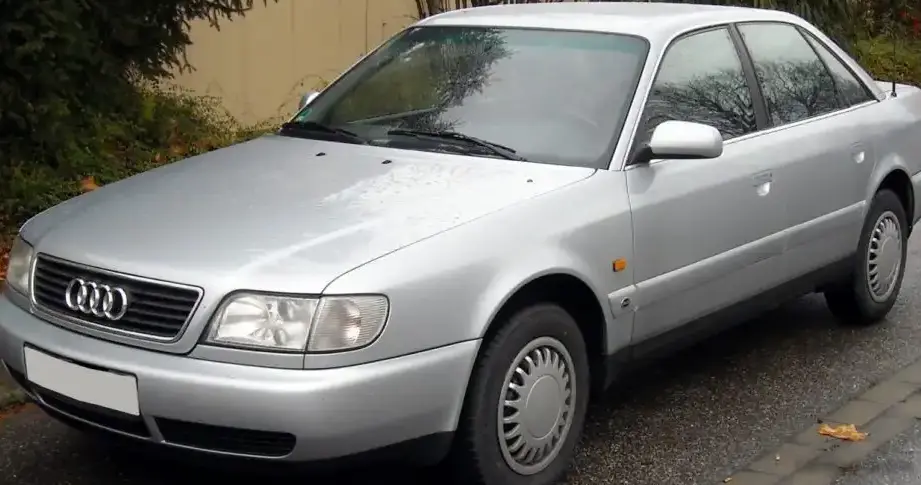
The Audi A6 Avant (4F, C6) 3.0 i V6 30V quattro, produced from 2006 to 2008, represents a compelling blend of performance, practicality, and luxury within the mid-size executive wagon segment. This variant occupied a premium position in the C6 A6 Avant lineup, offering a significant step up in power and all-wheel-drive capability compared to the base 2.4L and 1.8T models. It was positioned below the high-performance S6 Avant, catering to buyers seeking a refined driving experience with ample power for both daily commuting and long-distance travel. The 4F chassis generation, introduced in 2004, brought significant advancements in technology and build quality to the A6 range, solidifying Audi’s reputation for sophisticated engineering.
Technical Specifications
| Brand | Audi |
| Model | A6 |
| Generation | A6 Avant (4F,C6) |
| Type (Engine) | 3.0 i V6 30V (218 Hp) quattro |
| Start of production | 2006 |
| End of production | 2008 |
| Powertrain Architecture | Internal Combustion engine |
| Body type | Station wagon (estate) |
| Seats | 5 |
| Doors | 5 |
| Fuel consumption (urban) | 16 l/100 km (14.7 US mpg, 17.7 UK mpg, 6.3 km/l) |
| Fuel consumption (extra urban) | 8.3 l/100 km (28.3 US mpg, 34 UK mpg, 12 km/l) |
| Fuel Type | Petrol (Gasoline) |
| Acceleration 0 – 100 km/h | 8.8 sec |
| Acceleration 0 – 62 mph | 8.8 sec |
| Acceleration 0 – 60 mph | 8.4 sec |
| Maximum speed | 236 km/h (146.64 mph) |
| Weight-to-power ratio | 8.3 kg/Hp, 120.8 Hp/tonne |
| Weight-to-torque ratio | 6.2 kg/Nm, 160.7 Nm/tonne |
| Power | 218 Hp @ 6300 rpm |
| Power per litre | 73.3 Hp/l |
| Torque | 290 Nm @ 3200 rpm (213.89 lb.-ft. @ 3200 rpm) |
| Engine layout | Front, Longitudinal |
| Engine Model/Code | BBJ |
| Engine displacement | 2976 cm3 (181.61 cu. in.) |
| Number of cylinders | 6 |
| Engine configuration | V-engine |
| Cylinder Bore | 82.5 mm (3.25 in.) |
| Piston Stroke | 92.8 mm (3.65 in.) |
| Compression ratio | 10.5:1 |
| Number of valves per cylinder | 5 |
| Fuel injection system | Multi-port manifold injection |
| Engine aspiration | Naturally aspirated engine |
| Valvetrain | DOHC |
| Engine oil capacity | 6.3 l (6.66 US qt | 5.54 UK qt) |
| Coolant | 12 l (12.68 US qt | 10.56 UK qt) |
| Kerb Weight | 1805 kg (3979.34 lbs.) |
| Max. weight | 2350 kg (5180.86 lbs.) |
| Max load | 545 kg (1201.52 lbs.) |
| Trunk (boot) space – minimum | 565 l (19.95 cu. ft.) |
| Trunk (boot) space – maximum | 1660 l (58.62 cu. ft.) |
| Fuel tank capacity | 80 l (21.13 US gal | 17.6 UK gal) |
| Length | 4933 mm (194.21 in.) |
| Width | 1855 mm (73.03 in.) |
| Height | 1463 mm (57.6 in.) |
| Wheelbase | 2843 mm (111.93 in.) |
| Front track | 1612 mm (63.46 in.) |
| Rear (Back) track | 1618 mm (63.7 in.) |
| Drive wheel | All wheel drive (4×4) |
| Front suspension | Independent, type McPherson with coil spring and anti-roll bar |
| Rear suspension | Independent multi-link spring suspension with stabilizer |
| Front brakes | Disc |
| Rear brakes | Disc |
| Assisting systems | ABS (Anti-lock braking system) |
| Steering type | Steering rack and pinion |
| Tires size | 225/55R16 |
Powertrain & Engine Architecture
At the heart of the A6 Avant 3.0 quattro lies the BBJ engine code, a 2.976-liter naturally aspirated V6. This engine is a member of Audi’s long-running V6 family, known for its smoothness and reliability. The BBJ features a 60-degree V-angle, contributing to its balanced operation. It utilizes multi-port fuel injection, delivering fuel directly into the intake ports, and a double overhead camshaft (DOHC) valvetrain with five valves per cylinder (three intake, two exhaust). This configuration optimizes airflow for improved performance across the rev range. The engine produces 218 horsepower at 6300 rpm and 290 Nm (213.89 lb-ft) of torque at 3200 rpm. The engine is longitudinally mounted, driving all four wheels through Audi’s renowned quattro all-wheel-drive system. The transmission is a 6-speed automatic, known for its smooth shifts and adaptability. This transmission was a key component in delivering the engine’s power effectively, although it wasn’t as sporty or responsive as the available 6-speed manual.
Driving Characteristics
The 3.0L V6 automatic A6 Avant offered a refined and comfortable driving experience. Acceleration from 0-60 mph took approximately 8.4 seconds, making it adequately quick for most situations. The automatic transmission, while smooth, prioritized comfort over outright performance. Gear ratios were tuned for relaxed cruising, and the transmission would often upshift quickly to maximize fuel efficiency. Compared to the 1.8T models, the 3.0L provided significantly more power and torque, resulting in effortless highway passing and confident acceleration even with a full load. The quattro all-wheel-drive system provided excellent traction in all weather conditions, enhancing stability and control. However, the added weight of the V6 engine and quattro system meant that the 3.0L Avant wasn’t as nimble or fuel-efficient as its four-cylinder counterparts.
Equipment & Trim Levels
The A6 Avant 3.0 quattro typically came well-equipped, reflecting its premium positioning. Standard features included leather upholstery, power-adjustable front seats with memory function, dual-zone automatic climate control, a premium audio system, and a sunroof. Optional extras included navigation system, adaptive cruise control, heated seats, and upgraded interior trim materials. The exterior featured alloy wheels, fog lights, and chrome accents. Trim levels were relatively simple, with most options being added individually. The focus was on providing a luxurious and comfortable environment for both driver and passengers.
Chassis & Braking
The C6 A6 Avant utilized a fully independent suspension system. The front featured a McPherson strut setup with coil springs and an anti-roll bar, while the rear employed a multi-link suspension, also with coil springs and a stabilizer bar. This configuration provided a good balance between ride comfort and handling. Brakes consisted of ventilated discs on all four wheels, providing ample stopping power. The ABS (Anti-lock Braking System) was standard, enhancing safety and control during emergency braking. The chassis was designed to be rigid and refined, minimizing noise, vibration, and harshness.
Market Reception & Comparison
The A6 Avant 3.0 quattro was generally well-received by automotive critics. It was praised for its powerful engine, comfortable ride, and sophisticated interior. However, some reviewers noted that the automatic transmission could feel a bit sluggish at times, and the fuel economy wasn’t exceptional. Compared to the 1.8T Avant, the 3.0L offered a significant performance upgrade but came at a higher price and with increased running costs. The 1.8T was favored by buyers prioritizing fuel efficiency and affordability. The S6 Avant, with its even more powerful V8 engine, catered to those seeking ultimate performance.
Legacy
The Audi A6 Avant (4F, C6) 3.0 i V6 quattro has proven to be a relatively reliable vehicle, with the BBJ engine being known for its durability. However, like all European cars of this era, maintenance costs can be higher than those of Japanese or American counterparts. Common issues include oil leaks, sensor failures, and occasional problems with the automatic transmission. Today, these A6 Avants are becoming increasingly sought after by enthusiasts who appreciate their blend of practicality, performance, and luxury. Well-maintained examples command a reasonable price in the used car market, and the 3.0L V6 quattro variant remains a desirable choice for those seeking a refined and capable executive wagon.