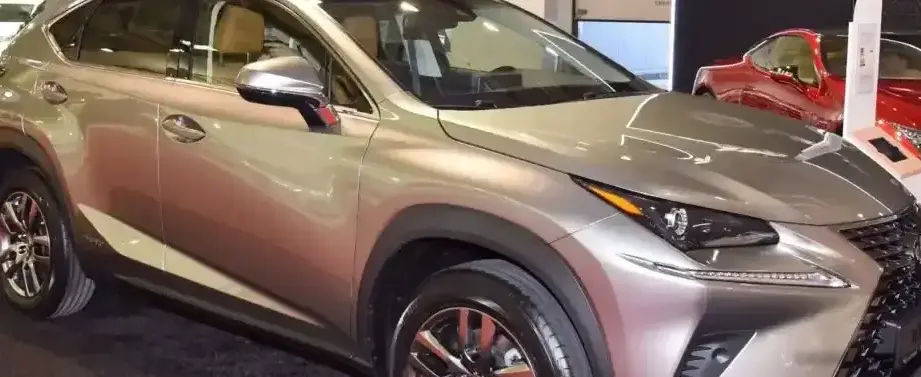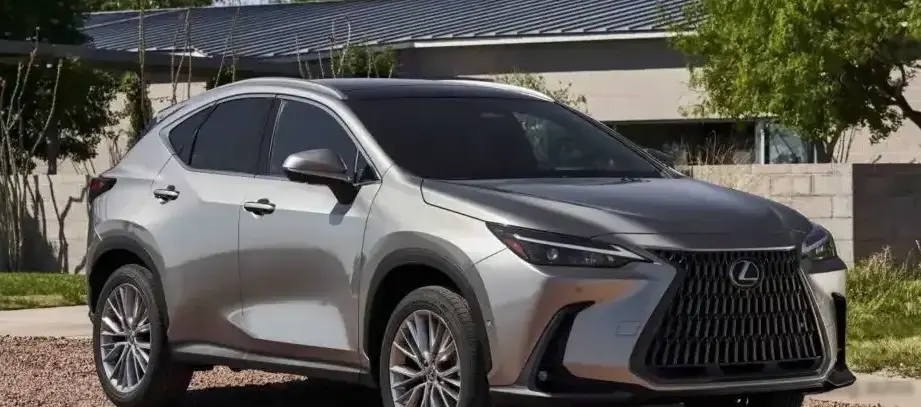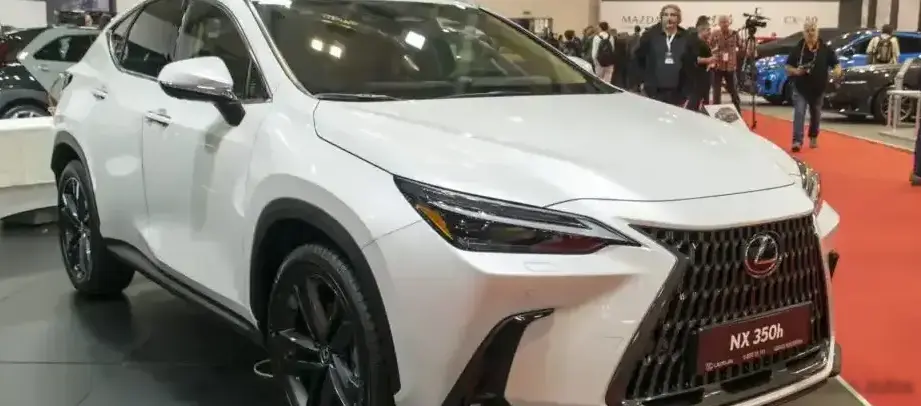
The Lexus NX 300h (AZ10, facelifted in 2017) represents Lexus’s entry into the compact luxury crossover segment with a focus on hybrid efficiency and all-weather capability. Produced from 2017 through September 2021, this variant combined a 2.5-liter four-cylinder gasoline engine with a sophisticated hybrid system, offering a balance between fuel economy and performance. The “e-Four” designation indicates the vehicle’s electronically controlled all-wheel-drive system, enhancing traction and stability. This model sat in the mid-range of the NX lineup, offering a more premium experience than the base NX 200 while remaining more accessible than the NX 350.
Technical Specifications
| Brand | Lexus |
| Model | NX |
| Generation | NX I (AZ10, facelift 2017) |
| Type (Engine) | 300h (197 Hp) Hybrid e-Four e-CVT |
| Start of production | 2017 |
| End of production | September, 2021 |
| Powertrain Architecture | FHEV (Full Hybrid Electric Vehicle) |
| Body type | SUV, Crossover |
| Seats | 5 |
| Doors | 5 |
| Fuel consumption (urban) | 5.8-6.1 l/100 km (40.6 – 38.6 US mpg) |
| Fuel consumption (extra urban) | 5.5-5.7 l/100 km (42.8 – 41.3 US mpg) |
| Fuel consumption (combined) | 5.7-5.9 l/100 km (41.3 – 39.9 US mpg) |
| CO2 emissions | 130-135 g/km |
| Fuel Type | Petrol (Gasoline) |
| Acceleration 0 – 100 km/h | 9.4 sec |
| Acceleration 0 – 62 mph | 9.4 sec |
| Acceleration 0 – 60 mph | 8.9 sec |
| Maximum speed | 180 km/h (111.85 mph) |
| Emission standard | Euro 6d |
| Weight-to-power ratio | 9.4 kg/Hp |
| Weight-to-torque ratio | 12.8 kg/Nm |
| Battery voltage | 244.8 V |
| Battery technology | Nickel-metal hydride (NiMH) |
| Battery location | Under the rear seats |
| Electric motor power (1) | 143 Hp |
| Electric motor torque (1) | 270 Nm (199.14 lb.-ft.) |
| Electric motor location (1) | Integrated into the transmission |
| Electric motor type (1) | Synchronous |
| Electric motor power (2) | 68 Hp |
| Electric motor torque (2) | 139 Nm (102.52 lb.-ft.) |
| Electric motor location (2) | Rear axle, Transverse |
| Electric motor type (2) | Synchronous |
| System power | 197 Hp |
| System torque | 145 Nm (106.95 lb.-ft.) |
| Engine Power | 155 Hp @ 5700 rpm |
| Engine Torque | 210 Nm @ 4200-4000 rpm (154.89 lb.-ft. @ 4200-4000 rpm) |
| Engine layout | Front, Transverse |
| Engine Model/Code | 2AR-FXE |
| Engine displacement | 2494 cm3 (152.19 cu. in.) |
| Number of cylinders | 4 |
| Engine configuration | Inline |
| Cylinder Bore | 90 mm (3.54 in.) |
| Piston Stroke | 98 mm (3.86 in.) |
| Compression ratio | 12.5:1 |
| Number of valves per cylinder | 4 |
| Fuel injection system | Multi-port manifold injection |
| Engine aspiration | Naturally aspirated engine |
| Valvetrain | VVT-i |
| Engine oil capacity | 4.4 l (4.65 US qt | 3.87 UK qt) |
| Coolant capacity | 7.3 l (7.71 US qt | 6.42 UK qt) |
| Kerb Weight | 1860-1980 kg (4100.6 – 4365.15 lbs.) |
| Max. weight | 2395 kg (5280.07 lbs.) |
| Max load | 415-535 kg (914.92 – 1179.47 lbs.) |
| Trunk (boot) space – minimum | 555 l (19.6 cu. ft.) |
| Trunk (boot) space – maximum | 1600 l (56.5 cu. ft.) |
| Fuel tank capacity | 56 l (14.79 US gal | 12.32 UK gal) |
| Permitted trailer load with brakes (12%) | 1500 kg (3306.93 lbs.) |
| Permitted trailer load without brakes | 750 kg (1653.47 lbs.) |
| Length | 4640 mm (182.68 in.) |
| Width | 1845 mm (72.64 in.) |
| Height | 1645 mm (64.76 in.) |
| Wheelbase | 2660 mm (104.72 in.) |
| Front track | 1580 mm (62.2 in.) |
| Rear track | 1580 mm (62.2 in.) |
| Front overhang | 1000 mm (39.37 in.) |
| Rear overhang | 980 mm (38.58 in.) |
| Ride height (ground clearance) | 175 mm (6.89 in.) |
| Drag coefficient (Cd) | 0.34 |
| Minimum turning circle | 12.1 m (39.7 ft.) |
| Drivetrain Architecture | ICE drives front wheels, electric motors drive front and rear wheels. |
| Drive wheel | All wheel drive (4×4) |
| Number of gears | automatic transmission e-CVT |
| Front suspension | Independent, type McPherson with coil spring and anti-roll bar |
| Rear suspension | Double wishbone |
| Front brakes | Ventilated discs |
| Rear brakes | Disc |
Powertrain & Engine Architecture
The NX 300h’s powertrain centers around the 2AR-FXE 2.5-liter inline-four engine. This engine utilizes a multi-port fuel injection system and Toyota’s VVT-i variable valve timing technology to optimize efficiency and power delivery. The engine itself produces 155 horsepower and 155 lb-ft of torque. However, the system’s total output is 197 horsepower, thanks to the contributions of the electric motors. The hybrid system employs a nickel-metal hydride (NiMH) battery pack located under the rear seats, providing a compact and reliable energy storage solution. The e-CVT (electronically controlled continuously variable transmission) seamlessly blends power from the gasoline engine and electric motors, optimizing fuel economy and providing smooth acceleration. The e-Four all-wheel-drive system uses a separate electric motor to power the rear wheels, providing on-demand all-wheel drive without a traditional mechanical center differential.
Driving Characteristics
The NX 300h with the e-CVT offers a distinctly different driving experience compared to its gasoline-only counterpart or higher-performance NX variants. Acceleration is smooth and linear, prioritizing efficiency over outright speed. The e-CVT lacks the stepped gear changes of a traditional automatic, resulting in a seamless power delivery. While the 0-60 mph time of around 8.9 seconds isn’t particularly quick, the hybrid system provides ample torque for everyday driving situations. The e-Four system enhances stability and traction, particularly in inclement weather. The regenerative braking system captures energy during deceleration, further improving fuel economy. The vehicle can operate in electric-only mode at low speeds and under light loads, contributing to a quiet and refined driving experience.
Equipment & Trim Levels
The NX 300h typically came well-equipped, even in its base form. Standard features included Lexus Safety System+, which encompassed pre-collision system with pedestrian detection, lane departure alert with steering assist, and dynamic radar cruise control. Interior amenities included a 7-inch infotainment display, Bluetooth connectivity, and a rearview camera. Higher trim levels added features such as a larger 10.3-inch infotainment screen, navigation, premium audio systems, leather upholstery, heated and ventilated front seats, and a power liftgate. Optional extras included blind spot monitoring, rear cross-traffic alert, and a panoramic sunroof.
Chassis & Braking
The NX 300h utilizes a MacPherson strut front suspension and a double wishbone rear suspension, providing a comfortable and controlled ride. Stabilizer bars are fitted to both axles to reduce body roll during cornering. The braking system consists of ventilated discs at the front and solid discs at the rear. The electronic brake-force distribution (EBD) and brake assist systems enhance braking performance and safety. The steering is an electric power-assisted rack-and-pinion system, offering precise and responsive steering feel.
Market Reception & Comparison
The Lexus NX 300h was generally well-received by critics for its fuel efficiency, comfortable ride, and luxurious interior. However, some reviewers noted that its acceleration wasn’t as brisk as some competitors. Compared to the NX 200, the 300h offered significantly better fuel economy and a more refined driving experience. Compared to the NX 350, it prioritized efficiency over outright performance. The hybrid powertrain proved to be reliable, and the vehicle maintained strong resale values.
Legacy
The Lexus NX 300h established Lexus as a major player in the compact luxury hybrid crossover segment. The powertrain proved to be durable and reliable, with many examples still on the road today. The hybrid system’s efficiency and low emissions continue to appeal to environmentally conscious buyers. In the used car market, the NX 300h remains a popular choice, known for its blend of luxury, fuel economy, and reliability. The success of the NX 300h paved the way for subsequent generations of the NX, further solidifying Lexus’s commitment to hybrid technology.