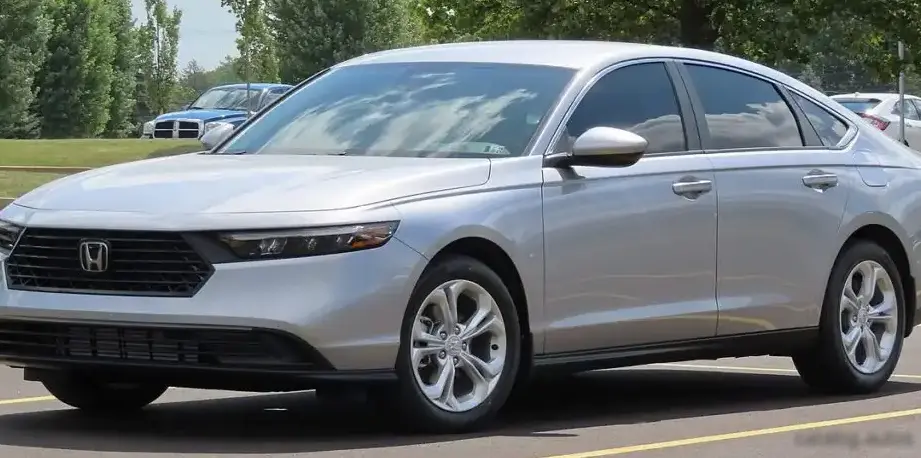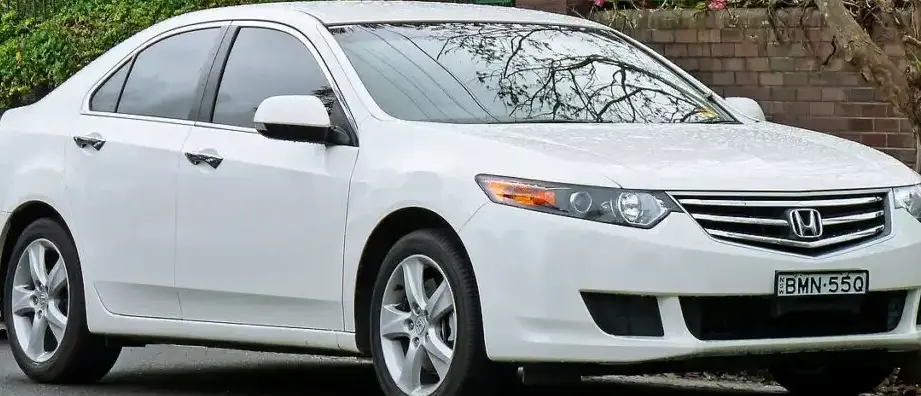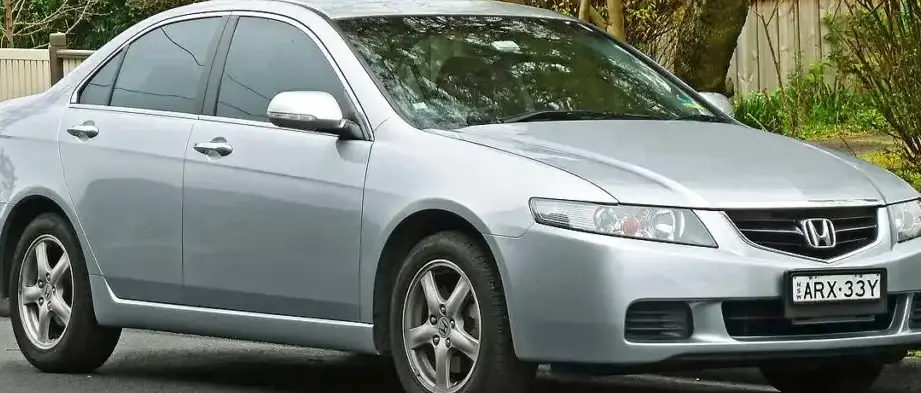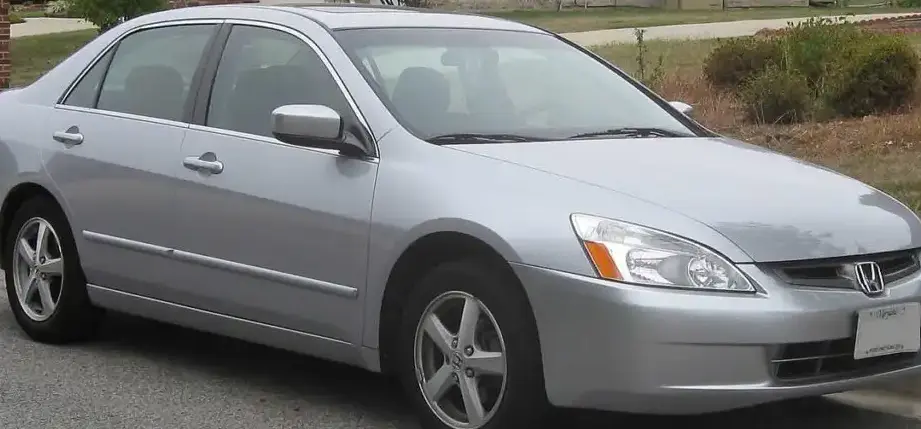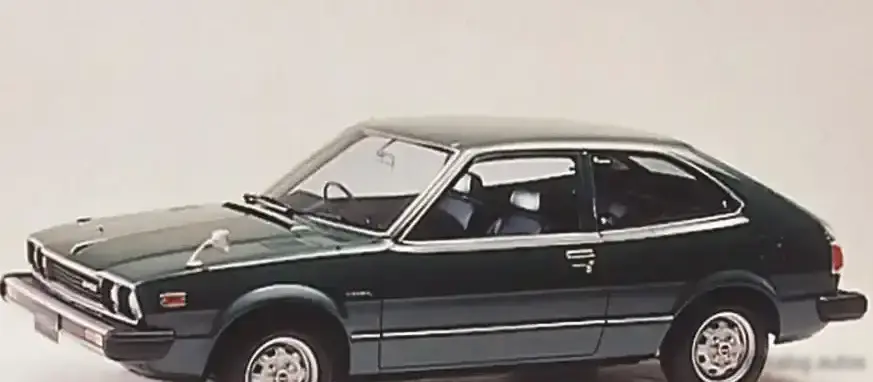
The Honda Accord V (CC7) 2.0i S, produced between 1993 and 1996, represented a significant evolution in Honda’s popular mid-size sedan. Part of the fifth generation Accord (CC7 chassis code), this variant occupied a middle ground in the lineup, offering a balance between performance and affordability. It slotted above the base 1.8L models and below the more powerful V6 options, appealing to buyers seeking a reasonably equipped and efficient family car. The CC7 generation marked a shift towards more aerodynamic styling and increased interior space compared to its predecessor, solidifying the Accord’s reputation for reliability and practicality in the North American market, where it was a consistent bestseller.
Technical Specifications
| Brand | Honda |
| Model | Accord |
| Generation | Accord V (CC7) |
| Type (Engine) | 2.0i S (131 Hp) |
| Start of production | 1993 |
| End of production | 1996 |
| Powertrain Architecture | Internal Combustion engine |
| Body type | Sedan |
| Seats | 5 |
| Doors | 4 |
| Fuel consumption (combined) | 8.8 l/100 km |
| Fuel consumption (US mpg) | 26.7 US mpg |
| Fuel consumption (UK mpg) | 32.1 UK mpg |
| Fuel consumption (km/l) | 11.4 km/l |
| Fuel Type | Petrol (Gasoline) |
| Acceleration 0 – 100 km/h | 10.2 sec |
| Acceleration 0 – 62 mph | 10.2 sec |
| Acceleration 0 – 60 mph | 9.7 sec |
| Maximum speed | 200 km/h (124.27 mph) |
| Weight-to-power ratio | 9.9 kg/Hp |
| Power | 131 Hp @ 5400 rpm |
| Power per litre | 65.6 Hp/l |
| Torque | 178 Nm @ 4800 rpm (131.29 lb.-ft. @ 4800 rpm) |
| Engine layout | Front, Transverse |
| Engine Model/Code | F20Z1 |
| Engine displacement | 1997 cm3 (121.86 cu. in.) |
| Number of cylinders | 4 |
| Engine configuration | Inline |
| Cylinder Bore | 85 mm (3.35 in.) |
| Piston Stroke | 88 mm (3.46 in.) |
| Compression ratio | 9.5:1 |
| Number of valves per cylinder | 4 |
| Fuel injection system | Multi-port manifold injection |
| Engine aspiration | Naturally aspirated engine |
| Valvetrain | OHC |
| Engine oil capacity | 3.8 l (4.02 US qt | 3.34 UK qt) |
| Kerb Weight | 1295 kg (2854.99 lbs.) |
| Max. weight | 1820 kg (4012.41 lbs.) |
| Max load | 525 kg (1157.43 lbs.) |
| Trunk (boot) space – minimum | 405 l (14.3 cu. ft.) |
| Fuel tank capacity | 65 l (17.17 US gal | 14.3 UK gal) |
| Length | 4675 mm (184.06 in.) |
| Width | 1715 mm (67.52 in.) |
| Height | 1380 mm (54.33 in.) |
| Wheelbase | 2720 mm (107.09 in.) |
| Front track | 1475 mm (58.07 in.) |
| Rear (Back) track | 1480 mm (58.27 in.) |
| Drivetrain Architecture | The Internal combustion engine (ICE) drives the front wheels of the vehicle. |
| Drive wheel | Front wheel drive |
| Number of gears and type of gearbox | 5 gears, manual transmission |
| Front suspension | Double wishbone |
| Rear suspension | Transverse stabilizer |
| Front brakes | Ventilated discs |
| Rear brakes | Disc |
| Assisting systems | ABS (Anti-lock braking system) |
| Steering type | Steering rack and pinion |
| Power steering | Hydraulic Steering |
| Tires size | 185/65 R15 |
| Wheel rims size | 15 |
Powertrain & Engine Architecture
The heart of the 2.0i S was the F20Z1 engine, a 1.997-liter inline-four cylinder powerplant. This engine utilized a single overhead camshaft (SOHC) valvetrain, operating four valves per cylinder. Fuel delivery was managed by a multi-point fuel injection system, contributing to improved fuel efficiency and smoother operation. The F20Z1 was known for its durability and relatively simple design, making it a reliable unit. The engine produced 131 horsepower at 5400 rpm and 131 lb-ft of torque at 4800 rpm. This power was transmitted to the front wheels through a five-speed manual transmission, which was standard equipment. The engine’s transverse mounting and front-wheel-drive configuration were typical for Honda vehicles of this era, optimizing interior space and packaging efficiency.
Driving Characteristics
The 2.0i S offered a balanced driving experience. While not overtly sporty, the 131 hp engine provided adequate power for everyday driving and highway cruising. Acceleration to 60 mph took approximately 9.7 seconds, which was competitive for its class at the time. The five-speed manual transmission allowed drivers to maintain control over engine speed and maximize fuel economy. Compared to the base 1.8L models, the 2.0i S offered noticeably more responsive acceleration and better passing power. However, it lacked the outright performance of the V6-powered Accords. The suspension provided a comfortable ride, absorbing bumps and imperfections in the road effectively. Steering was precise and well-weighted, contributing to a confident feel behind the wheel.
Equipment & Trim Levels
The 2.0i S trim level typically included features such as power windows, power door locks, and a basic audio system. Air conditioning was often standard, though it could be optional depending on the specific package. Interior upholstery was typically cloth, with a relatively simple and functional dashboard layout. Optional extras included a sunroof, upgraded audio systems, and alloy wheels. The 2.0i S aimed to provide a good level of comfort and convenience without the added cost of the more luxurious trims.
Chassis & Braking
The Accord V (CC7) utilized a front independent double wishbone suspension and a rear independent suspension with a transverse stabilizer bar. This suspension setup provided a good balance between ride comfort and handling. Braking duties were handled by ventilated discs at the front and solid discs at the rear. Anti-lock brakes (ABS) were standard, enhancing safety by preventing wheel lockup during hard braking. The chassis was designed to be rigid and lightweight, contributing to improved handling and fuel efficiency.
Market Reception & Comparison
The Honda Accord V (CC7) 2.0i S was generally well-received by automotive critics. It was praised for its reliability, fuel efficiency, and comfortable ride. Compared to other mid-size sedans of the time, the Accord offered a compelling combination of features and value. The 2.0i S trim level was considered a sweet spot in the lineup, offering a noticeable performance upgrade over the base models without the higher price tag of the V6 options. Fuel economy was respectable, averaging around 26.7 US mpg in combined driving. Reliability was a key strength, with the F20Z1 engine proving to be a durable and long-lasting unit.
Legacy
The Honda Accord V (CC7) 2.0i S has maintained a strong reputation for reliability and longevity. Well-maintained examples are still relatively common on the used car market today. The F20Z1 engine is known for its durability and relatively low maintenance costs. While not a particularly collectible model, the 2.0i S represents a solid and dependable choice for buyers seeking an affordable and practical used car. Its enduring popularity is a testament to Honda’s commitment to quality and engineering excellence.