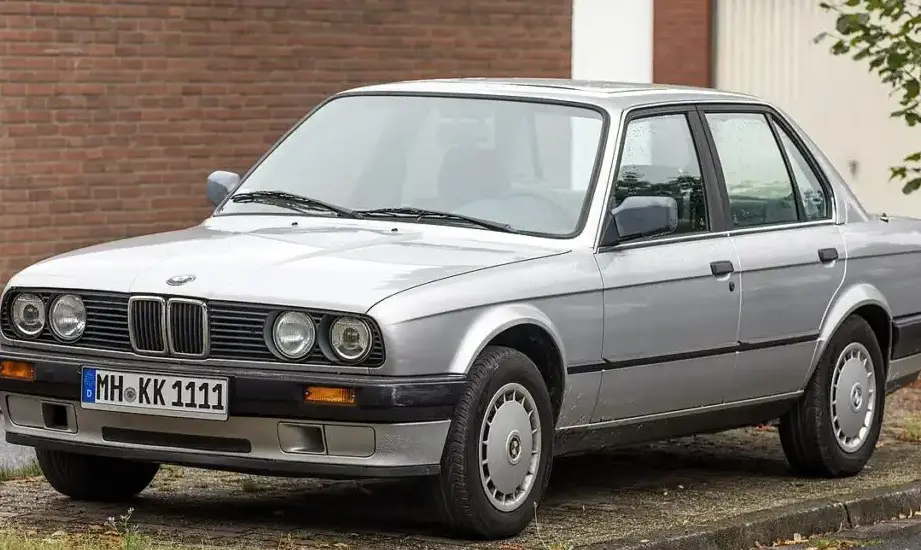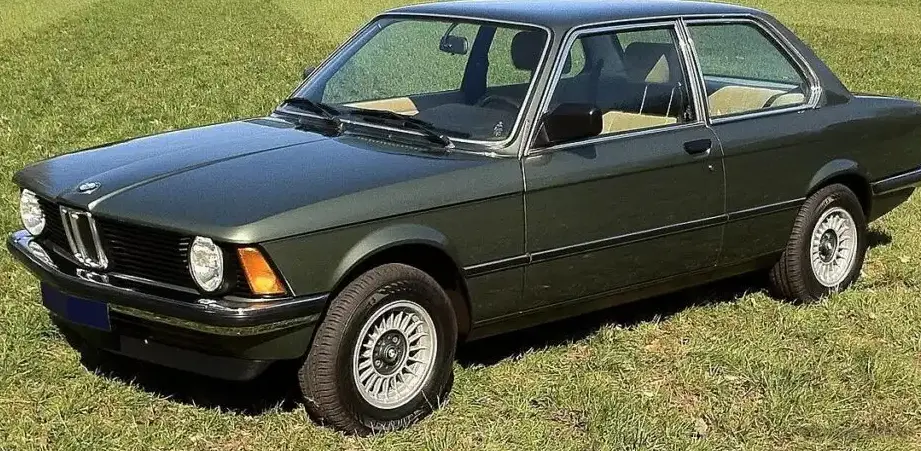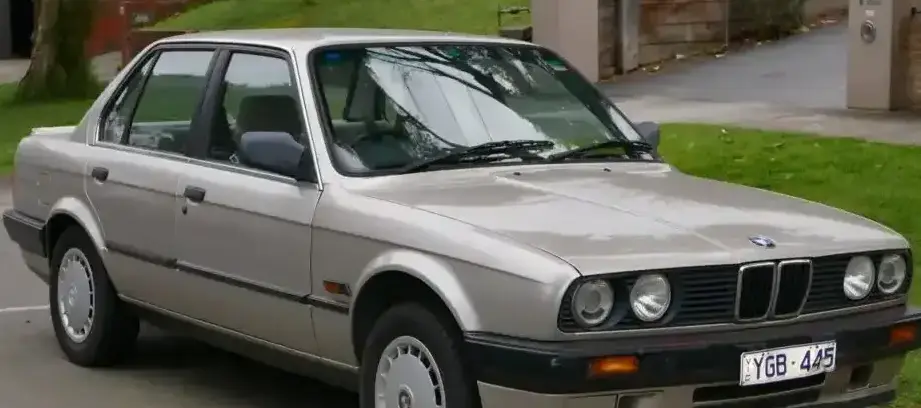
The BMW 3 Series Sedan (E30) 316i Automatic, produced from 1987 to 1988, represents an entry point into the iconic E30 generation. Positioned as the base model within the facelifted E30 range (introduced in 1987, designated 1HX0), it offered a more accessible price point and focused on fuel efficiency and comfortable cruising rather than outright performance. This variant catered to buyers seeking the prestige and handling characteristics of the 3 Series in a practical, everyday package. The 316i Automatic filled a niche for those who preferred the convenience of an automatic transmission, a less common choice in the European market at the time, but gaining popularity in North America.
Technical Specifications
| Brand | BMW |
| Model | 3 Series |
| Generation | 3 Series Sedan (E30, facelift 1987) |
| Type (Engine) | 316i (102 Hp) Automatic |
| Start of production | 1987 |
| End of production | 1988 |
| Powertrain Architecture | Internal Combustion engine |
| Body type | Sedan |
| Seats | 5 |
| Doors | 4 |
| Fuel consumption (combined) | 8.6 l/100 km (27.4 US mpg, 32.8 UK mpg, 11.6 km/l) |
| Fuel Type | Petrol (Gasoline) |
| Acceleration 0 – 100 km/h | 12.1 sec |
| Acceleration 0 – 62 mph | 12.1 sec |
| Acceleration 0 – 60 mph | 11.5 sec |
| Maximum speed | 182 km/h (113.09 mph) |
| Weight-to-power ratio | 10.6 kg/Hp, 94 Hp/tonne |
| Weight-to-torque ratio | 7.8 kg/Nm, 129 Nm/tonne |
| Power | 102 Hp @ 5800 rpm |
| Power per litre | 63.9 Hp/l |
| Torque | 140 Nm @ 4500 rpm (103.26 lb.-ft. @ 4500 rpm) |
| Engine layout | Front, Longitudinal |
| Engine Model/Code | M10B18 |
| Engine displacement | 1596 cm3 (97.39 cu. in.) |
| Number of cylinders | 4 |
| Engine configuration | Inline |
| Number of valves per cylinder | 2 |
| Fuel injection system | Multi-port manifold injection |
| Engine aspiration | Naturally aspirated engine |
| Engine oil capacity | 4 l (4.23 US qt | 3.52 UK qt) |
| Coolant capacity | 6 l (6.34 US qt | 5.28 UK qt) |
| Kerb Weight | 1085 kg (2392.02 lbs.) |
| Max. weight | 1545 kg (3406.14 lbs.) |
| Max load | 460 kg (1014.13 lbs.) |
| Trunk (boot) space – minimum | 425 l (15.01 cu. ft.) |
| Fuel tank capacity | 55 l (14.53 US gal | 12.1 UK gal) |
| Length | 4321 mm (170.12 in.) |
| Width | 1641 mm (64.61 in.) |
| Height | 1379 mm (54.29 in.) |
| Wheelbase | 2570 mm (101.18 in.) |
| Front track | 1410 mm (55.51 in.) |
| Rear (Back) track | 1420 mm (55.91 in.) |
| Ride height (ground clearance) | 125 mm (4.92 in.) |
| Drivetrain Architecture | Rear wheel drive |
| Number of gears and type of gearbox | 4 gears, automatic transmission |
| Front brakes | Disc |
| Rear brakes | Drum |
| Tires size | 175/70 R14 |
| Wheel rims size | 14 |
Powertrain & Engine Architecture
The heart of the 316i Automatic is the M10B18 engine, a 1.6-liter inline-four cylinder unit. This engine, a descendant of BMW’s long-running M10 family, featured a cast iron block and an aluminum cylinder head. The ‘B18’ designation indicates a displacement of 1.8 liters, although in this application it was detuned to 1.6 liters to meet market demands and regulations. Fuel delivery is managed by a Bosch Motronic multi-port fuel injection system, a significant upgrade over the carbureted engines of earlier E30 models. The engine utilizes a single overhead camshaft (SOHC) operating two valves per cylinder. The automatic transmission is a four-speed unit, offering smooth shifts but at the expense of some performance compared to the available five-speed manual. This transmission was chosen for its ease of use and comfort, appealing to a broader range of drivers.
Driving Characteristics
The 316i Automatic delivers a comfortable and predictable driving experience. With 102 horsepower and 103 lb-ft of torque, acceleration is modest, taking around 12.1 seconds to reach 62 mph. The automatic transmission, while convenient, does impact responsiveness. Gear ratios are optimized for fuel economy and smooth cruising, rather than spirited driving. Compared to the 318i (with its more powerful engine and available manual transmission), the 316i Automatic feels noticeably slower. However, the lower power output also contributes to better fuel economy, making it a practical choice for daily commuting. The rear-wheel-drive layout provides balanced handling, typical of BMWs of this era, but the softer suspension setup prioritizes ride comfort over sharp cornering.
Equipment & Trim Levels
The 316i Automatic typically came equipped with a relatively basic level of standard features. Interior upholstery was usually cloth, with options for leather available at extra cost. Standard equipment included power steering, central locking, and electric windows. Air conditioning was a popular optional extra. The dashboard layout is typical of the E30, with a functional and straightforward design. Trim levels were relatively limited, with most customization options revolving around exterior color, interior upholstery, and the addition of optional equipment packages. The 316i Automatic was often seen as a blank canvas for buyers to personalize their vehicle.
Chassis & Braking
The E30 chassis is renowned for its robust construction and balanced handling. The 316i Automatic utilizes a MacPherson strut front suspension and a semi-trailing arm rear suspension. The rear brakes are drum brakes, a cost-saving measure compared to the disc brakes found on higher-spec models. The front brakes are ventilated discs. Stabilizer bars are fitted to both the front and rear axles, helping to reduce body roll during cornering. The suspension is tuned for comfort, providing a relatively smooth ride over uneven surfaces. The 175/70 R14 tires offer adequate grip for everyday driving conditions.
Market Reception & Comparison
The 316i Automatic received mixed reviews. Critics generally praised its comfort, fuel efficiency, and ease of use, but criticized its lack of performance compared to other E30 variants. It was often seen as a sensible and practical choice, but not a particularly exciting one. Compared to the 318i, the 316i Automatic offered significantly lower running costs, but at the expense of driving enjoyment. The 320i and 325i models, with their larger engines and sportier suspensions, were targeted at a different segment of the market. In terms of reliability, the M10B18 engine is generally considered to be robust and durable, although regular maintenance is essential.
Legacy
Today, the E30 316i Automatic holds a special place in the hearts of many BMW enthusiasts. While not as sought-after as the higher-performance models, it represents an affordable entry point into E30 ownership. The M10B18 engine, while not particularly powerful, is known for its reliability and simplicity. Parts availability is generally good, making it relatively easy to maintain and repair. The 316i Automatic is often seen as a classic car that offers a unique blend of comfort, practicality, and BMW driving dynamics. Its enduring appeal lies in its ability to provide a genuine E30 experience without the high price tag of its more powerful siblings. Well-maintained examples are becoming increasingly collectible, and are appreciated for their historical significance and timeless design.