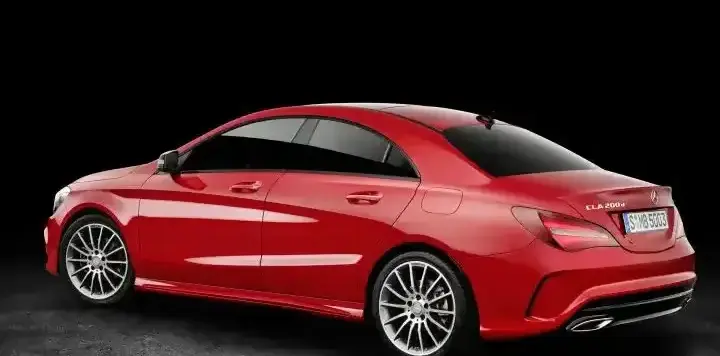
The Mercedes-Benz CLA 180, specifically the facelifted version produced from April 2016 to May 2018 (part of the C117 series), represented the entry point into the CLA Coupe range. Positioned as a stylish and relatively affordable option, it aimed to attract buyers seeking the Mercedes-Benz brand experience in a compact, four-door coupe body style. This variant was primarily sold in the European market, where it competed with other premium compacts like the Audi A3 and BMW 2 Series. The CLA 180 offered a blend of comfort, technology, and efficiency, making it a popular choice for urban drivers and young professionals.
Technical Specifications
| Brand | Mercedes-Benz |
| Model | CLA |
| Generation | CLA Coupe (C117, facelift 2016) |
| Type (Engine) | CLA 180 (122 Hp) |
| Start of production | April, 2016 |
| End of production | May, 2018 |
| Powertrain Architecture | Internal Combustion engine |
| Body type | Coupe |
| Seats | 5 |
| Doors | 4 |
| Fuel consumption (urban) | 7.7-7.4 l/100 km (30.5 – 31.8 US mpg) |
| Fuel consumption (extra urban) | 4.6-4.2 l/100 km (51.1 – 56 US mpg) |
| Fuel consumption (combined) | 5.7-5.4 l/100 km (41.3 – 43.6 US mpg) |
| CO2 emissions | 133-125 g/km |
| Fuel Type | Petrol (Gasoline) |
| Acceleration 0 – 100 km/h | 9 sec |
| Acceleration 0 – 62 mph | 9 sec |
| Acceleration 0 – 60 mph | 8.6 sec |
| Maximum speed | 210 km/h (130.49 mph) |
| Emission standard | Euro 6 |
| Weight-to-power ratio | 10.8 kg/Hp |
| Weight-to-torque ratio | 5.1 kg/Nm |
| Power | 122 Hp @ 5000 rpm |
| Torque | 260 Nm @ 1750-2500 rpm (191.77 lb.-ft.) |
| Engine layout | Front, Transverse |
| Engine Model/Code | M 270.910 |
| Engine displacement | 1595 cm3 (97.33 cu. in.) |
| Number of cylinders | 4 |
| Engine configuration | Inline |
| Compression ratio | 10.3:1 |
| Number of valves per cylinder | 4 |
| Fuel injection system | Direct injection |
| Engine aspiration | Turbocharger, Intercooler |
| Engine oil capacity | 5.8 l (6.13 US qt | 5.1 UK qt) |
| Coolant capacity | 7 l (7.4 US qt | 6.16 UK qt) |
| Kerb Weight | 1320 kg (2910.1 lbs) |
| Max. weight | 1920 kg (4232.88 lbs) |
| Max load | 600 kg (1322.77 lbs) |
| Trunk (boot) space – minimum | 470 l (16.6 cu. ft) |
| Fuel tank capacity | 50 l (13.21 US gal | 11 UK gal) |
| Max. roof load | 100 kg (220.46 lbs) |
| Permitted trailer load with brakes (12%) | 1200 kg (2645.55 lbs) |
| Permitted trailer load without brakes | 695 kg (1532.21 lbs) |
| Length | 4640 mm (182.68 in) |
| Width | 1777 mm (69.96 in) |
| Width including mirrors | 2032 mm (80 in) |
| Height | 1432 mm (56.38 in) |
| Wheelbase | 2699 mm (106.26 in) |
| Front track | 1549 mm (60.98 in) |
| Rear track | 1547 mm (60.91 in) |
| Drag coefficient (Cd) | 0.23 |
| Minimum turning circle | 11.00 m (36.09 ft) |
| Drivetrain Architecture | Front wheel drive |
| Number of gears | 6 gears, manual transmission |
| Front suspension | Double wishbone |
| Rear suspension | Trailing arm |
| Front brakes | Ventilated discs |
| Rear brakes | Disc |
| Assisting systems | ABS (Anti-lock braking system) |
| Steering type | Steering rack and pinion |
| Power steering | Electric Steering |
| Tires size | 205/55 R16 |
| Wheel rims size | 16 |
INTRODUCTION
The facelifted Mercedes-Benz CLA 180, introduced in April 2016, was a key component of the C117 CLA Coupe range. This update brought styling revisions, improved technology, and refined engine options. Built on the 1HX0/A3 platform shared with other compact Mercedes-Benz models, the CLA 180 aimed to provide an accessible entry point into the premium coupe segment. It served as a direct competitor to models like the Audi A3 Coupe and BMW 2 Series Coupe, offering a blend of style, comfort, and efficiency. The 2016-2018 CLA 180 was primarily targeted towards younger buyers and those seeking a fashionable and technologically advanced vehicle.
Powertrain & Engine Architecture
The CLA 180 was powered by the M 270.910 1.6-liter inline-four cylinder gasoline engine. This engine, a member of Mercedes-Benz’s modular engine family, featured direct fuel injection and a single turbocharger with an intercooler. The engine code signifies its displacement and generation within the M 270 family. The direct injection system allowed for precise fuel delivery, optimizing combustion efficiency and power output. The turbocharger boosted performance, providing 122 horsepower at 5000 rpm and 260 Nm (191.77 lb-ft) of torque between 1750 and 2500 rpm. The engine was paired with a 7-speed dual-clutch automatic transmission (7G-DCT), which offered quick and smooth gear changes. This transmission was chosen for its efficiency and responsiveness, contributing to the CLA 180’s overall fuel economy.
Driving Characteristics
The CLA 180, with its 122 hp and 7-speed automatic, offered a comfortable and refined driving experience, but wasn’t particularly sporty. Acceleration from 0 to 62 mph (0-100 km/h) took around 9 seconds. The 7G-DCT transmission was well-tuned for everyday driving, providing smooth upshifts and downshifts. However, compared to higher-output CLA variants like the CLA 250 or AMG CLA 45, the 180 felt noticeably less powerful, especially during overtaking maneuvers or when climbing hills. The gear ratios were optimized for fuel efficiency rather than outright performance. The suspension setup prioritized comfort, resulting in a relatively soft ride quality, but this also meant less precise handling compared to sportier trims. The front-wheel-drive configuration contributed to predictable handling, but also limited traction in slippery conditions.
Equipment & Trim Levels
The CLA 180 came standard with a respectable level of equipment, including automatic climate control, a multimedia system with a 7-inch display screen, Bluetooth connectivity, and a suite of safety features like ABS, ESP, and multiple airbags. Interior upholstery typically consisted of fabric seats, although leather options were available as upgrades. Standard dashboard trim was generally in a brushed aluminum or black piano lacquer finish. Optional extras included a larger multimedia screen, navigation system, panoramic sunroof, upgraded sound system, and various driver assistance systems like lane keeping assist and blind spot monitoring. The Style package added chrome accents and more luxurious interior trim, while the Sport package included sport seats, a sport steering wheel, and lowered suspension.
Chassis & Braking
The CLA 180 utilized a front-wheel-drive chassis with a MacPherson strut front suspension and a multi-link rear suspension. The suspension was tuned for comfort, providing a smooth ride over most road surfaces. The front brakes were ventilated discs, while the rear brakes were solid discs. ABS (Anti-lock Braking System) and ESP (Electronic Stability Program) were standard safety features. The steering system was an electric power steering system, offering light and precise steering feel. The relatively low weight of the CLA 180 (around 1320 kg / 2910.1 lbs) helped to offset the modest power output, contributing to reasonable handling and braking performance.
Market Reception & Comparison
The CLA 180 received mixed reviews from automotive critics. While praised for its stylish design, comfortable interior, and fuel efficiency (achieving around 41.3-43.6 US mpg combined), it was often criticized for its lack of outright performance. Compared to the CLA 250, which offered significantly more power, the 180 felt underpowered, especially on the highway. However, the 180 was more affordable and offered better fuel economy than its more powerful siblings. The 1.8L engine proved to be relatively reliable, with few reported major issues. The automatic transmission was also generally considered durable and dependable. The CLA 180 appealed to buyers who prioritized style and comfort over performance, and it offered a compelling value proposition within the premium compact segment.
Legacy
The Mercedes-Benz CLA 180 (C117, facelift 2016) remains a relatively common sight on the used car market. The M 270 engine, while not known for being exceptionally powerful, has proven to be reasonably reliable with proper maintenance. Common issues include occasional turbocharger problems and oil leaks, but these are generally not catastrophic. The 7G-DCT transmission is also generally durable, but requires regular fluid changes. The CLA 180’s stylish design and comfortable interior continue to appeal to buyers seeking an affordable and fashionable entry into the Mercedes-Benz brand. Its fuel efficiency and relatively low running costs make it a practical choice for daily commuting and urban driving.