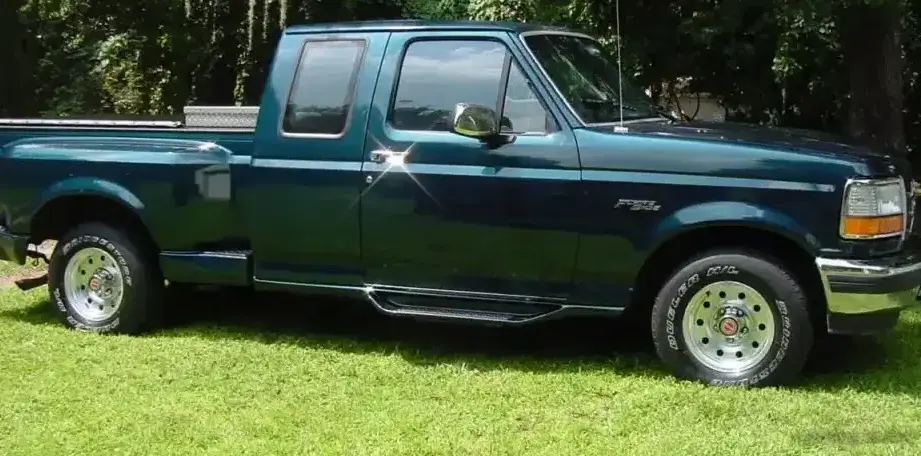
The Ford F-Series F-150 IX SuperCab, equipped with the 4.9-liter inline-six engine producing 145 horsepower and paired with a four-speed automatic transmission and four-wheel drive, represents a significant configuration within the eighth generation of Ford’s best-selling pickup truck. Produced from 1991 to 1993, this variant occupied a crucial position in the lineup, offering a balance between affordability, capability, and comfort for buyers seeking a versatile work and family vehicle. It was part of the broader F-Series redesign that introduced more aerodynamic styling and improved interior space compared to previous generations.
Technical Specifications
| Brand | Ford |
| Model | F-Series F-100/F-150 |
| Generation | F-Series F-150 IX SuperCab |
| Type (Engine) | 4.9 (145 Hp) 4×4 Automatic |
| Start of production | August, 1991 |
| End of production | 1993 |
| Powertrain Architecture | Internal Combustion engine |
| Body type | Pick-up |
| Seats | 5-6 |
| Doors | 2 |
| Fuel Type | Petrol (Gasoline) |
| Power | 145 Hp @ 3400 rpm |
| Power per litre | 29.6 Hp/l |
| Torque | 360 Nm @ 2000 rpm / 265.52 lb.-ft. @ 2000 rpm |
| Engine layout | Front, Longitudinal |
| Engine displacement | 4900 cm3 / 299.02 cu. in. |
| Number of cylinders | 6 |
| Engine configuration | Inline |
| Cylinder Bore | 101.6 mm / 4 in. |
| Piston Stroke | 101 mm / 3.98 in. |
| Number of valves per cylinder | 2 |
| Fuel injection system | Multi-port manifold injection |
| Engine aspiration | Naturally aspirated engine |
| Engine oil capacity | 4.7 l / 4.97 US qt | 4.14 UK qt |
| Max. weight | 2835 kg / 6250.11 lbs |
| Fuel tank capacity | 131-141 l / 34.61 – 37.25 US gal | 28.82 – 31.02 UK gal |
| Length | 5565-5977 mm / 219.09 – 235.31 in. |
| Width | 2007 mm / 79.02 in. |
| Height | 1877 mm / 73.9 in. |
| Wheelbase | 3531-3937 mm / 139.02 – 155 in. |
| Wading depth | 848 mm / 33.39 in. |
| Drivetrain Architecture | The Internal combustion engine (ICE) drives the rear wheels permanently, and the front wheels are driven through an electrically or mechanically operated clutch if necessary. |
| Drive wheel | All wheel drive (4×4) |
| Number of gears and type of gearbox | 4 gears, automatic transmission |
| Front suspension | Independent coil spring |
| Rear suspension | Leaf spring |
| Front brakes | Disc |
| Rear brakes | Drum |
| Power steering | Electric Steering |
| Tires size | 235/75 R15 |
| Wheel rims size | 15 |
Powertrain & Engine Architecture
The heart of this F-150 variant is the 4.9-liter (299 cubic inch) inline-six engine, often referred to as the “300 six” due to its historical predecessor. While technically a 4.9L, the engine’s lineage and robust design earned it the nickname. This engine, designated with various codes depending on specific calibration (though commonly found without a specific code in this era), is a naturally aspirated, cast-iron block and head engine known for its durability and low-end torque. It utilizes a multi-port fuel injection system, a significant upgrade from the carbureted engines of earlier F-Series trucks, improving fuel efficiency and driveability. The engine features a two-valve per cylinder configuration and a relatively simple valvetrain, contributing to its reliability. The four-speed automatic transmission (typically the AOD or AOD-E) was chosen for its ease of use and suitability for both on-road and light off-road applications. This transmission featured a torque converter for smooth power delivery and a relatively conservative gear ratio spread, prioritizing fuel economy and towing capability over outright acceleration.
Driving Characteristics
The 145-horsepower, 4.9-liter engine and four-speed automatic combination delivered a practical, if not exhilarating, driving experience. Acceleration was modest, particularly when heavily loaded or tackling steep inclines. The automatic transmission’s gear ratios were geared towards maximizing fuel economy and providing sufficient torque for hauling and towing. Compared to the available 5.0-liter V8 or the later 5.8-liter V8 options, this configuration offered significantly less horsepower and quicker acceleration. However, it provided a smoother, more relaxed driving experience, especially in city traffic. The 4×4 system, typically engaged via a manual transfer case, provided enhanced traction in slippery conditions, making it suitable for light to moderate off-road use. The overall driving experience was characterized by its dependability and ease of operation, rather than sporty performance.
Equipment & Trim Levels
The F-150 IX SuperCab 4.9L 4×4 Automatic typically fell into the mid-range of available trim levels. Standard equipment generally included a basic AM/FM radio, cloth upholstery, and manual windows and locks. The SuperCab configuration offered extended rear seating, providing more passenger space than the standard cab. Popular optional extras included air conditioning, a cruise control, upgraded sound systems, and power windows and locks. The interior trim was generally utilitarian, focusing on durability and functionality rather than luxury. The exterior featured basic chrome trim and steel wheels, with optional alloy wheels and upgraded paint colors available.
Chassis & Braking
The F-150 IX SuperCab utilized a body-on-frame construction, providing a robust and durable platform. The front suspension consisted of independent coil springs, offering a relatively comfortable ride. The rear suspension employed leaf springs, designed to handle heavier loads. The braking system featured disc brakes on the front wheels and drum brakes on the rear, providing adequate stopping power for the vehicle’s weight class. Power steering was standard, making maneuvering easier, especially at low speeds. The tires, typically 235/75R15, were chosen for their balance of on-road comfort and off-road traction.
Market Reception & Comparison
The F-150 IX SuperCab 4.9L 4×4 Automatic was well-received by buyers seeking a versatile and affordable pickup truck. Critics praised its durability, reliability, and practicality. However, the engine’s relatively low horsepower was often noted as a drawback, particularly when compared to the V8 options. Fuel economy was considered average for the time, but the 4.9-liter engine generally offered better fuel efficiency than the larger V8s. In terms of reliability, the 4.9-liter engine was known for its longevity, with many examples exceeding 200,000 miles with proper maintenance. Compared to the 5.0L V8, the 4.9L offered lower initial cost and potentially better long-term reliability, but at the expense of performance. The 5.0L was favored by those needing more power for towing or hauling heavy loads.
Legacy
The Ford F-150 IX SuperCab 4.9L 4×4 Automatic has become a popular choice among classic truck enthusiasts and those seeking a dependable and affordable work truck. The 4.9-liter engine’s reputation for durability has ensured a steady demand for well-maintained examples. While not as sought after as the higher-performance V8 models, this configuration offers a unique blend of practicality, affordability, and reliability. Parts availability remains good, making maintenance and repairs relatively straightforward. Today, these trucks are often found in use as daily drivers, work vehicles, or restoration projects, representing a significant chapter in Ford’s long history of building tough and dependable pickup trucks.