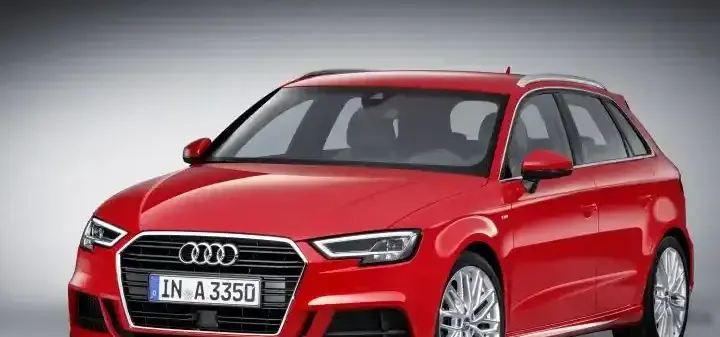
The Audi A3 Sportback (8V, facelift) 30 TDI, produced from 2018 to 2020, represents a significant iteration within the third-generation (8V) A3 family. This variant, characterized by its 1.6-liter turbocharged diesel engine producing 116 horsepower, occupied a key position in Audi’s European lineup as an efficient and practical entry point into the premium compact hatchback segment. The facelifted 8V A3, introduced in 2016, brought revised styling, updated technology, and refined engine options, solidifying the A3’s appeal to a broad customer base. This specific 30 TDI model was designed to balance fuel economy with acceptable performance for daily commuting and longer journeys.
Technical Specifications
| Brand | Audi |
| Model | A3 |
| Generation | A3 Sportback (8V, facelift 2016) |
| Type (Engine) | 30 TDI (116 Hp) |
| Start of production | 2018 |
| End of production | 2020 |
| Powertrain Architecture | Internal Combustion engine |
| Body type | Hatchback |
| Seats | 5 |
| Doors | 5 |
| Fuel consumption (urban) | 5.0-5.2 l/100 km (47 – 45.2 US mpg, 56.5 – 54.3 UK mpg, 20 – 19.2 km/l) |
| Fuel consumption (extra urban) | 4.0-4.1 l/100 km (58.8 – 57.4 US mpg, 70.6 – 68.9 UK mpg, 25 – 24.4 km/l) |
| Fuel consumption (combined) | 4.4-4.5 l/100 km (53.5 – 52.3 US mpg, 64.2 – 62.8 UK mpg, 22.7 – 22.2 km/l) |
| CO2 emissions | 114-118 g/km |
| Fuel Type | Diesel |
| Acceleration 0 – 100 km/h | 10.4 sec |
| Acceleration 0 – 62 mph | 10.4 sec |
| Acceleration 0 – 60 mph | 9.9 sec |
| Maximum speed | 205 km/h (127.38 mph) |
| Emission standard | Euro 6d – TEMP |
| Weight-to-power ratio | 11.1 kg/Hp, 89.9 Hp/tonne |
| Weight-to-torque ratio | 5.2 kg/Nm, 193.8 Nm/tonne |
| Power | 116 Hp @ 3250-4000 rpm |
| Torque | 250 Nm @ 1750-3200 rpm (184.39 lb.-ft. @ 1750-3200 rpm) |
| Engine layout | Front, Transverse |
| Engine Model/Code | DGTE |
| Engine displacement | 1598 cm3 (97.52 cu. in.) |
| Number of cylinders | 4 |
| Engine configuration | Inline |
| Cylinder Bore | 79.5 mm (3.13 in.) |
| Piston Stroke | 80.5 mm (3.17 in.) |
| Compression ratio | 16.2:1 |
| Number of valves per cylinder | 4 |
| Fuel injection system | Diesel Commonrail |
| Engine aspiration | Turbocharger, Intercooler |
| Engine oil capacity | 4.7 l (4.97 US qt | 4.14 UK qt) |
| Coolant | 12 l (12.68 US qt | 10.56 UK qt) |
| Kerb Weight | 1290 kg (2843.96 lbs.) |
| Max. weight | 1875 kg (4133.67 lbs.) |
| Max load | 585 kg (1289.7 lbs.) |
| Trunk (boot) space – minimum | 380 l (13.42 cu. ft.) |
| Trunk (boot) space – maximum | 1220 l (43.08 cu. ft.) |
| Fuel tank capacity | 50 l (13.21 US gal | 11 UK gal) |
| AdBlue tank | 13 l (3.43 US gal | 2.86 UK gal) |
| Max. roof load | 75 kg (165.35 lbs.) |
| Permitted trailer load with brakes (8%) | 1700 kg (3747.86 lbs.) |
| Permitted trailer load with brakes (12%) | 1500 kg (3306.93 lbs.) |
| Permitted trailer load without brakes | 680 kg (1499.14 lbs.) |
| Permitted towbar download | 75 kg (165.35 lbs.) |
| Length | 4313 mm (169.8 in.) |
| Width | 1785 mm (70.28 in.) |
| Width including mirrors | 1966 mm (77.4 in.) |
| Height | 1461 mm (57.52 in.) |
| Wheelbase | 2637 mm (103.82 in.) |
| Front track | 1543 mm (60.75 in.) |
| Rear (Back) track | 1514 mm (59.61 in.) |
| Drag coefficient (Cd) | 0.32 |
| Minimum turning circle (turning diameter) | 10.9 m (35.76 ft.) |
| Drivetrain Architecture | The Internal combustion engine (ICE) drives the front wheels of the vehicle. |
| Drive wheel | Front wheel drive |
| Number of gears and type of gearbox | 6 gears, manual transmission |
| Front suspension | Independent type McPherson |
| Front brakes | Ventilated discs |
| Rear brakes | Disc |
| Assisting systems | ABS (Anti-lock braking system) |
| Steering type | Steering rack and pinion |
| Power steering | Electric Steering |
| Tires size | 205/55 R16; 225/45 R17; 225/40 R18 |
| Wheel rims size | 6.5J x 16 |
Powertrain & Engine Architecture
The heart of the A3 30 TDI is the DGTE engine, a 1.6-liter inline-four cylinder diesel. This engine is part of Volkswagen Group’s modular engine family, known for its compact dimensions and efficiency. It utilizes a turbocharger with an intercooler to boost power output, delivering 116 horsepower and 250 Nm (184 lb-ft) of torque. The engine employs a common rail direct injection system, injecting fuel directly into the combustion chamber at extremely high pressure for optimized combustion. The valvetrain features four valves per cylinder, enhancing breathing and contributing to improved performance. The 30 TDI was exclusively offered with a 6-speed manual transmission, prioritizing fuel efficiency over outright performance. This transmission was chosen to complement the engine’s torque characteristics and provide a smooth driving experience.
Driving Characteristics
The A3 30 TDI with the manual transmission offers a balanced driving experience. While not particularly sporty, it provides adequate acceleration for everyday driving, achieving 0-60 mph in approximately 9.9 seconds. The engine’s peak torque is available from a relatively low 1750 rpm, providing good responsiveness in urban environments and making overtaking at highway speeds manageable. The 6-speed gearbox is well-matched to the engine, offering precise shifts and contributing to the car’s overall refinement. Compared to higher-output A3 variants like the 2.0 TDI, the 30 TDI feels less eager to rev, but its fuel economy advantage is significant. The manual transmission provides a more engaging driving experience than the optional S tronic dual-clutch transmission available on other A3 models.
Equipment & Trim Levels
The 30 TDI typically came equipped with a respectable level of standard features. This included air conditioning, a multi-function steering wheel, Audi’s MMI infotainment system with a 5.8-inch display, Bluetooth connectivity, and alloy wheels. Higher trim levels, such as Sport and S line, added features like sport seats, upgraded interior trim, larger alloy wheels, and a lowered suspension. Optional extras included a panoramic sunroof, navigation system, parking sensors, and advanced driver-assistance systems like adaptive cruise control. Interior upholstery was typically cloth, with leather options available on higher trims.
Chassis & Braking
The A3 Sportback 8V utilizes a McPherson strut front suspension and a multi-link rear suspension, providing a comfortable and controlled ride. The 30 TDI variant, being one of the lighter A3 models, benefits from a nimble feel. Front brakes are ventilated discs, while rear brakes are solid discs. ABS (Anti-lock Braking System) is standard, ensuring safe and effective braking performance. Stabilizer bars are fitted to both the front and rear axles to reduce body roll during cornering.
Market Reception & Comparison
The A3 30 TDI was well-received in the European market as a practical and economical premium hatchback. Critics praised its fuel efficiency and comfortable ride, but some noted its relatively modest performance compared to more powerful A3 variants. Compared to the 2.0 TDI models, the 30 TDI offered significantly better fuel economy, making it an attractive option for drivers prioritizing running costs. However, the 2.0 TDI provided a more engaging driving experience and quicker acceleration. The 30 TDI also competed with other premium hatchbacks like the BMW 1 Series and Mercedes-Benz A-Class, offering a compelling combination of style, comfort, and efficiency.
Legacy
The 1.6-liter DGTE engine, while not known for being exceptionally durable, has proven to be reasonably reliable with regular maintenance. Common issues include diesel particulate filter (DPF) clogging, particularly on vehicles used primarily for short journeys, and potential issues with the turbocharger. However, these issues are generally manageable with preventative maintenance and proper driving habits. Today, the A3 30 TDI represents a relatively affordable entry point into Audi ownership on the used car market. Its fuel efficiency and practicality continue to make it a popular choice for those seeking a comfortable and economical premium hatchback.