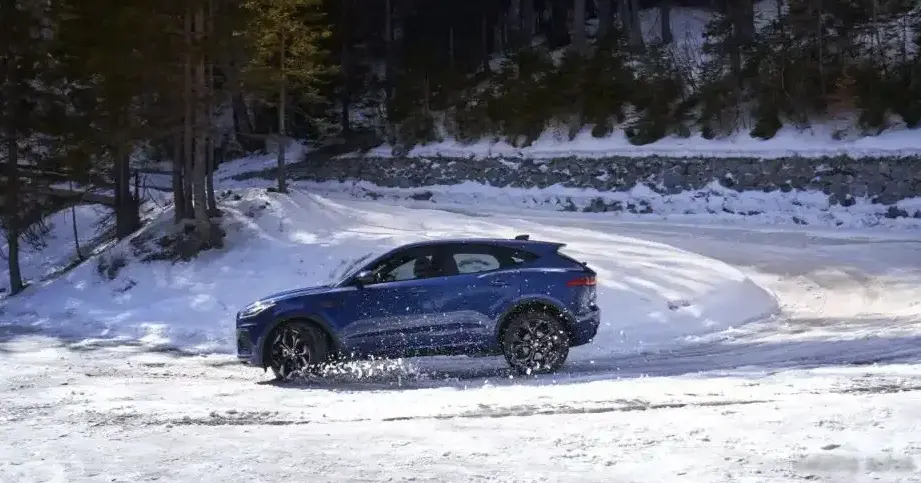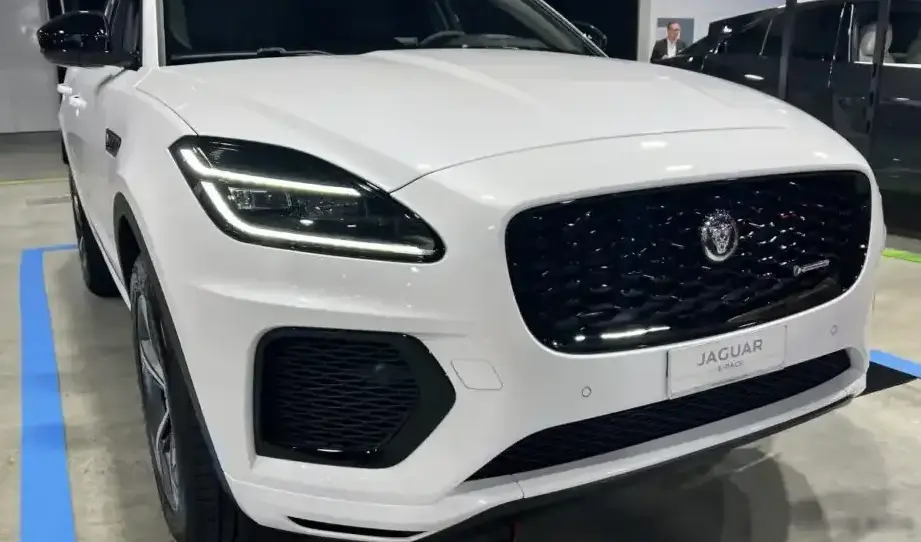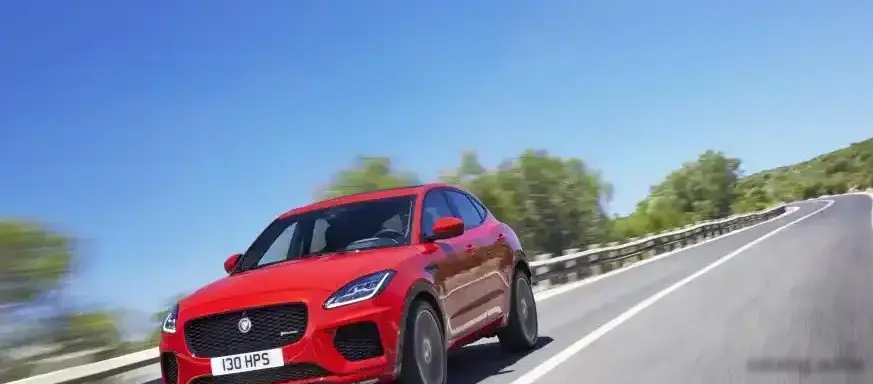
The Jaguar E-Pace 2.0 D180 AWD, produced from 2018 to October 2020, represents a key entry point into the E-Pace model range. Positioned as a compact luxury SUV, it aimed to bring Jaguar’s design language and driving dynamics to a broader audience. This variant, powered by a 2.0-liter four-cylinder diesel engine producing 180 horsepower, coupled with an all-wheel-drive system, was designed to balance fuel efficiency, practicality, and a premium driving experience within the broader E-Pace lineup built on the LR556 platform. It served as a more accessible alternative to the higher-performance petrol variants and offered a different character than the more economy-focused front-wheel-drive models.
Technical Specifications
| Brand | Jaguar |
| Model | E-Pace |
| Generation | E-Pace |
| Type (Engine) | 2.0 D180 (180 Hp) AWD |
| Start of production | 2018 |
| End of production | October, 2020 |
| Powertrain Architecture | Internal Combustion engine |
| Body type | SUV |
| Seats | 5 |
| Doors | 5 |
| Fuel consumption (urban) | 6 l/100 km (39.2 US mpg, 47.1 UK mpg, 16.7 km/l) |
| Fuel consumption (extra urban) | 4.8 l/100 km (49 US mpg, 58.9 UK mpg, 20.8 km/l) |
| Fuel consumption (combined) | 5.2 l/100 km (45.2 US mpg, 54.3 UK mpg, 19.2 km/l) |
| CO2 emissions | 137 g/km |
| Fuel Type | Diesel |
| Acceleration 0 – 100 km/h | 9.9 sec |
| Acceleration 0 – 62 mph | 9.9 sec |
| Acceleration 0 – 60 mph | 9.4 sec |
| Maximum speed | 207 km/h (128.62 mph) |
| Emission standard | Euro 6 |
| Weight-to-power ratio | 10.2 kg/Hp, 98.3 Hp/tonne |
| Weight-to-torque ratio | 4.3 kg/Nm, 234.8 Nm/tonne |
| Power | 180 Hp @ 4000 rpm |
| Power per litre | 90 Hp/l |
| Torque | 430 Nm @ 1750 rpm (317.15 lb.-ft. @ 1750 rpm) |
| Engine layout | Front, Longitudinal |
| Engine Model/Code | Ingenium / 204DTD |
| Engine displacement | 1999 cm3 (121.99 cu. in.) |
| Number of cylinders | 4 |
| Engine configuration | Inline |
| Cylinder Bore | 83 mm (3.27 in.) |
| Piston Stroke | 92.3 mm (3.63 in.) |
| Compression ratio | 15.5:1 |
| Number of valves per cylinder | 4 |
| Fuel injection system | Diesel Commonrail |
| Engine aspiration | Turbocharger, Intercooler |
| Valvetrain | DOHC |
| Engine oil capacity | 6.52 l (6.89 US qt | 5.74 UK qt) |
| Coolant | 11.2 l (11.83 US qt | 9.85 UK qt) |
| Kerb Weight | 1831 kg (4036.66 lbs.) |
| Max. weight | 2400 kg (5291.09 lbs.) |
| Max load | 569 kg (1254.43 lbs.) |
| Trunk (boot) space – minimum | 1234 l (43.58 cu. ft.) |
| Trunk (boot) space – maximum | 2577 l (91.01 cu. ft.) |
| Fuel tank capacity | 55.7 l (14.71 US gal | 12.25 UK gal) |
| AdBlue tank | 16 l (4.23 US gal | 3.52 UK gal) |
| Max. roof load | 75 kg (165.35 lbs.) |
| Permitted trailer load with brakes (12%) | 1800 kg (3968.32 lbs.) |
| Permitted trailer load without brakes | 750 kg (1653.47 lbs.) |
| Permitted towbar download | 100 kg (220.46 lbs.) |
| Length | 4395 mm (173.03 in.) |
| Width | 1984 mm (78.11 in.) |
| Width including mirrors | 2088 mm (82.2 in.) |
| Height | 1649 mm (64.92 in.) |
| Wheelbase | 2681 mm (105.55 in.) |
| Front track | 1625-1635 mm (63.98 – 64.37 in.) |
| Rear (Back) track | 1624-1634 mm (63.94 – 64.33 in.) |
| Ride height (ground clearance) | 204 mm (8.03 in.) |
| Drag coefficient (Cd) | 0.32 |
| Minimum turning circle (turning diameter) | 11.46 m (37.6 ft.) |
| Approach angle | 22.8° |
| Departure angle | 29.4° |
| Ramp-over (brakeover) angle | 21.1° |
| Climb angle | 45° |
| Wading depth | 500 mm (19.69 in.) |
| Drive wheel | All wheel drive (4×4) |
| Number of gears and type of gearbox | 6 gears, manual transmission |
| Front suspension | Independent, type McPherson with coil spring and anti-roll bar |
| Rear suspension | Independent multi-link spring suspension with stabilizer |
| Front brakes | Ventilated discs |
| Rear brakes | Disc |
Powertrain & Engine Architecture
The heart of the E-Pace D180 is Jaguar Land Rover’s Ingenium engine family, specifically the 204DTD 2.0-liter inline-four diesel. This engine utilizes a cast aluminum block and cylinder head, designed for both efficiency and reduced weight. The engine employs a sophisticated common-rail direct injection system, delivering fuel at pressures up to 2,500 bar for optimized combustion. A single turbocharger with an intercooler provides forced induction, contributing to the engine’s 430 Nm (317 lb-ft) of torque, readily available from 1750 rpm. The DOHC valvetrain, with four valves per cylinder, further enhances breathing and performance. The 6-speed manual transmission was standard on this model, offering a direct connection to the engine and allowing for driver control. The all-wheel-drive system is a full-time setup, utilizing a multi-plate clutch to distribute torque between the front and rear axles, enhancing traction and stability.
Driving Characteristics
The E-Pace D180 AWD delivers a composed and comfortable driving experience. While not overtly sporty, the 180 horsepower and 430 Nm of torque provide adequate performance for everyday driving and highway cruising. Acceleration from 0-60 mph takes approximately 9.4 seconds. The manual transmission, while engaging, has a slightly longer throw compared to some competitors. The all-wheel-drive system provides confident handling in various weather conditions. Compared to the higher-output petrol versions, the D180 feels less urgent in its acceleration, but offers significantly better fuel economy. Against the more economical front-wheel-drive diesel variants, the D180 AWD provides superior grip and stability, making it a more rewarding driving experience.
Equipment & Trim Levels
The E-Pace D180 AWD typically came equipped with a generous level of standard features. These included leather upholstery, dual-zone climate control, an 8-inch touchscreen infotainment system with navigation, and a suite of safety features such as autonomous emergency braking and lane departure warning. Optional extras included a panoramic sunroof, premium sound system, adaptive cruise control, and various cosmetic enhancements. Trim levels varied depending on the market, but generally offered progressive upgrades in terms of interior materials, exterior styling, and technology features.
Chassis & Braking
The E-Pace utilizes a MacPherson strut front suspension and a multi-link rear suspension, tuned to provide a balance between comfort and handling. The chassis is relatively lightweight, contributing to the vehicle’s agility. The braking system consists of ventilated discs at the front and solid discs at the rear, providing adequate stopping power. The steering is electrically assisted, offering a precise and responsive feel. Stabilizer bars are fitted to both the front and rear axles to minimize body roll during cornering.
Market Reception & Comparison
The Jaguar E-Pace D180 AWD was generally well-received by automotive critics. It was praised for its stylish design, comfortable interior, and engaging driving dynamics. However, some reviewers noted that the rear seat space was somewhat limited and that the infotainment system could be slow to respond at times. Compared to rivals such as the Audi Q3 and BMW X1, the E-Pace offered a more distinctive design and a more luxurious feel. Fuel economy was competitive, averaging around 45.2 US mpg in combined driving. Reliability reports have been generally positive, although some owners have reported minor issues with the infotainment system.
Legacy
The E-Pace D180 AWD has proven to be a relatively reliable and durable vehicle. The Ingenium engine has a good reputation for longevity, and the all-wheel-drive system is robust. On the used car market, these models represent a good value proposition, offering a premium driving experience at a more affordable price point. The combination of fuel efficiency, practicality, and Jaguar’s brand appeal continues to make the E-Pace D180 a desirable choice for buyers seeking a compact luxury SUV.