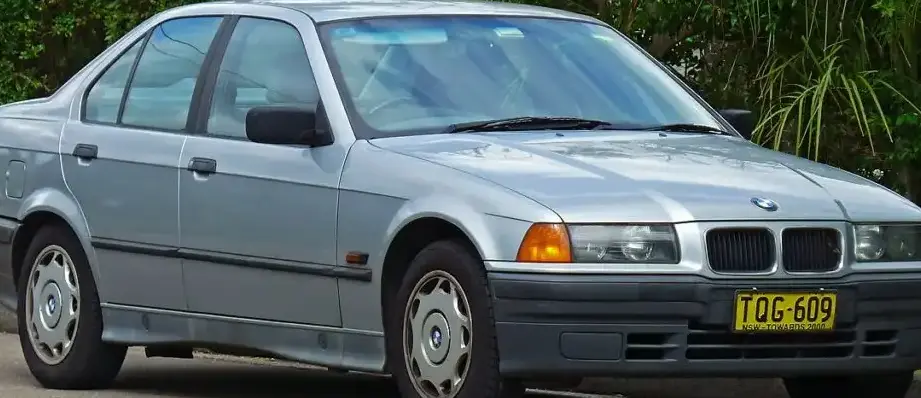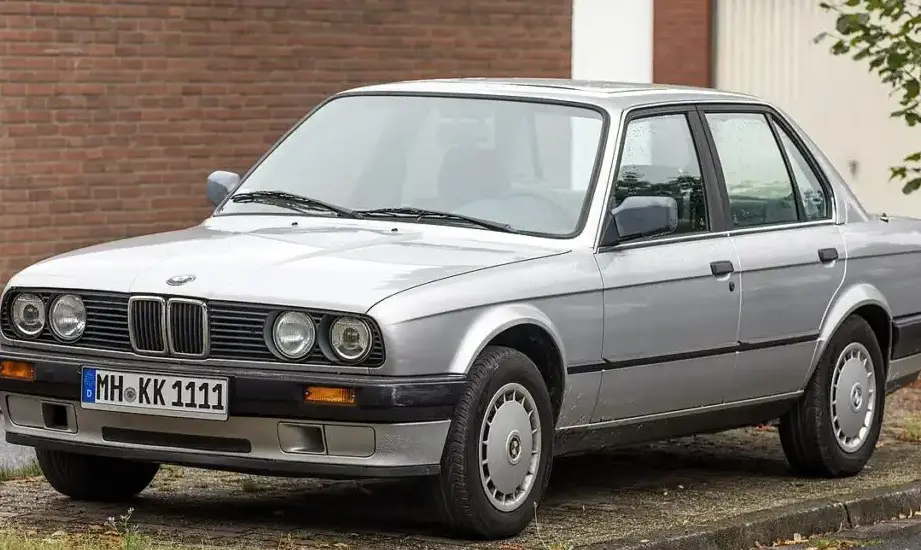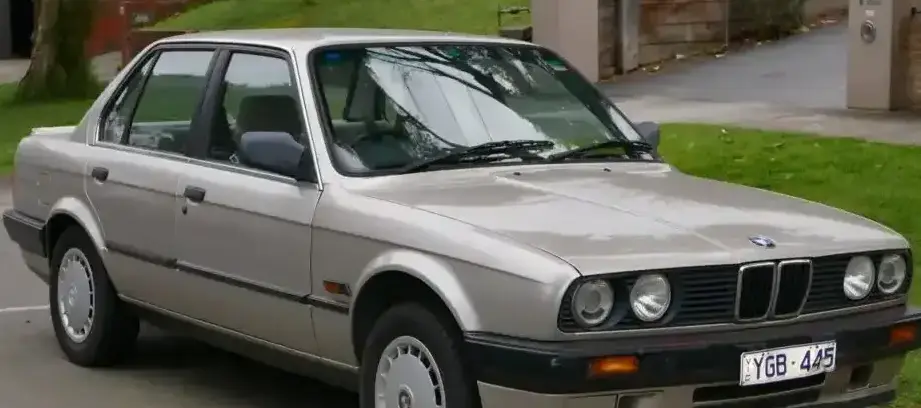
The BMW 3 Series Sedan (E30), particularly the 320i model produced from 1987 to 1991 following the facelift, represents a pivotal point in the evolution of the compact executive car. Positioned as a mid-range offering within the E30 lineup, the 320i bridged the gap between the more economical base models and the performance-focused 325i. This generation of the 3 Series cemented BMW’s reputation for building driver-focused vehicles, blending practicality with a sporting character. The facelift introduced in 1987 brought subtle but significant styling updates, including integrated bumpers and revised interior trim, enhancing the car’s modern appeal.
Technical Specifications
| Brand | BMW |
| Model | 3 Series |
| Generation | 3 Series Sedan (E30, facelift 1987) |
| Type (Engine) | 320i (129 Hp) |
| Start of production | 1987 |
| End of production | 1991 |
| Powertrain Architecture | Internal Combustion engine |
| Body type | Sedan |
| Seats | 5 |
| Doors | 4 |
| Fuel consumption (economy) – urban | 13 l/100 km (18.1 US mpg, 21.7 UK mpg, 7.7 km/l) |
| Fuel consumption (economy) – extra urban | 7.5 l/100 km (31.4 US mpg, 37.7 UK mpg, 13.3 km/l) |
| Fuel consumption (economy) – combined | 9.5 l/100 km (24.8 US mpg, 29.7 UK mpg, 10.5 km/l) |
| Fuel Type | Petrol (Gasoline) |
| Acceleration 0 – 100 km/h | 10.6 sec |
| Acceleration 0 – 62 mph | 10.6 sec |
| Acceleration 0 – 60 mph | 10.1 sec |
| Maximum speed | 197 km/h (122.41 mph) |
| Weight-to-power ratio | 9 kg/Hp, 111.2 Hp/tonne |
| Weight-to-torque ratio | 7.1 kg/Nm, 141.4 Nm/tonne |
| Power | 129 Hp @ 6000 rpm |
| Power per litre | 64.8 Hp/l |
| Torque | 164 Nm @ 4300 rpm (120.96 lb.-ft. @ 4300 rpm) |
| Engine layout | Front, Longitudinal |
| Engine Model/Code | M20B20 |
| Engine displacement | 1991 cm3 (121.5 cu. in.) |
| Number of cylinders | 6 |
| Engine configuration | Inline |
| Cylinder Bore | 80 mm (3.15 in.) |
| Piston Stroke | 66 mm (2.6 in.) |
| Compression ratio | 8.8:1 |
| Number of valves per cylinder | 2 |
| Fuel injection system | Multi-port manifold injection |
| Engine aspiration | Naturally aspirated engine |
| Engine oil capacity | 4.25 l (4.49 US qt | 3.74 UK qt) |
| Coolant | 10.5 l (11.1 US qt | 9.24 UK qt) |
| Kerb Weight | 1160 kg (2557.36 lbs.) |
| Max. weight | 1620 kg (3571.49 lbs.) |
| Max load | 460 kg (1014.13 lbs.) |
| Trunk (boot) space – minimum | 425 l (15.01 cu. ft.) |
| Fuel tank capacity | 55 l (14.53 US gal | 12.1 UK gal) |
| Length | 4325 mm (170.28 in.) |
| Width | 1645 mm (64.76 in.) |
| Height | 1380 mm (54.33 in.) |
| Wheelbase | 2570 mm (101.18 in.) |
| Front track | 1405 mm (55.31 in.) |
| Rear (Back) track | 1415 mm (55.71 in.) |
| Drivetrain Architecture | The Internal combustion engine (ICE) drives the rear wheels of the vehicle. |
| Drive wheel | Rear wheel drive |
| Number of gears and type of gearbox | 5 gears, manual transmission |
| Front suspension | Coil spring |
| Rear suspension | Coil spring |
| Front brakes | Disc |
| Rear brakes | Drum |
| Assisting systems | ABS (Anti-lock braking system) |
| Steering type | Steering rack and pinion |
| Power steering | Hydraulic Steering |
| Tires size | 195/65 R14 |
| Wheel rims size | 14 |
Powertrain & Engine Architecture
The heart of the 1987-1991 BMW 320i facelift was the M20B20 engine, a 2.0-liter inline-six cylinder powerplant. This engine, a descendant of BMW’s long-standing six-cylinder tradition, featured a cast iron block and an aluminum cylinder head. It utilized Bosch Motronic fuel injection, a sophisticated system for its time, delivering precise fuel metering for improved efficiency and performance. The M20B20 employed a single overhead camshaft (SOHC) design with two valves per cylinder. This configuration, while simpler than dual overhead cam designs, proved remarkably durable and offered a good balance of power and torque. The engine’s 8.8:1 compression ratio was a compromise between performance and the ability to run on the available fuel grades of the era. The 320i was exclusively offered with a 5-speed manual transmission, providing drivers with full control over the engine’s power delivery. The transmission was known for its precise shift quality and robust construction.
Driving Characteristics
The 320i, with its 129 horsepower and 121 lb-ft of torque, offered a distinctly different driving experience compared to its more powerful 325i sibling. While not a performance leader, the 320i provided a smooth and refined driving experience, particularly well-suited for everyday commuting and longer journeys. Acceleration from 0-60 mph took around 10.1 seconds, respectable for the late 1980s. The 5-speed manual transmission allowed drivers to keep the engine in its sweet spot, maximizing its available power. The gear ratios were well-chosen, providing good acceleration in lower gears and comfortable cruising at highway speeds. Compared to the 325i, the 320i felt less urgent in its acceleration, but its lighter weight and balanced chassis contributed to nimble handling. The rear-wheel-drive layout provided a classic BMW driving feel, with predictable and engaging dynamics.
Equipment & Trim Levels
The 320i typically came standard with features considered essential for a premium compact sedan of its time. These included power windows, central locking, and a basic stereo system. Interior upholstery was typically cloth, although leather was available as an option. Dashboard design was functional and driver-focused, with clearly marked gauges and intuitive controls. Optional extras included a sunroof, air conditioning, and upgraded sound systems. The 320i’s trim level was generally considered a step above the base 318i, offering a more refined interior and a slightly more comprehensive list of standard features. However, it lacked some of the luxury appointments found in the top-of-the-line 325i.
Chassis & Braking
The E30 320i utilized a MacPherson strut front suspension and a semi-trailing arm rear suspension. This setup provided a good balance of ride comfort and handling precision. The chassis was relatively lightweight, contributing to the car’s nimble feel. Braking duties were handled by disc brakes at the front and drum brakes at the rear. While adequate for most driving situations, the rear drum brakes were a point of criticism compared to the all-disc brake setup found on the 325i. Anti-lock braking system (ABS) was available as an option, enhancing braking performance and safety. The steering was a rack-and-pinion system with hydraulic power assistance, providing precise and responsive steering feel.
Market Reception & Comparison
The 320i was generally well-received by automotive critics, who praised its balanced handling, comfortable ride, and refined engine. It was seen as a sensible and practical choice for buyers who wanted a premium compact sedan without the higher price tag of the 325i. Fuel economy was considered good for its class, with combined fuel consumption around 24.8 US mpg. Compared to the 325i, the 320i offered a lower purchase price and slightly better fuel economy, but at the expense of outright performance. The 318i, the base model, was even more affordable but offered less power and refinement. The 320i struck a good balance between these two extremes, appealing to a broad range of buyers.
Legacy
The E30 320i has earned a reputation for long-term reliability, particularly the M20B20 engine. With proper maintenance, these engines can reliably exceed 200,000 miles. Today, the E30 320i is a popular choice among classic car enthusiasts, prized for its timeless design, engaging driving dynamics, and relative affordability. Parts availability is generally good, although some specific components can be difficult to find. The 320i represents a high point in BMW’s engineering history, embodying the brand’s commitment to building driver-focused vehicles that are both enjoyable to drive and reliable to own. Well-maintained examples continue to command respectable prices in the used car market, reflecting their enduring appeal.