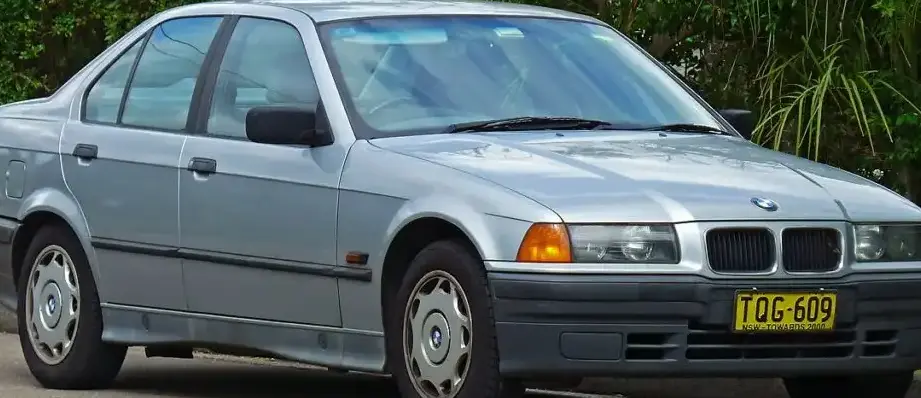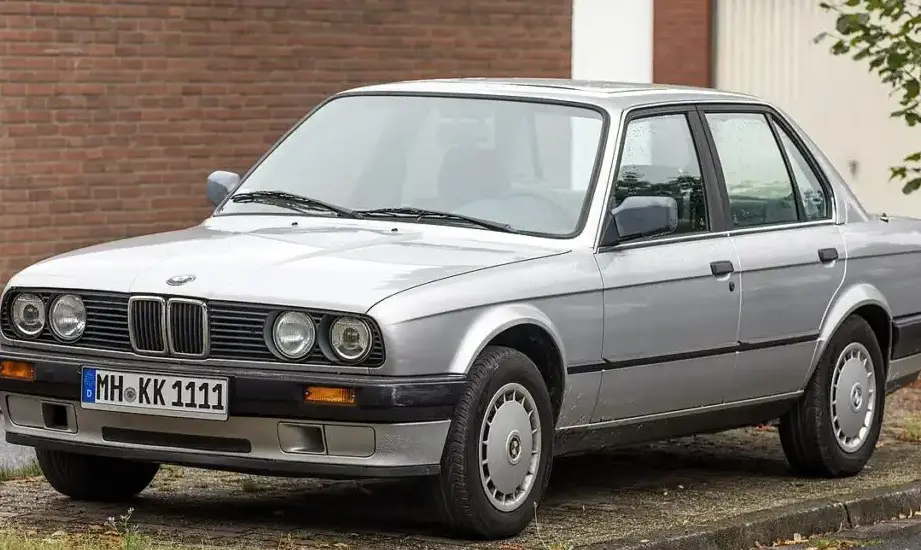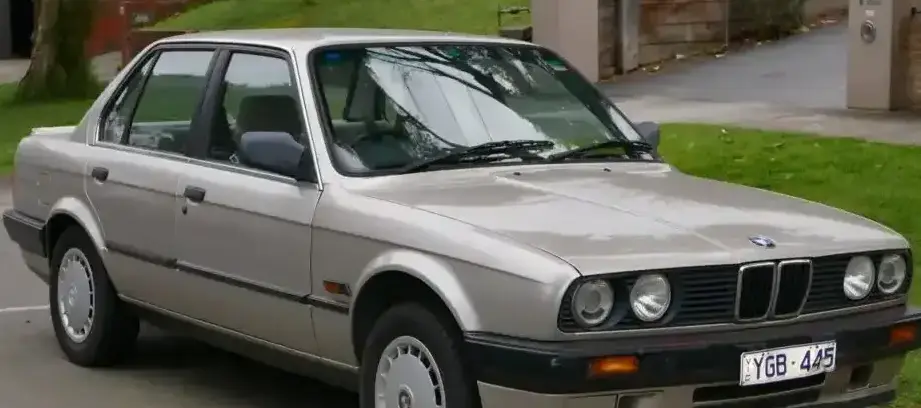
The BMW 3 Series Sedan (E30) 320i Automatic, produced from 1987 to 1991, represents a significant iteration of BMW’s iconic compact executive car. This variant, part of the E30 facelift series, offered a blend of performance and convenience aimed at buyers seeking a comfortable and refined driving experience. Positioned as a mid-range offering within the 3 Series lineup, it slotted between the base 318i and the more potent 325i models. The 320i Automatic was particularly popular in markets where ease of driving and automatic transmissions were highly valued, including the United States and parts of Europe.
Technical Specifications
| Brand | BMW |
| Model | 3 Series |
| Generation | 3 Series Sedan (E30, facelift 1987) |
| Type (Engine) | 320i (129 Hp) Automatic |
| Start of production | 1987 |
| End of production | 1991 |
| Powertrain Architecture | Internal Combustion engine |
| Body type | Sedan |
| Seats | 5 |
| Doors | 4 |
| Fuel consumption (economy) – urban | 13.4 l/100 km (17.6 US mpg, 21.1 UK mpg, 7.5 km/l) |
| Fuel consumption (economy) – extra urban | 7.7 l/100 km (30.5 US mpg, 36.7 UK mpg, 13 km/l) |
| Fuel consumption (economy) – combined | 9.7 l/100 km (24.2 US mpg, 29.1 UK mpg, 10.3 km/l) |
| Fuel Type | Petrol (Gasoline) |
| Acceleration 0 – 100 km/h | 12.3 sec |
| Acceleration 0 – 62 mph | 12.3 sec |
| Acceleration 0 – 60 mph | 11.7 sec |
| Maximum speed | 195 km/h (121.17 mph) |
| Weight-to-power ratio | 9 kg/Hp, 111.2 Hp/tonne |
| Weight-to-torque ratio | 7.1 kg/Nm, 141.4 Nm/tonne |
| Power | 129 Hp @ 6000 rpm |
| Power per litre | 64.8 Hp/l |
| Torque | 164 Nm @ 4300 rpm (120.96 lb.-ft. @ 4300 rpm) |
| Engine layout | Front, Longitudinal |
| Engine Model/Code | M20B20 |
| Engine displacement | 1991 cm3 (121.5 cu. in.) |
| Number of cylinders | 6 |
| Engine configuration | Inline |
| Cylinder Bore | 80 mm (3.15 in.) |
| Piston Stroke | 66 mm (2.6 in.) |
| Compression ratio | 8.8:1 |
| Number of valves per cylinder | 2 |
| Fuel injection system | Multi-port manifold injection |
| Engine aspiration | Naturally aspirated engine |
| Engine oil capacity | 4.25 l (4.49 US qt | 3.74 UK qt) |
| Coolant | 10.5 l (11.1 US qt | 9.24 UK qt) |
| Kerb Weight | 1160 kg (2557.36 lbs.) |
| Max. weight | 1620 kg (3571.49 lbs.) |
| Max load | 460 kg (1014.13 lbs.) |
| Trunk (boot) space – minimum | 425 l (15.01 cu. ft.) |
| Fuel tank capacity | 55 l (14.53 US gal | 12.1 UK gal) |
| Length | 4325 mm (170.28 in.) |
| Width | 1645 mm (64.76 in.) |
| Height | 1380 mm (54.33 in.) |
| Wheelbase | 2570 mm (101.18 in.) |
| Front track | 1405 mm (55.31 in.) |
| Rear (Back) track | 1415 mm (55.71 in.) |
| Drivetrain Architecture | The Internal combustion engine (ICE) drives the rear wheels of the vehicle. |
| Drive wheel | Rear wheel drive |
| Number of gears and type of gearbox | 4 gears, automatic transmission |
| Front suspension | Coil spring |
| Rear suspension | Coil spring |
| Front brakes | Disc |
| Rear brakes | Drum |
| Assisting systems | ABS (Anti-lock braking system) |
| Steering type | Steering rack and pinion |
| Power steering | Hydraulic Steering |
| Tires size | 195/65 HR14 |
| Wheel rims size | 14 |
Powertrain & Engine Architecture
The heart of the 320i Automatic is the M20B20 engine, a 2.0-liter inline-six cylinder powerplant. This engine, a hallmark of BMW engineering during the era, featured a cast iron block and an aluminum cylinder head. It employed multi-port fuel injection, delivering fuel directly to each intake port for improved efficiency and responsiveness. The M20 engine is known for its smooth power delivery and robust construction. The valvetrain consisted of a single overhead camshaft operating two valves per cylinder. The automatic transmission used was a four-speed unit, designed to provide smooth and effortless gear changes. While not as sporty as the available five-speed manual, it catered to drivers prioritizing comfort and convenience. The transmission’s gear ratios were optimized for everyday driving, emphasizing fuel economy and relaxed cruising.
Driving Characteristics
The 320i Automatic offered a distinctly different driving experience compared to its manual transmission counterpart or the higher-output 325i. Acceleration from 0-60 mph took approximately 11.7 seconds, and top speed was around 121 mph. While not blistering performance, it was adequate for most driving situations. The automatic transmission, while smooth, did result in some power loss compared to the manual. The gear ratios were spaced to prioritize fuel efficiency and comfortable cruising, meaning the engine didn’t rev as freely or feel as eager as in the manual version. However, the automatic provided a more relaxed driving experience, particularly in city traffic. The rear-wheel drive configuration provided balanced handling, typical of BMWs of the period.
Equipment & Trim Levels
The 320i Automatic typically came standard with features such as power windows, central locking, and a basic stereo system. Interior upholstery was usually cloth, although leather was available as an option. Dashboard configuration was relatively simple and functional, with clearly marked gauges and controls. Optional extras included a sunroof, air conditioning, upgraded sound systems, and alloy wheels. The trim level could vary depending on the market, but generally, the 320i Automatic was positioned as a well-equipped, comfortable sedan.
Chassis & Braking
The E30 3 Series featured a robust chassis with independent suspension at all four wheels. The front suspension utilized coil springs and MacPherson struts, while the rear employed a semi-trailing arm setup with coil springs. This configuration provided a good balance of ride comfort and handling precision. Braking consisted of disc brakes at the front and drum brakes at the rear. Anti-lock braking system (ABS) was available as an option, enhancing safety and control during hard braking. The 320i Automatic, due to its weight, often featured slightly thicker stabilizer bars compared to the lighter 318i to mitigate body roll.
Market Reception & Comparison
The 320i Automatic was generally well-received by automotive critics. It was praised for its comfortable ride, refined engine, and ease of use. However, some reviewers noted that the automatic transmission dulled the driving experience compared to the manual. Compared to the 325i, the 320i offered less outright performance but better fuel economy. Against the 318i, the 320i provided a noticeable power upgrade. Reliability was generally good, although maintenance costs could be higher than some competitors due to the BMW’s complex engineering.
Legacy
The E30 320i Automatic has become a sought-after classic car among enthusiasts. The M20 engine is known for its durability and relatively straightforward maintenance. While finding well-maintained examples can be challenging, the 320i Automatic offers a unique blend of classic BMW styling, comfortable driving dynamics, and a relatively affordable entry point into the world of vintage BMWs. Today, these cars are often seen as a testament to BMW’s engineering prowess during the 1980s and early 1990s, and they continue to provide a rewarding driving experience for those who appreciate a classic automobile.