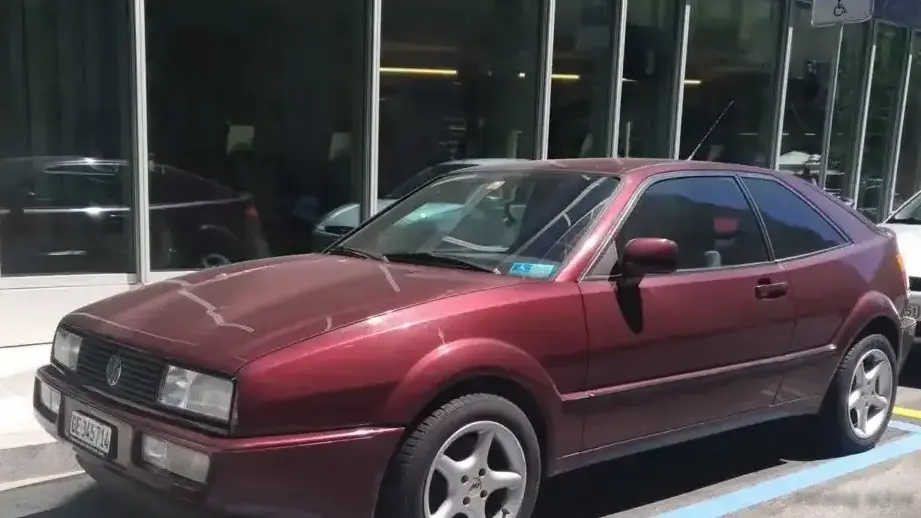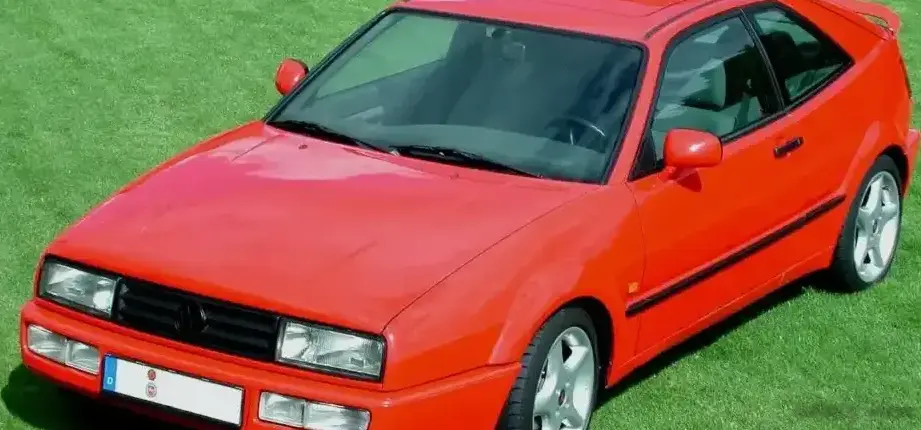
The Volkswagen Corrado 2.0i, produced from 1993 to 1995, represents a mid-range offering within the Corrado lineup, a sporty coupe based on the Volkswagen A2 platform (internally designated 53I, with a facelift introduced in 1991). Positioned between the base 1.8-liter models and the performance-oriented VR6 variants, the 2.0i aimed to provide a balance of performance, fuel efficiency, and affordability for the European and North American markets. The Corrado itself was intended as a successor to the Scirocco, offering a more refined and stylish alternative in the compact coupe segment.
Technical Specifications
| Brand | Volkswagen |
| Model | Corrado |
| Generation | Corrado (53I, facelift 1991) |
| Type (Engine) | 2.0i (115 Hp) |
| Start of production | 1993 |
| End of production | 1995 |
| Powertrain Architecture | Internal Combustion engine |
| Body type | Coupe |
| Seats | 4 |
| Doors | 2 |
| Fuel consumption (urban) | 10.6 l/100 km (22.2 US mpg, 26.6 UK mpg, 9.4 km/l) |
| Fuel consumption (combined) | 7.8 l/100 km (30.2 US mpg, 36.2 UK mpg, 12.8 km/l) |
| Fuel Type | Petrol (Gasoline) |
| Acceleration 0 – 100 km/h | 10.6 sec |
| Acceleration 0 – 62 mph | 10.6 sec |
| Acceleration 0 – 60 mph | 10.1 sec |
| Maximum speed | 200 km/h (124.27 mph) |
| Weight-to-power ratio | 9.9 kg/Hp, 101.3 Hp/tonne |
| Weight-to-torque ratio | 6.6 kg/Nm, 151.5 Nm/tonne |
| Power | 115 Hp @ 5400 rpm |
| Power per litre | 58 Hp/l |
| Torque | 172 Nm @ 3200 rpm (126.86 lb.-ft. @ 3200 rpm) |
| Engine layout | Front, Longitudinal |
| Engine Model/Code | 2E, ADY |
| Engine displacement | 1984 cm3 (121.07 cu. in.) |
| Number of cylinders | 4 |
| Engine configuration | Inline |
| Cylinder Bore | 82.5 mm (3.25 in.) |
| Piston Stroke | 92.8 mm (3.65 in.) |
| Compression ratio | 10.3:1 |
| Number of valves per cylinder | 2 |
| Fuel injection system | Multi-port manifold injection |
| Engine aspiration | Naturally aspirated engine |
| Engine oil capacity | 3.8 l (4.02 US qt | 3.34 UK qt) |
| Coolant capacity | 5.5 l (5.81 US qt | 4.84 UK qt) |
| Kerb Weight | 1135 kg (2502.25 lbs.) |
| Max. weight | 1505 kg (3317.96 lbs.) |
| Max load | 370 kg (815.71 lbs.) |
| Trunk (boot) space – minimum | 283 l (9.99 cu. ft.) |
| Trunk (boot) space – maximum | 821 l (28.99 cu. ft.) |
| Fuel tank capacity | 70 l (18.49 US gal | 15.4 UK gal) |
| Length | 4050 mm (159.45 in.) |
| Width | 1670 mm (65.75 in.) |
| Height | 1320 mm (51.97 in.) |
| Wheelbase | 2470 mm (97.24 in.) |
| Front track | 1435 mm (56.5 in.) |
| Rear track | 1430 mm (56.3 in.) |
| Drivetrain Architecture | The Internal combustion engine (ICE) drives the front wheels of the vehicle. |
| Drive wheel | Front wheel drive |
| Number of gears | 5 |
| Gearbox type | Manual transmission |
| Front suspension | Wishbone |
| Rear suspension | Suspension with traction connecting levers |
| Front brakes | Ventilated discs |
| Rear brakes | Disc |
| Assisting systems | ABS (Anti-lock braking system) |
| Steering type | Steering rack and pinion |
| Power steering | Hydraulic Steering |
| Tires size | 195/50 R15 V |
| Wheel rims size | 6.5J x 15 |
Powertrain & Engine Architecture
The Corrado 2.0i was powered by the Volkswagen 2E or ADY engine, a 1.984-liter inline four-cylinder gasoline engine. This engine featured a cast iron block and an aluminum cylinder head, employing a single overhead camshaft (SOHC) design with two valves per cylinder. Fuel delivery was managed by Bosch Motronic multi-port fuel injection, optimizing fuel efficiency and emissions. The 2E and ADY codes represent minor variations within the same engine family, primarily relating to emissions control equipment and slight adjustments to engine management parameters. The engine’s longitudinal mounting within the front-wheel-drive chassis contributed to a balanced weight distribution. The standard transmission was a five-speed manual, although a four-speed automatic transmission was also available, impacting performance characteristics.
Driving Characteristics
The 2.0i Corrado offered a more relaxed driving experience compared to the higher-performance VR6 model. With 115 horsepower and 127 lb-ft of torque, acceleration from 0 to 60 mph took approximately 10.1 seconds, and it reached a top speed of around 124 mph. The manual transmission provided precise gear changes, while the optional automatic, though convenient, resulted in noticeable power loss and slower acceleration. The gear ratios were tuned for a balance between fuel economy and usable power in everyday driving situations. Handling was generally considered good, thanks to the independent suspension and relatively low weight, but it lacked the sharpness and responsiveness of the VR6.
Equipment & Trim Levels
The 2.0i Corrado typically came equipped with features such as power windows, central locking, and a basic stereo system. Interior upholstery was usually cloth, with options for upgraded materials. Depending on the market and optional packages, features like air conditioning, a sunroof, and alloy wheels could be added. The dashboard layout was functional and driver-focused, with clear instrumentation. The trim level generally sat in the mid-range of the Corrado lineup, offering more features than the base models but falling short of the luxury and performance of the VR6.
Chassis & Braking
The Corrado 2.0i utilized a MacPherson strut front suspension and a torsion beam rear suspension. The front suspension incorporated a stabilizer bar to reduce body roll during cornering. Braking consisted of ventilated disc brakes at the front and solid disc brakes at the rear. ABS (Anti-lock Braking System) was standard, enhancing safety and control during emergency braking. The chassis was designed to provide a comfortable ride while maintaining reasonable handling characteristics. The weight distribution, aided by the longitudinal engine placement, contributed to balanced handling.
Market Reception & Comparison
The Corrado 2.0i was generally well-received by automotive critics as a stylish and practical coupe. It offered a good compromise between performance and fuel economy, making it an attractive option for buyers seeking a sporty but sensible vehicle. Compared to the VR6, the 2.0i was more affordable and easier to insure, but it lacked the VR6’s exhilarating acceleration and distinctive engine note. Against competitors like the Honda Civic Coupe and Toyota Celica, the Corrado offered a more European driving experience and a more sophisticated interior. Fuel economy was respectable for its class, averaging around 30 mpg in combined driving.
Legacy
The Volkswagen Corrado 2.0i has developed a loyal following among enthusiasts. The 2E and ADY engines are known for their reliability and relatively simple maintenance requirements. While not as sought-after as the VR6, the 2.0i offers a more accessible entry point into Corrado ownership. Today, well-maintained examples are becoming increasingly collectible. Common issues include wear and tear on suspension components and potential corrosion, particularly in areas exposed to harsh weather conditions. The availability of aftermarket parts and a strong online community contribute to the continued viability of the Corrado 2.0i as a classic sports coupe.