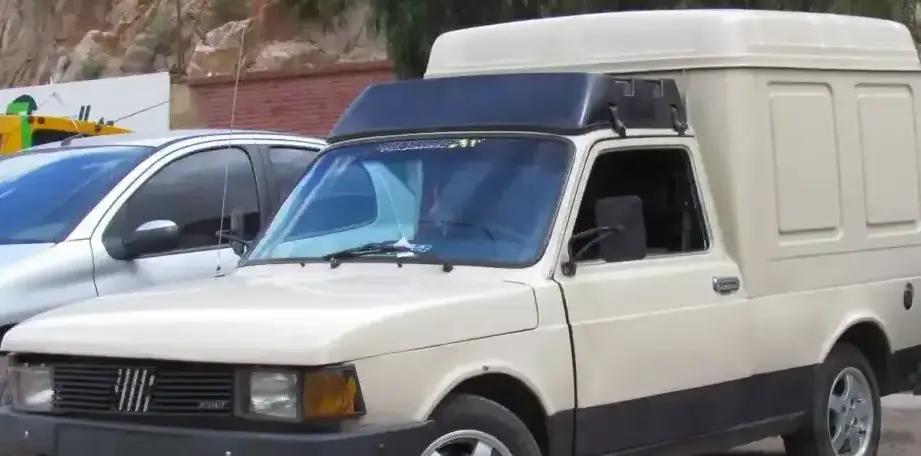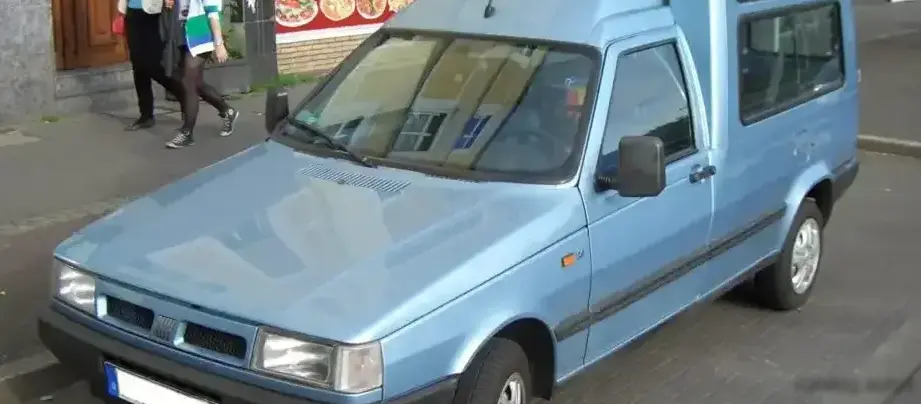
The Fiat Fiorino (147) 1.3 Diesel, producing 45 horsepower, was a utilitarian light commercial vehicle produced between 1982 and 1987. It represented the base-level offering in the Fiorino (147) range, a panel van and pickup derived from the Fiat 127 supermini. Designed primarily for commercial use – small businesses, tradespeople, and delivery services – the 1.3 Diesel variant prioritized fuel efficiency and low running costs over outright performance. It was a key component of Fiat’s strategy to offer affordable and practical transportation solutions in Europe, particularly in markets where small commercial vehicles were highly valued.
Technical Specifications
| Brand | Fiat |
| Model | Fiorino |
| Generation | Fiorino (147) |
| Type (Engine) | 1.3 Diesel (45 Hp) |
| Start of production | 1982 |
| End of production | 1987 |
| Powertrain Architecture | Internal Combustion engine |
| Body type | Minivan / Pickup |
| Fuel Type | Diesel |
| Power | 45 Hp |
| Engine Model/Code | 127 A5.000 |
| Engine aspiration | Naturally aspirated engine |
| Engine oil capacity | 4 l (4.23 US qt | 3.52 UK qt) |
| Coolant capacity | 7 l (7.4 US qt | 6.16 UK qt) |
Powertrain & Engine Architecture
The Fiorino 1.3 Diesel was powered by the Fiat 127 A5.000 engine, a 1301cc inline-four cylinder diesel. This engine was a naturally aspirated, indirect injection diesel, a common configuration for the time. Indirect injection, while less efficient than direct injection, offered quieter operation and reduced emissions – important considerations even in the early 1980s. The engine featured a simple mechanical fuel injection pump, delivering fuel to the pre-chamber where combustion was initiated. The engine utilized a single overhead camshaft operating two valves per cylinder. The 127 A5.000 was known for its robustness and simplicity, prioritizing durability over high performance. The engine was typically paired with a four-speed manual transmission, although a five-speed manual was available in some markets. An automatic transmission was not offered with this engine.
Driving Characteristics
The 45 horsepower output of the 1.3 Diesel engine resulted in modest performance. Acceleration was slow, and the Fiorino was not designed for high-speed driving. Its strength lay in its ability to reliably carry loads and operate efficiently at lower speeds. The four-speed manual transmission was geared for economy, with relatively tall ratios. This meant that the engine needed to work hard when climbing hills or carrying a full load. The gearing prioritized fuel efficiency, making it suitable for urban delivery work and short-distance trips. Compared to the gasoline-powered Fiorino variants, the diesel offered significantly better fuel economy, but at the expense of performance. The diesel’s torque curve was relatively flat, providing usable power across a narrow rev range, which was beneficial for load-carrying. The unladen ride could be somewhat harsh, particularly on rough roads, due to the vehicle’s simple suspension and commercial focus.
Equipment & Trim Levels
The Fiorino 1.3 Diesel was a very basic vehicle, reflecting its commercial purpose. Standard equipment was minimal, typically including a driver’s seat, basic instrumentation (speedometer, fuel gauge), and a steering wheel. Interior trim was sparse and utilitarian, with durable plastic surfaces and vinyl upholstery. Options were limited, but could include a passenger seat, sliding side windows, and a rear wiper. The dashboard layout was simple and functional, prioritizing ease of use over aesthetics. The vehicle was typically finished in a single color, often white or a light pastel shade. The focus was on providing a functional and affordable work vehicle, rather than a comfortable or luxurious one.
Chassis & Braking
The Fiorino (147) utilized a ladder-frame chassis, providing a robust and durable platform for commercial use. Front suspension consisted of independent coil springs, while the rear suspension employed a rigid axle with leaf springs. This setup prioritized load-carrying capacity over ride comfort. Braking was typically accomplished with drum brakes on all four wheels, although some later models may have featured front disc brakes. The braking system was adequate for the vehicle’s weight and performance, but lacked the sophistication of more modern systems. Steering was by a recirculating ball mechanism, providing a relatively direct but unrefined feel. The Fiorino’s simple chassis and braking systems contributed to its low maintenance costs and ease of repair.
Market Reception & Comparison
The Fiat Fiorino 1.3 Diesel was well-received in its target market – small businesses and tradespeople. Its low purchase price, excellent fuel economy, and robust construction made it a practical and cost-effective choice. Critics acknowledged its lack of performance and refinement, but recognized that these were acceptable trade-offs for its affordability and functionality. Compared to other small commercial vehicles of the time, such as the Renault 5 Express and the Citroën C15, the Fiorino offered a competitive combination of price, fuel economy, and load capacity. The gasoline-powered Fiorino variants offered more performance, but at a higher cost and with lower fuel economy. The 1.3 Diesel was the most popular engine choice for those prioritizing economy and reliability.
Legacy
The Fiat Fiorino (147) 1.3 Diesel, while not a performance icon, played a significant role in providing affordable commercial transportation in Europe during the 1980s. The 127 A5.000 diesel engine proved to be remarkably durable, and many examples remain on the road today, often with high mileage. In the used car market, these Fiorinos are valued for their simplicity, low running costs, and ease of repair. They are often sought after by enthusiasts and collectors who appreciate their utilitarian charm and historical significance. The Fiorino’s success paved the way for subsequent generations of Fiat commercial vehicles, continuing the brand’s tradition of providing practical and affordable transportation solutions. The engine itself, while superseded by more modern designs, is still regarded as a reliable and robust unit, capable of providing years of service with proper maintenance.