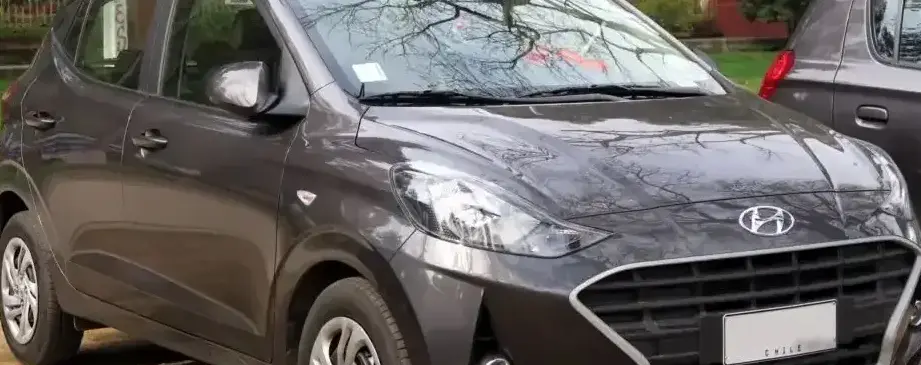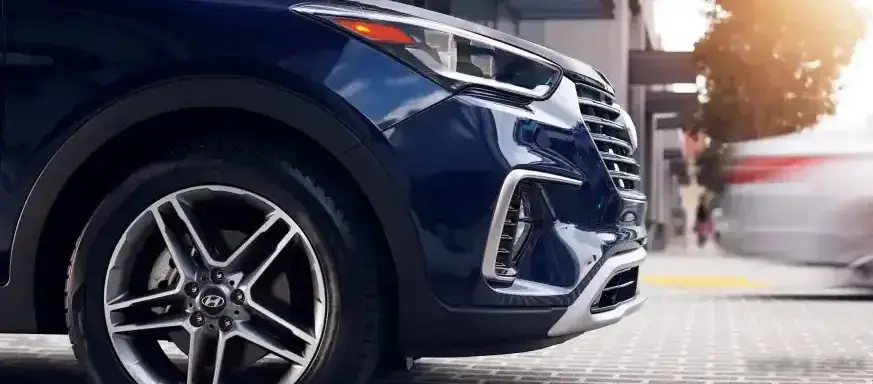
The Hyundai Grand Santa Fe (NC, facelifted in 2016) with the 3.3-liter V6 engine and automatic transmission represents a significant offering in the mid-size crossover SUV segment. Produced from 2016 to 2018, this variant was primarily aimed at the North American market, where three-row SUVs were – and continue to be – in high demand. The facelift brought styling updates and refinements to Hyundai’s already competitive offering, focusing on enhancing both the vehicle’s aesthetic appeal and its overall functionality. This particular configuration, pairing the naturally aspirated V6 with a six-speed automatic, positioned the Grand Santa Fe as a comfortable and capable family hauler, prioritizing smooth power delivery over outright sportiness. It sat towards the higher end of the Grand Santa Fe lineup, offering more power and refinement than the base 2.4-liter four-cylinder models.
Technical Specifications
| Brand | Hyundai |
| Model | Santa Fe |
| Generation | Grand Santa Fe (NC, facelift 2016) |
| Type (Engine) | 3.3 V6 (290 Hp) Automatic |
| Start of production | 2016 |
| End of production | 2018 |
| Powertrain Architecture | Internal Combustion engine |
| Body type | SUV |
| Seats | 6-7 |
| Doors | 5 |
| Fuel consumption (economy) – urban (NEDC) | 13 l/100 km (18.1 US mpg, 21.7 UK mpg, 7.7 km/l) |
| Fuel consumption (economy) – extra urban (NEDC) | 9.4 l/100 km (25 US mpg, 30.1 UK mpg, 10.6 km/l) |
| Fuel consumption (economy) – combined (NEDC) | 11.2 l/100 km (21 US mpg, 25.2 UK mpg, 8.9 km/l) |
| Fuel Type | Petrol (Gasoline) |
| Weight-to-power ratio | 6.3 kg/Hp, 158.8 Hp/tonne |
| Weight-to-torque ratio | 5.3 kg/Nm, 187.3 Nm/tonne |
| Power | 290 Hp @ 6400 rpm |
| Power per litre | 86.8 Hp/l |
| Torque | 342 Nm @ 5200 rpm (252.25 lb.-ft. @ 5200 rpm) |
| Engine layout | Front, Transverse |
| Engine Model/Code | Lambda II |
| Engine displacement | 3342 cm3 (203.94 cu. in.) |
| Number of cylinders | 6 |
| Engine configuration | V-engine |
| Cylinder Bore | 92 mm (3.62 in.) |
| Piston Stroke | 83.8 mm (3.3 in.) |
| Compression ratio | 11.5:1 |
| Number of valves per cylinder | 4 |
| Fuel injection system | Direct injection |
| Engine aspiration | Naturally aspirated engine |
| Valvetrain | DOHC, D-CVVT |
| Engine systems | Start & Stop System |
| Kerb Weight | 1826 kg (4025.64 lbs.) |
| Trunk (boot) space – minimum | 634 l (22.39 cu. ft.) |
| Trunk (boot) space – maximum | 1842 l (65.05 cu. ft.) |
| Fuel tank capacity | 71 l (18.76 US gal | 15.62 UK gal) |
| Length | 4905 mm (193.11 in.) |
| Width | 1885 mm (74.21 in.) |
| Height | 1695 mm (66.73 in.) |
| Wheelbase | 2800 mm (110.24 in.) |
| Front track | 1628 mm (64.09 in.) |
| Rear (Back) track | 1639 mm (64.53 in.) |
| Front overhang | 955 mm (37.6 in.) |
| Rear overhang | 1150 mm (45.28 in.) |
| Minimum turning circle (turning diameter) | 11.2 m (36.75 ft.) |
| Drivetrain Architecture | The Internal combustion engine (ICE) drives the front wheels of the vehicle. |
| Drive wheel | Front wheel drive |
| Number of gears and type of gearbox | 6 gears, automatic transmission Shiftronic |
| Front suspension | Independent, type McPherson with coil spring and anti-roll bar |
| Rear suspension | Independent multi-link suspension |
| Front brakes | Ventilated discs |
| Rear brakes | Disc |
| Assisting systems | ABS (Anti-lock braking system) |
| Steering type | Steering rack and pinion |
| Power steering | Electric Steering |
| Tires size | 235/60 R18; 235/55 R19 |
| Wheel rims size | 7.5J x 18; 7.5J x 19 |
Powertrain & Engine Architecture
At the heart of the Grand Santa Fe 3.3 is Hyundai’s Lambda II V6 engine. This engine, part of Hyundai-Kia’s modular engine family, is a 60-degree V6 utilizing an aluminum block and cylinder heads. The 3.3-liter displacement is achieved with a 92mm bore and 83.8mm stroke. Direct injection is employed to enhance fuel efficiency and power output, while dual continuously variable valve timing (D-CVVT) on both intake and exhaust valves optimizes engine breathing across the rev range. The engine produces 290 horsepower at 6,400 rpm and 252 lb-ft of torque at 5,200 rpm. This power is then channeled through a six-speed automatic transmission, branded as ‘Shiftronic’ by Hyundai. This transmission is a conventional torque-converter automatic, prioritizing smooth shifts and ease of use over the more aggressive shift programming found in some performance-oriented vehicles. The transmission lacks manual shift capabilities beyond a ‘Shiftronic’ mode that allows the driver to influence gear selection.
Driving Characteristics
The 3.3L V6 and automatic transmission combination in the Grand Santa Fe delivers a comfortable and predictable driving experience. Acceleration is adequate for everyday driving and highway merging, but it doesn’t offer the briskness of some turbocharged competitors. The automatic transmission is tuned for smoothness, and while it responds reasonably well to throttle inputs, it isn’t particularly quick to downshift. The gear ratios are optimized for fuel economy and cruising comfort, rather than maximizing performance. Compared to the base 2.4-liter four-cylinder version, the V6 provides a noticeable improvement in power and responsiveness, especially when fully loaded with passengers and cargo. However, it lacks the low-end torque of a turbocharged engine, requiring the driver to utilize more of the engine’s rev range for quicker acceleration.
Equipment & Trim Levels
The Grand Santa Fe 3.3 V6 typically came well-equipped, reflecting its position as a higher-trim level. Standard features generally included leather upholstery, heated front seats, a touchscreen infotainment system with navigation, a rearview camera, and a power liftgate. Available options often included a panoramic sunroof, ventilated front seats, premium audio systems, and advanced safety features like blind-spot monitoring and lane departure warning. Interior trim levels varied, with higher trims offering more luxurious materials and finishes. The overall interior design prioritized comfort and practicality, with ample space for passengers and cargo.
Chassis & Braking
The Grand Santa Fe utilizes a front-wheel-drive platform with independent suspension at all four corners. The front suspension employs a McPherson strut design with coil springs and an anti-roll bar, while the rear features a multi-link setup. This suspension configuration provides a comfortable ride quality, effectively absorbing bumps and irregularities in the road surface. Braking duties are handled by ventilated discs at the front and solid discs at the rear. Anti-lock braking system (ABS) is standard, providing enhanced stopping power and control during emergency braking situations. The steering is electrically assisted, offering light and precise steering feel.
Market Reception & Comparison
The Hyundai Grand Santa Fe 3.3 V6 was generally well-received by automotive critics. It was praised for its spacious interior, comfortable ride, and generous features list. However, some reviewers noted that its fuel economy was not class-leading and that its handling was not as sporty as some competitors. Compared to other V6-powered crossovers, the Grand Santa Fe offered a competitive value proposition, providing a lot of features for the price. Against the four-cylinder models within the Grand Santa Fe lineup, the V6 offered a significant performance upgrade, but at the cost of slightly lower fuel economy.
Legacy
The Hyundai Grand Santa Fe 3.3 V6 has proven to be a relatively reliable powertrain in the used car market. The Lambda II V6 engine is known for its durability, and the six-speed automatic transmission has also demonstrated good longevity. Common maintenance items include routine oil changes, spark plug replacements, and occasional sensor replacements. While not without its quirks, the Grand Santa Fe 3.3 V6 remains a viable option for buyers seeking a spacious, comfortable, and well-equipped three-row crossover SUV. Its continued presence in the used car market is a testament to its overall quality and dependability.