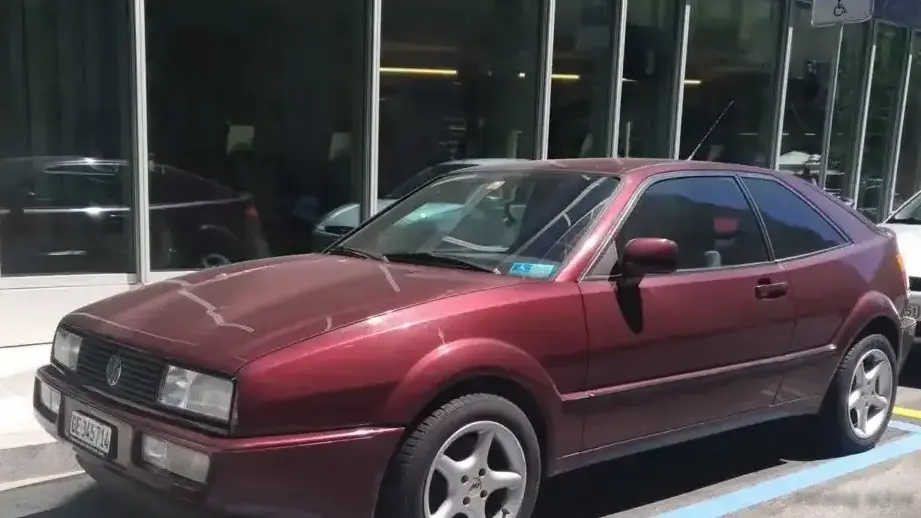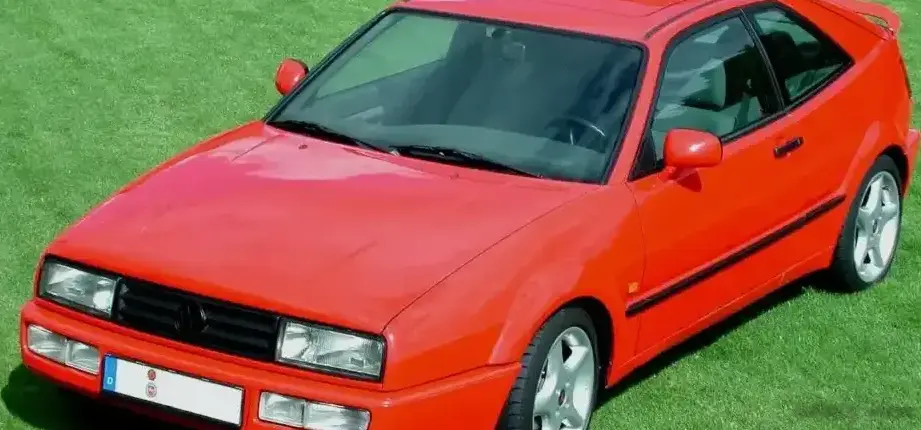
The Volkswagen Corrado 2.0i 16V, produced from 1991 to 1995, represents a refined iteration of Volkswagen’s sporty coupe. Falling within the Corrado (53I) generation, which received a facelift in 1991, this variant occupied a mid-range position in the lineup, offering a balance between performance and affordability. It was designed to appeal to drivers seeking a stylish and engaging driving experience, slotting above the base models and below the more potent VR6 versions. The Corrado, as a whole, aimed to provide a more premium and sophisticated alternative to other compact coupes available in the European market.
Technical Specifications
| Brand | Volkswagen |
| Model | Corrado |
| Generation | Corrado (53I, facelift 1991) |
| Type (Engine) | 2.0i 16V (136 Hp) |
| Start of production | 1991 |
| End of production | 1995 |
| Powertrain Architecture | Internal Combustion engine |
| Body type | Coupe |
| Seats | 4 |
| Doors | 2 |
| Fuel consumption (urban) | 12.3 l/100 km (19.1 US mpg, 23 UK mpg, 8.1 km/l) |
| Fuel consumption (extra urban) | 6 l/100 km (39.2 US mpg, 47.1 UK mpg, 16.7 km/l) |
| Fuel consumption (combined) | 7.6 l/100 km (30.9 US mpg, 37.2 UK mpg, 13.2 km/l) |
| Fuel Type | Petrol (Gasoline) |
| Acceleration 0 – 100 km/h | 9.3 sec |
| Acceleration 0 – 62 mph | 9.3 sec |
| Acceleration 0 – 60 mph | 8.8 sec |
| Maximum speed | 210 km/h (130.49 mph) |
| Weight-to-power ratio | 8.6 kg/Hp, 115.7 Hp/tonne |
| Weight-to-torque ratio | 6.5 kg/Nm, 153.2 Nm/tonne |
| Power | 136 Hp @ 5800 rpm |
| Power per litre | 68.5 Hp/l |
| Torque | 180 Nm @ 4400 rpm (132.76 lb.-ft. @ 4400 rpm) |
| Engine layout | Front, Transverse |
| Engine Model/Code | 9A |
| Engine displacement | 1984 cm3 (121.07 cu. in.) |
| Number of cylinders | 4 |
| Engine configuration | Inline |
| Cylinder Bore | 82.5 mm (3.25 in.) |
| Piston Stroke | 92.8 mm (3.65 in.) |
| Compression ratio | 10.8:1 |
| Number of valves per cylinder | 4 |
| Fuel injection system | Multi-port manifold injection |
| Engine aspiration | Naturally aspirated engine |
| Valvetrain | DOHC |
| Engine oil capacity | 4 l (4.23 US qt | 3.52 UK qt) |
| Coolant capacity | 5.5 l (5.81 US qt | 4.84 UK qt) |
| Kerb Weight | 1175 kg (2590.43 lbs.) |
| Max. weight | 1545 kg (3406.14 lbs.) |
| Max load | 370 kg (815.71 lbs.) |
| Trunk (boot) space – minimum | 235 l (8.3 cu. ft.) |
| Trunk (boot) space – maximum | 810 l (28.6 cu. ft.) |
| Fuel tank capacity | 70 l (18.49 US gal | 15.4 UK gal) |
| Length | 4050 mm (159.45 in.) |
| Width | 1690 mm (66.54 in.) |
| Height | 1310 mm (51.57 in.) |
| Wheelbase | 2470 mm (97.24 in.) |
| Front track | 1435 mm (56.5 in.) |
| Rear track | 1430 mm (56.3 in.) |
| Drivetrain Architecture | Front wheel drive |
| Drive wheel | Front wheel drive |
| Number of gears | 5 gears, manual transmission |
| Front suspension | Wishbone |
| Rear suspension | Suspension with traction connecting levers |
| Front brakes | Ventilated discs |
| Rear brakes | Disc |
| Assisting systems | ABS (Anti-lock braking system) |
| Steering type | Steering rack and pinion |
| Power steering | Hydraulic Steering |
| Tires size | 195/50 R15 |
| Wheel rims size | 6.5J x 15 |
Powertrain & Engine Architecture
The heart of the Corrado 2.0i 16V is the 9A engine, a 1.984-liter inline-four cylinder gasoline engine. This engine is characterized by its dual overhead camshafts (DOHC) and four valves per cylinder, a configuration that allows for improved breathing and higher engine speeds. The 9A utilizes Bosch Motronic fuel injection, a multi-port system that precisely meters fuel delivery for optimal combustion. The engine’s 136 horsepower at 5800 rpm and 180 Nm (132.76 lb-ft) of torque at 4400 rpm provided a respectable level of performance for its time. The engine’s design prioritized smooth operation and reasonable fuel efficiency over outright power. The standard transmission was a five-speed manual, but a four-speed automatic transmission was also offered, impacting the car’s acceleration and overall driving experience.
Driving Characteristics
The Corrado 2.0i 16V with the manual transmission offered a reasonably sporty driving experience. Acceleration from 0 to 60 mph took approximately 8.8 seconds, and top speed was around 130 mph. The automatic transmission version, while offering convenience, noticeably dulled performance, adding roughly a second to the 0-60 mph time. The gear ratios in the automatic were tuned for fuel economy rather than spirited driving. Handling was generally good, thanks to the independent front suspension and torsion beam rear suspension. The steering was precise, providing good feedback to the driver. Compared to the more powerful VR6 models, the 2.0i 16V felt less urgent in its acceleration, but it offered a more balanced and predictable driving experience.
Equipment & Trim Levels
The Corrado 2.0i 16V typically came equipped with features such as power windows, central locking, and a basic stereo system. Interior upholstery was usually cloth, although leather options were available. The dashboard layout was functional and driver-focused, with clear instrumentation. Optional extras included a sunroof, alloy wheels, and upgraded audio systems. The trim level largely dictated the availability of these options. The 2.0i 16V was positioned as a step up from the base models, offering a more comprehensive equipment list without the premium price tag of the VR6.
Chassis & Braking
The Corrado 2.0i 16V featured a front-wheel-drive layout with a MacPherson strut front suspension and a torsion beam rear suspension. The front brakes were ventilated discs, providing good stopping power, while the rear brakes were solid discs. Anti-lock braking system (ABS) was standard, enhancing safety. The chassis was relatively lightweight, contributing to the car’s nimble handling. The suspension was tuned for a balance between comfort and handling, providing a reasonably compliant ride without sacrificing too much cornering ability.
Market Reception & Comparison
The Corrado 2.0i 16V was generally well-received by automotive critics. It was praised for its stylish design, comfortable interior, and engaging driving experience. However, some critics noted that the engine lacked the outright power of the VR6 models. Fuel economy was considered reasonable for a sporty coupe of its time, averaging around 31 mpg on the combined cycle. Compared to other coupes in its class, such as the Opel Calibra and the Ford Escort Cosworth, the Corrado offered a more refined and sophisticated driving experience. The 2.0i 16V proved to be a reliable and durable powertrain, with relatively few common issues.
Legacy
Today, the Volkswagen Corrado 2.0i 16V is considered a desirable classic car. The 9A engine is known for its reliability, although regular maintenance is essential to keep it running smoothly. Parts availability is generally good, although some specific components can be difficult to find. The Corrado’s timeless design and engaging driving experience continue to appeal to enthusiasts. Well-maintained examples command a premium in the used car market, reflecting the car’s growing popularity among collectors and enthusiasts. The 2.0i 16V represents a sweet spot in the Corrado lineup, offering a balance of performance, affordability, and reliability that makes it a compelling choice for those seeking a classic sporty coupe.