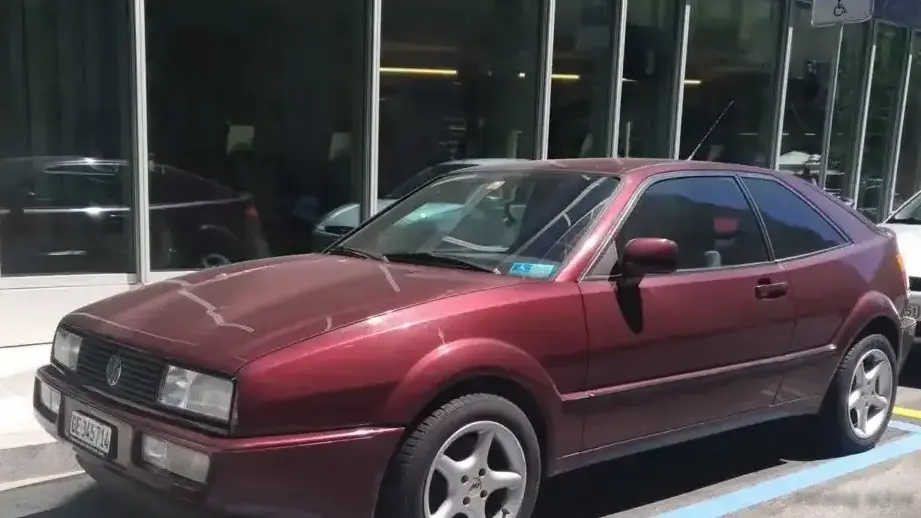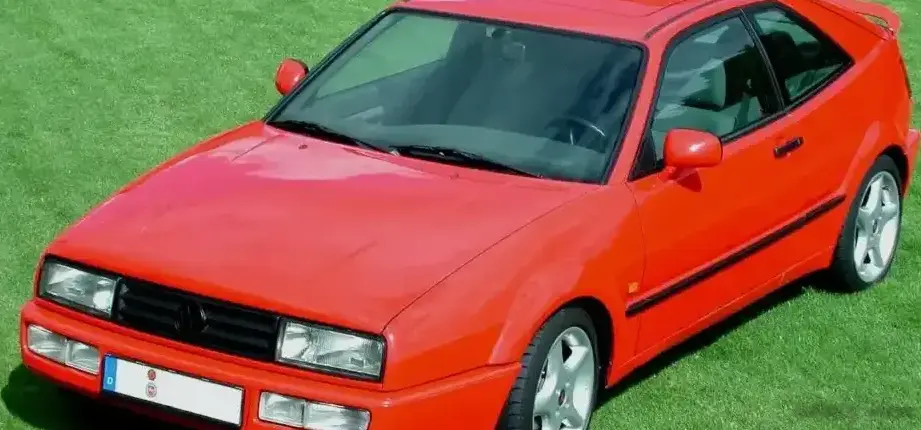
The Volkswagen Corrado 2.0i 16V Automatic, produced from 1991 to 1995, represents a refined iteration of Volkswagen’s sporty coupe. Falling within the facelifted 53I series, this variant occupied a middle ground in the Corrado lineup, offering a balance between performance and comfort. It was positioned above the base 1.8L models and below the more potent VR6, appealing to buyers seeking a sophisticated and capable grand tourer. The Corrado itself was built upon the Volkswagen A2 platform, sharing underpinnings with the Golf Mk2 and Jetta Mk2, but distinguished by its unique styling and focus on driver engagement.
Technical Specifications
| Brand | Volkswagen |
| Model | Corrado |
| Generation | Corrado (53I, facelift 1991) |
| Type (Engine) | 2.0i 16V (136 Hp) Automatic |
| Start of production | 1991 |
| End of production | 1995 |
| Powertrain Architecture | Internal Combustion engine |
| Body type | Coupe |
| Seats | 4 |
| Doors | 2 |
| Fuel consumption (urban) | 12.7 l/100 km (18.5 US mpg, 22.2 UK mpg, 7.9 km/l) |
| Fuel consumption (extra urban) | 6.7 l/100 km (35.1 US mpg, 42.2 UK mpg, 14.9 km/l) |
| Fuel consumption (combined) | 8.1 l/100 km (29 US mpg, 34.9 UK mpg, 12.3 km/l) |
| Fuel Type | Petrol (Gasoline) |
| Acceleration 0 – 100 km/h | 9.9 sec |
| Acceleration 0 – 62 mph | 9.9 sec |
| Acceleration 0 – 60 mph | 9.4 sec |
| Maximum speed | 210 km/h (130.49 mph) |
| Weight-to-power ratio | 8.6 kg/Hp, 115.7 Hp/tonne |
| Weight-to-torque ratio | 6.5 kg/Nm, 153.2 Nm/tonne |
| Power | 136 Hp @ 5800 rpm |
| Power per litre | 68.5 Hp/l |
| Torque | 180 Nm @ 4400 rpm (132.76 lb.-ft. @ 4400 rpm) |
| Engine layout | Front, Transverse |
| Engine Model/Code | 9A |
| Engine displacement | 1984 cm3 (121.07 cu. in.) |
| Number of cylinders | 4 |
| Engine configuration | Inline |
| Cylinder Bore | 82.5 mm (3.25 in.) |
| Piston Stroke | 92.8 mm (3.65 in.) |
| Compression ratio | 10.8:1 |
| Number of valves per cylinder | 4 |
| Fuel injection system | Multi-port manifold injection |
| Engine aspiration | Naturally aspirated engine |
| Valvetrain | DOHC |
| Engine oil capacity | 4 l (4.23 US qt | 3.52 UK qt) |
| Coolant capacity | 5.5 l (5.81 US qt | 4.84 UK qt) |
| Kerb Weight | 1175 kg (2590.43 lbs.) |
| Max. weight | 1545 kg (3406.14 lbs.) |
| Max load | 370 kg (815.71 lbs.) |
| Trunk (boot) space – minimum | 235 l (8.3 cu. ft.) |
| Trunk (boot) space – maximum | 810 l (28.6 cu. ft.) |
| Fuel tank capacity | 70 l (18.49 US gal | 15.4 UK gal) |
| Length | 4050 mm (159.45 in.) |
| Width | 1690 mm (66.54 in.) |
| Height | 1310 mm (51.57 in.) |
| Wheelbase | 2470 mm (97.24 in.) |
| Front track | 1435 mm (56.5 in.) |
| Rear track | 1430 mm (56.3 in.) |
| Drivetrain Architecture | Front wheel drive |
| Number of gears | 4 |
| Gearbox type | Automatic transmission |
| Front suspension | Wishbone |
| Rear suspension | Suspension with traction connecting levers |
| Front brakes | Ventilated discs |
| Rear brakes | Disc |
| Assisting systems | ABS (Anti-lock braking system) |
| Steering type | Steering rack and pinion |
| Power steering | Hydraulic Steering |
| Tires size | 195/50 R15 |
| Wheel rims size | 6.5J x 15 |
Powertrain & Engine Architecture
The heart of the Corrado 2.0i 16V Automatic is the 9A engine, a 1.984-liter inline-four cylinder powerplant. This engine featured a dual overhead camshaft (DOHC) valvetrain operating four valves per cylinder, contributing to its relatively high specific output. Fuel delivery was managed by a Bosch Motronic multi-port fuel injection system, optimizing air-fuel mixture for improved efficiency and performance. The 9A engine was known for its robust construction and relatively straightforward maintenance. The automatic transmission paired with this engine was a four-speed unit, designed to provide smooth and comfortable shifts. While not as sporty as a manual transmission, it catered to drivers prioritizing ease of use and relaxed cruising.
Driving Characteristics
The 136 horsepower and 180 Nm (132.76 lb-ft) of torque delivered by the 2.0i 16V engine, coupled with the four-speed automatic transmission, resulted in a driving experience focused on usability rather than outright speed. Acceleration from 0 to 60 mph took approximately 9.4 seconds, and the car could reach a top speed of 210 km/h (130.49 mph). Compared to the five-speed manual version, the automatic offered slightly slower acceleration due to inherent transmission losses. However, the automatic’s gear ratios were tuned for comfortable highway cruising, providing adequate power for overtaking maneuvers. The automatic transmission did diminish some of the driver engagement found in the manual variants, but it made the Corrado more accessible to a wider range of drivers.
Equipment & Trim Levels
The Corrado 2.0i 16V Automatic typically came equipped with a respectable level of standard features. These included power windows, central locking, and a basic stereo system. Interior upholstery was usually cloth, although leather options were available as upgrades. The dashboard layout was functional and driver-focused, with clear instrumentation. Optional extras included a sunroof, upgraded sound system, and alloy wheels. The trim level often dictated the availability of these options, with higher trims offering more standard features and a greater degree of customization.
Chassis & Braking
The Corrado’s chassis featured independent suspension all around, with a wishbone setup at the front and a torsion beam arrangement at the rear. This suspension configuration provided a good balance between ride comfort and handling. The 2.0i 16V Automatic models were equipped with ventilated disc brakes at the front and solid disc brakes at the rear, providing adequate stopping power for the car’s weight and performance. Anti-lock braking system (ABS) was standard, enhancing safety and control during emergency braking situations. The steering was rack and pinion, offering precise and responsive handling.
Market Reception & Comparison
The Corrado 2.0i 16V Automatic was generally well-received by automotive critics. It was praised for its stylish design, comfortable interior, and refined driving experience. However, some critics noted that the automatic transmission detracted from the car’s sporty character. Compared to the more powerful VR6 model, the 2.0i 16V Automatic offered a more affordable entry point into the Corrado range. It also provided better fuel economy than the VR6, making it a more practical choice for everyday driving. Against the 1.8L models, the 2.0i 16V offered a noticeable performance upgrade, justifying its higher price tag.
Legacy
The Volkswagen Corrado 2.0i 16V Automatic has developed a loyal following among enthusiasts. The 9A engine is known for its reliability, provided it is properly maintained. Common issues include oil leaks and wear on the timing belt, which requires periodic replacement. Today, well-maintained examples of the Corrado 2.0i 16V Automatic are sought after by collectors and enthusiasts, representing a stylish and capable coupe from a bygone era. Its blend of performance, comfort, and distinctive styling ensures its continued appeal in the used car market.