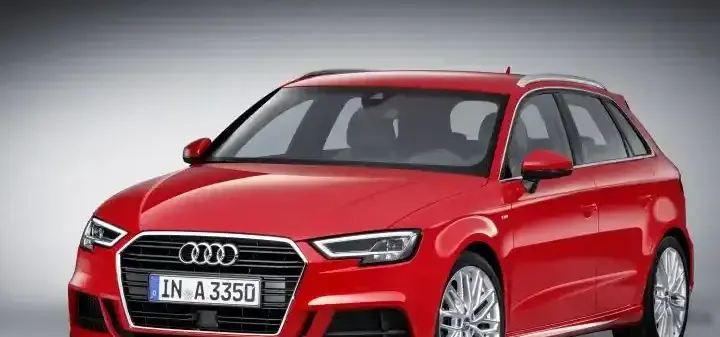
The Audi A3 Sportback (8V, facelift) 40 e-tron 1.4 TFSI, produced from July 2016 to March 2018, represents Audi’s initial foray into plug-in hybrid technology within the popular A3 compact hatchback range. Positioned as a premium, fuel-efficient option, it combined a 1.4-liter turbocharged gasoline engine with an electric motor, offering both all-electric driving capability and the flexibility of a conventional internal combustion engine. This variant was part of the 8V generation A3 Sportback, which benefited from a mid-life facelift in 2016, bringing updated styling and technology. The “40 e-tron” designation signified its place within Audi’s power and efficiency hierarchy, indicating a combined system output of approximately 204 horsepower.
Technical Specifications
| Brand | Audi |
| Model | A3 |
| Generation | A3 Sportback (8V, facelift 2016) |
| Type (Engine) | 40 e-tron 1.4 TFSI (204 Hp) Plug-in Hybrid S tronic |
| Start of production | July, 2016 |
| End of production | March, 2018 |
| Powertrain Architecture | PHEV (Plug-in Hybrid Electric Vehicle) |
| Body type | Hatchback |
| Seats | 5 |
| Doors | 5 |
| Fuel consumption (combined) | 1.6-1.8 l/100 km (147 – 130.7 US mpg, 176.6 – 156.9 UK mpg, 62.5 – 55.6 km/l) |
| CO2 emissions | 36-40 g/km |
| Fuel Type | Petrol / electricity |
| Acceleration 0 – 100 km/h | 7.6 sec |
| Acceleration 0 – 62 mph | 7.6 sec |
| Acceleration 0 – 60 mph | 7.2 sec |
| Maximum speed | 222 km/h (137.94 mph) |
| Emission standard | Euro 6 |
| Weight-to-power ratio | 7.5 kg/Hp, 132.5 Hp/tonne |
| Weight-to-torque ratio | 4.4 kg/Nm, 227.3 Nm/tonne |
| Gross battery capacity | 8.8 kWh |
| Net (usable) battery capacity | 7 kWh |
| Battery technology | Lithium-ion (Li-Ion) |
| Battery weight | 125 kg (275.58 lbs) |
| Battery location | Under the rear seats |
| All-electric range | 45-50 km (27.96 – 31.07 mi) |
| Average Energy consumption | 11.4-12 kWh/100 km (18.35 – 19.31 kWh/100 mi, 184 – 175 MPGe, 8.8 – 8.3 km/kWh, 5.5 – 5.2 mi/kWh) |
| Max speed (electric) | 130 km/h (80.78 mph) |
| Electric motor power | 102 Hp |
| Electric motor Torque | 330 Nm (243.4 lb.-ft.) |
| Electric motor location | Between the combustion engine and the transmission |
| System power | 204 Hp |
| System torque | 350 Nm (258.15 lb.-ft.) |
| Power | 150 Hp @ 5000-6000 rpm |
| Torque | 250 Nm @ 1500-3500 rpm (184.39 lb.-ft. @ 1500-3500 rpm) |
| Engine layout | Front, Transverse |
| Engine Model/Code | CUKB, CXUA |
| Engine displacement | 1395 cm3 (85.13 cu. in.) |
| Number of cylinders | 4 |
| Engine configuration | Inline |
| Cylinder Bore | 74.5 mm (2.93 in.) |
| Piston Stroke | 80 mm (3.15 in.) |
| Compression ratio | 10:1 |
| Number of valves per cylinder | 4 |
| Fuel injection system | Direct injection |
| Engine aspiration | Turbocharger, Intercooler |
| Valvetrain | DOHC |
| Engine oil capacity | 4 l (4.23 US qt | 3.52 UK qt) |
| Coolant | 11 l (11.62 US qt | 9.68 UK qt) |
| Kerb Weight | 1540 kg (3395.12 lbs) |
| Max. weight | 2050 kg (4519.48 lbs) |
| Max load | 510 kg (1124.36 lbs) |
| Trunk (boot) space – minimum | 280 l (9.89 cu. ft.) |
| Trunk (boot) space – maximum | 1120 l (39.55 cu. ft.) |
| Fuel tank capacity | 40 l (10.57 US gal | 8.8 UK gal) |
| Max. roof load | 75 kg (165.35 lbs) |
| Permitted trailer load with brakes (8%) | 1600 kg (3527.4 lbs) |
| Permitted trailer load with brakes (12%) | 1400 kg (3086.47 lbs) |
| Permitted trailer load without brakes | 750 kg (1653.47 lbs) |
| Permitted towbar download | 75 kg (165.35 lbs) |
| Length | 4311 mm (169.72 in.) |
| Width | 1785 mm (70.28 in.) |
| Width including mirrors | 1966 mm (77.4 in.) |
| Height | 1426 mm (56.14 in.) |
| Wheelbase | 2630 mm (103.54 in.) |
| Front track | 1543 mm (60.75 in.) |
| Rear (Back) track | 1514 mm (59.61 in.) |
| Front overhang | 868 mm (34.17 in.) |
| Rear overhang | 813 mm (32.01 in.) |
| Drag coefficient (Cd) | 0.32 |
| Minimum turning circle (turning diameter) | 10.9 m (35.76 ft.) |
| Drivetrain Architecture | The Internal combustion engine (ICE) and electric motor drive the front wheels of the car with the ability to work in full electric or mixed mode. |
| Drive wheel | Front wheel drive |
| Number of gears and type of gearbox | 6 gears, automatic transmission S tronic |
| Front suspension | Independent, type McPherson with coil spring and anti-roll bar |
| Rear suspension | Independent multi-link spring suspension with stabilizer |
| Front brakes | Ventilated discs |
| Rear brakes | Disc |
| Assisting systems | ABS (Anti-lock braking system) |
| Steering type | Steering rack and pinion |
| Power steering | Electric Steering |
| Tires size | 205/55 R16; 225/45 R17; 225/40 R18 |
| Wheel rims size | 6.5J x 16; 7.5J x 17; 7.5J x 18 |
Powertrain & Engine Architecture
The 40 e-tron utilized a 1.4-liter, four-cylinder turbocharged gasoline engine, identified by engine codes CUKB or CXUA depending on the specific production date and market. This engine, a member of Audi’s EA211 family, featured direct fuel injection and an intercooled turbocharger. The engine produced 150 horsepower and 184 lb-ft of torque. Integrated with the gasoline engine was a 102 horsepower electric motor, powered by an 8.8 kWh (gross) / 7 kWh (net) lithium-ion battery pack located under the rear seats. The combined system output reached 204 horsepower and 258 lb-ft of torque. Power was delivered to the front wheels via a six-speed S tronic dual-clutch automatic transmission, known for its quick and smooth shifts. The S tronic transmission was specifically tuned to work seamlessly with both the gasoline engine and the electric motor, optimizing efficiency and performance in various driving modes.
Driving Characteristics
The A3 Sportback 40 e-tron offered a unique driving experience. In pure electric mode, it provided silent and instant torque, making it ideal for city driving. The all-electric range of 28-31 miles allowed for daily commutes to be completed without using any gasoline. When the battery was depleted, or when more power was needed, the gasoline engine seamlessly kicked in. The combined power output provided brisk acceleration, with a 0-60 mph time of around 7.2 seconds. Compared to the standard 1.8 TFSI A3 Sportback with the S tronic transmission, the e-tron felt slightly heavier due to the battery pack, but the added torque from the electric motor compensated for this, particularly at lower speeds. The S tronic transmission’s gear ratios were optimized for both fuel efficiency and performance, providing responsive acceleration in all driving situations.
Equipment & Trim Levels
The 40 e-tron trim generally included a high level of standard equipment. Interior features typically included premium cloth upholstery, a leather-wrapped multi-function steering wheel, and Audi’s MMI infotainment system with a 7-inch display screen. Standard safety features included ABS, electronic stability control, and multiple airbags. Optional extras included leather seats, a panoramic sunroof, a premium sound system, and advanced driver-assistance systems such as adaptive cruise control and lane assist. The interior trim was generally focused on a clean, modern aesthetic, with high-quality materials and a user-friendly layout.
Chassis & Braking
The A3 Sportback 40 e-tron utilized a McPherson strut front suspension and a multi-link rear suspension, providing a comfortable and controlled ride. The suspension was tuned to handle the added weight of the battery pack without compromising handling. Front brakes were ventilated discs, while rear brakes were solid discs. ABS (Anti-lock Braking System) was standard, ensuring safe and effective braking in all conditions. The steering was an electric power-assisted rack and pinion system, offering precise and responsive steering feel.
Market Reception & Comparison
The Audi A3 Sportback 40 e-tron was generally well-received by critics, who praised its fuel efficiency, smooth ride, and refined interior. It was positioned as a competitor to other plug-in hybrid hatchbacks, such as the Volkswagen Golf GTE and the BMW 225xe Active Tourer. Compared to the standard A3 models, the e-tron offered significantly better fuel economy and the ability to drive in all-electric mode. However, it was also more expensive and slightly heavier. Reliability reports have been generally positive, with the powertrain proving to be relatively robust.
Legacy
The A3 Sportback 40 e-tron was an important stepping stone for Audi in the development of plug-in hybrid technology. It demonstrated the potential of combining a gasoline engine with an electric motor to deliver both fuel efficiency and performance. In the used car market, these models hold their value reasonably well, particularly those with low mileage and a well-maintained service history. The longevity of the battery pack is a key consideration for potential buyers, but many examples are still operating reliably with their original batteries. The 40 e-tron paved the way for Audi’s broader range of e-tron models, solidifying the brand’s commitment to electric mobility.