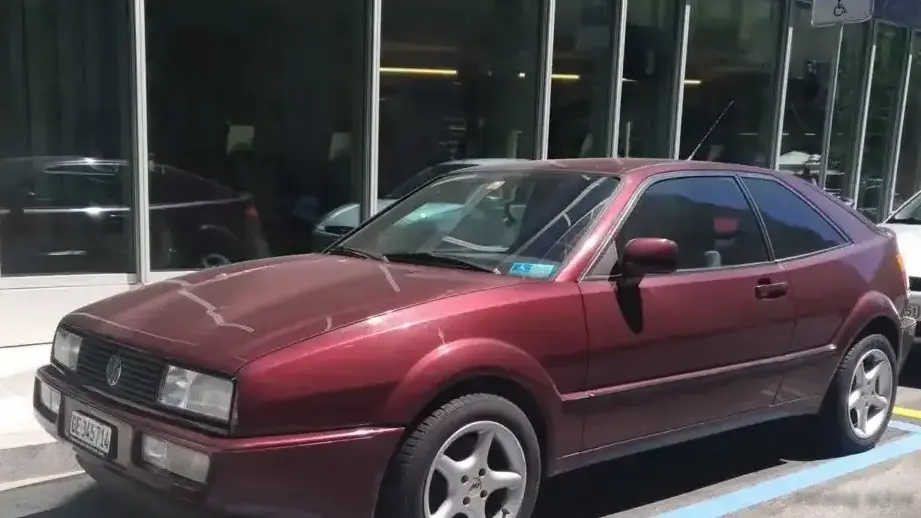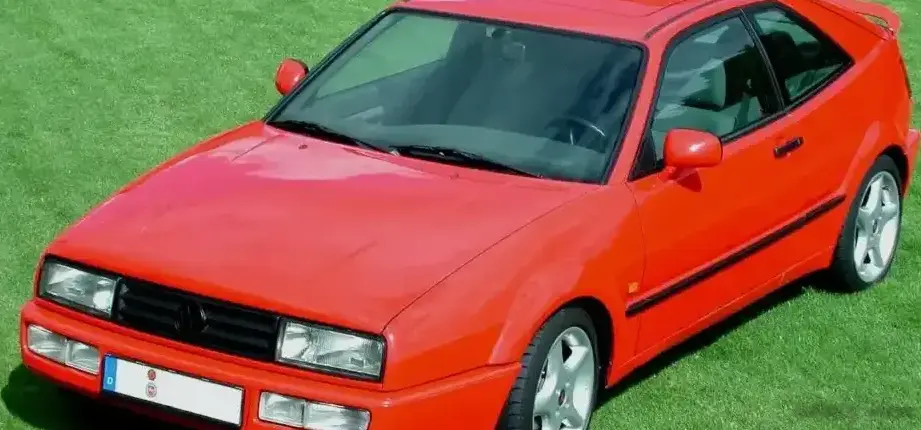
The Volkswagen Corrado VR6 Automatic, produced from 1991 to 1995, represents a compelling blend of sporty styling and refined performance within the Corrado model range. Positioned as the premium offering, it catered to buyers seeking a more powerful and luxurious experience than the base models. Built on the Volkswagen Group’s 53I platform (shared with the Golf Mk2 and Jetta Mk2), the facelifted Corrado, introduced in 1991, featured subtle but significant cosmetic updates and, crucially, the introduction of the VR6 engine option. This variant aimed to deliver a grand touring experience in a compact, coupe body style, appealing to a market segment that valued both driving enjoyment and everyday practicality.
Technical Specifications
| Brand | Volkswagen |
| Model | Corrado |
| Generation | Corrado (53I, facelift 1991) |
| Type (Engine) | 2.8 VR6 (178 Hp) Automatic |
| Start of production | 1991 |
| End of production | 1995 |
| Powertrain Architecture | Internal Combustion engine |
| Body type | Coupe |
| Seats | 4 |
| Doors | 3 |
| Fuel consumption (urban) | 13.8 l/100 km (17 US mpg, 20.5 UK mpg) |
| Fuel consumption (extra urban) | 10.2 l/100 km (23.1 US mpg, 27.7 UK mpg) |
| Fuel Type | Petrol (Gasoline) |
| Acceleration 0 – 60 mph | 7.8 sec |
| Maximum speed | 225 km/h (139.81 mph) |
| Weight-to-power ratio | 7.2 kg/Hp, 139.6 Hp/tonne |
| Weight-to-torque ratio | 5.3 kg/Nm, 188.2 Nm/tonne |
| Power | 178 Hp @ 5800 rpm |
| Power per litre | 63.8 Hp/l |
| Torque | 240 Nm @ 4200 rpm (177.01 lb.-ft. @ 4200 rpm) |
| Engine layout | Front, Transverse |
| Engine Model/Code | AAA |
| Engine displacement | 2792 cm3 (170.38 cu. in.) |
| Number of cylinders | 6 |
| Engine configuration | VR-engine |
| Cylinder Bore | 81 mm (3.19 in.) |
| Piston Stroke | 90.3 mm (3.56 in.) |
| Compression ratio | 10.5:1 |
| Number of valves per cylinder | 2 |
| Fuel injection system | Multi-port manifold injection |
| Engine aspiration | Naturally aspirated engine |
| Valvetrain | DOHC |
| Engine oil capacity | 5.5 l (5.81 US qt | 4.84 UK qt) |
| Coolant | 6.5 l (6.87 US qt | 5.72 UK qt) |
| Kerb Weight | 1275 kg (2810.89 lbs.) |
| Trunk (boot) space – minimum | 433 l (15.29 cu. ft.) |
| Trunk (boot) space – maximum | 821 l (28.99 cu. ft.) |
| Fuel tank capacity | 70 l (18.49 US gal | 15.4 UK gal) |
| Length | 4049 mm (159.41 in.) |
| Width | 1674 mm (65.91 in.) |
| Height | 1318 mm (51.89 in.) |
| Wheelbase | 2471 mm (97.28 in.) |
| Front track | 1435 mm (56.5 in.) |
| Rear (Back) track | 1427 mm (56.18 in.) |
| Minimum turning circle | 10.5 m (34.45 ft.) |
| Drivetrain Architecture | The Internal combustion engine (ICE) drives the front wheels of the vehicle. |
| Drive wheel | Front wheel drive |
| Number of gears and type of gearbox | 4 gears, automatic transmission |
| Front suspension | Independent, type McPherson with coil spring and anti-roll bar |
| Rear suspension | Transverse stabilizer, Coil spring, Torsion |
| Front brakes | Ventilated discs, 279.4 mm |
| Rear brakes | Disc, 226.06 mm |
| Assisting systems | ABS (Anti-lock braking system) |
| Steering type | Steering rack and pinion |
| Power steering | Hydraulic Steering |
| Tires size | 205/50 R15 |
| Wheel rims size | 6.5J x 15 |
Powertrain & Engine Architecture
The heart of the Corrado VR6 Automatic is the AAA engine code, a 2.8-liter naturally aspirated VR6 engine. This engine, a hallmark of Volkswagen’s engineering prowess, features a unique 15-degree V-angle configuration, blending the smoothness of a V6 with the compactness of an inline-six. The engine utilizes multi-port fuel injection and a dual overhead camshaft (DOHC) valvetrain, contributing to its responsive power delivery. Paired with this engine is a four-speed automatic transmission, designed to provide smooth and effortless shifting. While not as sporty as the available five-speed manual, the automatic transmission offered a more relaxed driving experience, appealing to buyers prioritizing comfort and convenience. The automatic transmission’s gear ratios were tuned for a balance of acceleration and fuel efficiency, though the VR6’s inherent thirst for fuel remained a characteristic.
Driving Characteristics
The Corrado VR6 Automatic delivers a noticeably different driving experience compared to the lower-powered versions. The 178 horsepower and 177 lb-ft of torque provide brisk acceleration, with a 0-60 mph time of around 7.8 seconds. While the manual transmission offered quicker shifts and more driver involvement, the automatic provided a smooth and refined power delivery. The four-speed automatic, while adequate, could sometimes feel a bit overwhelmed by the VR6’s power, particularly during aggressive acceleration. The suspension, tuned for a balance of comfort and handling, provides a reasonably composed ride, though it’s not as overtly sporty as some contemporary coupes. The front-wheel-drive layout, while offering good traction, can exhibit some understeer when pushed hard.
Equipment & Trim Levels
The VR6 Automatic trim typically included a generous level of standard equipment. Interior features included comfortable cloth upholstery, power windows and locks, and a basic audio system. Optional extras included leather upholstery, a sunroof, upgraded audio systems, and alloy wheels. The dashboard layout was functional and driver-focused, with clear instrumentation and logically placed controls. The Corrado’s interior, while not lavish, was well-built and offered a comfortable and practical space for both driver and passengers.
Chassis & Braking
The Corrado VR6 Automatic utilizes an independent McPherson strut front suspension and a torsion beam rear suspension. This setup provides a good balance of ride comfort and handling. The braking system consists of ventilated discs at the front and solid discs at the rear, equipped with ABS (Anti-lock Braking System) as standard. The braking performance is adequate for the car’s weight and power, providing confident stopping power in most driving conditions. The VR6 models often featured a slightly thicker front stabilizer bar compared to the base models, further enhancing handling stability.
Market Reception & Comparison
The Corrado VR6 Automatic received generally positive reviews from automotive critics. It was praised for its powerful engine, refined driving experience, and stylish design. However, the automatic transmission was sometimes criticized for not fully exploiting the VR6’s potential. Compared to the 1.8L and 2.0L versions, the VR6 Automatic offered significantly more performance but came at a higher price and with increased fuel consumption. The VR6 was also more complex and potentially more expensive to maintain than the simpler four-cylinder engines. Against rivals like the BMW 3-Series Coupe and the Audi Coupe, the Corrado VR6 offered a compelling alternative, often at a more affordable price point.
Legacy
The Corrado VR6 Automatic has developed a strong following among enthusiasts. The VR6 engine is renowned for its durability and distinctive sound. While the automatic transmission isn’t as highly regarded as the manual, it remains a viable option for those seeking a more relaxed driving experience. Today, well-maintained examples of the Corrado VR6 Automatic are becoming increasingly collectible. Common issues include wear and tear on the suspension components, corrosion, and potential oil leaks from the VR6 engine. However, with proper maintenance, these cars can provide years of reliable and enjoyable motoring. The Corrado VR6 Automatic stands as a testament to Volkswagen’s engineering ingenuity and a reminder of a time when coupes offered a unique blend of style, performance, and practicality.