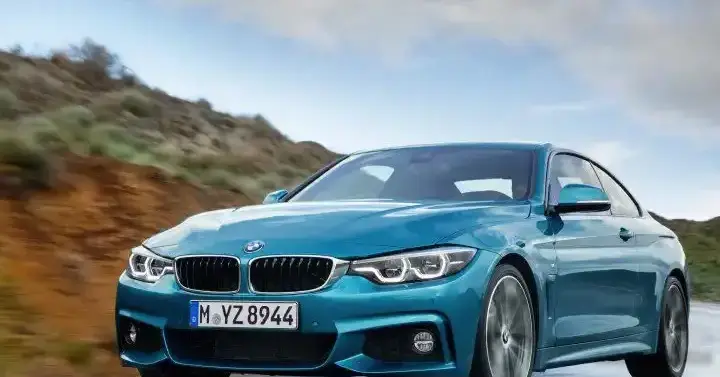
Technical Specifications
| Brand | BMW |
| Model | 4 Series |
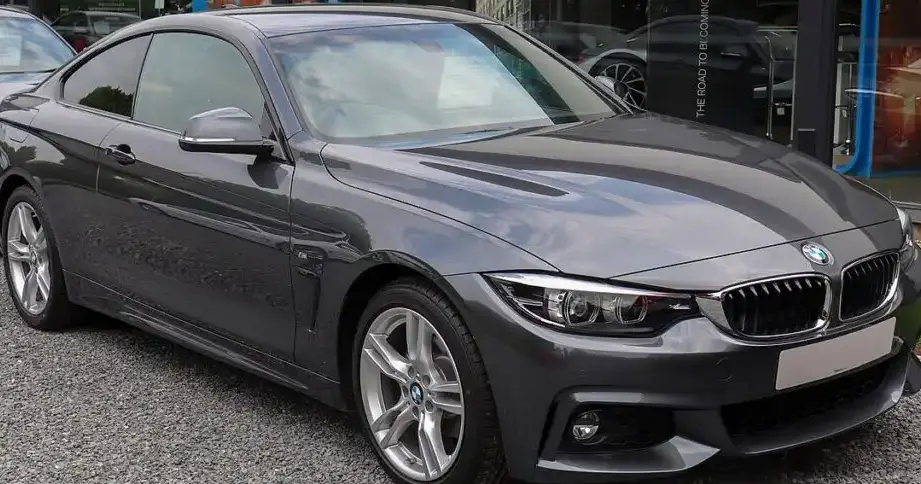
| Generation | 4 Series Coupe (F32, facelift 2017) |
| Type (Engine) | 418i (136 Hp) Steptronic |
| Start of production | 2017 |
| End of production | 2019 |
| Powertrain Architecture | Internal Combustion engine |
| Body type | Coupe |
| Seats | 4 |
| Doors | 2 |
| Fuel consumption (economy) – urban (NEDC) | 6.6-7 l/100 km (35.6 – 33.6 US mpg, 42.8 – 40.4 UK mpg, 15.2 – 14.3 km/l) |
| Fuel consumption (economy) – extra urban (NEDC) | 4.3-4.8 l/100 km (54.7 – 49 US mpg, 65.7 – 58.9 UK mpg, 23.3 – 20.8 km/l) |
| Fuel consumption (economy) – combined (NEDC) | 5.3-5.6 l/100 km (44.4 – 42 US mpg, 53.3 – 50.4 UK mpg, 18.9 – 17.9 km/l) |
| CO2 emissions (NEDC) | 124-131 g/km |
| Fuel Type | Petrol (Gasoline) |
| Acceleration 0 – 100 km/h | 9.2 sec |
| Acceleration 0 – 62 mph | 9.2 sec |
| Acceleration 0 – 60 mph | 8.7 sec |
| Maximum speed | 212 km/h (131.73 mph) |
| Emission standard | Euro 6 |
| Weight-to-power ratio | 10.7 kg/Hp, 93.8 Hp/tonne |
| Weight-to-torque ratio | 6.6 kg/Nm, 151.7 Nm/tonne |
| Power | 136 Hp @ 4400 rpm |
| Power per litre | 90.7 Hp/l |
| Torque | 220 Nm @ 1250-4300 rpm (162.26 lb.-ft. @ 1250-4300 rpm) |
| Engine layout | Front, Longitudinal |
| Engine Model/Code | B38B15A |
| Engine displacement | 1499 cm3 (91.47 cu. in.) |
| Number of cylinders | 3 |
| Engine configuration | Inline |
| Cylinder Bore | 82 mm (3.23 in.) |
| Piston Stroke | 94.6 mm (3.72 in.) |
| Compression ratio | 11:1 |
| Number of valves per cylinder | 4 |
| Fuel injection system | Direct injection |
| Engine aspiration | Turbocharger, Intercooler |
| Valvetrain | VALVETRONIC, Double-VANOS |
| Engine oil capacity | 4.25 l (4.49 US qt | 3.74 UK qt) |
| Coolant | 7.7 l (8.14 US qt | 6.78 UK qt) |
| Kerb Weight | 1450 kg (3196.7 lbs.) |
| Max. weight | 1970 kg (4343.11 lbs.) |
| Max load | 520 kg (1146.4 lbs.) |
| Trunk (boot) space – minimum | 445 l (15.72 cu. ft.) |
| Fuel tank capacity | 60 l (15.85 US gal | 13.2 UK gal) |
| Max. roof load | 75 kg (165.35 lbs.) |
| Permitted trailer load with brakes (8%) | 1500 kg (3306.93 lbs.) |
| Permitted trailer load with brakes (12%) | 1300 kg (2866.01 lbs.) |
| Length | 4640 mm (182.68 in.) |
| Width | 1825 mm (71.85 in.) |
| Width including mirrors | 2017 mm (79.41 in.) |
| Height | 1377 mm (54.21 in.) |
| Wheelbase | 2810 mm (110.63 in.) |
| Front track | 1545 mm (60.83 in.) |
| Rear (Back) track | 1594 mm (62.76 in.) |
| Front overhang | 787 mm (30.98 in.) |
| Rear overhang | 1043 mm (41.06 in.) |
| Drivetrain Architecture | The Internal combustion engine (ICE) drives the rear wheels of the vehicle. |
| Drive wheel | Rear wheel drive |
| Number of gears and type of gearbox | 8 gears, automatic transmission Steptronic |
| Front suspension | Spring Strut, Transverse stabilizer |
| Rear suspension | Independent multi-link spring suspension with stabilizer |
| Front brakes | Ventilated discs |
| Rear brakes | Ventilated discs |
| Assisting systems | ABS (Anti-lock braking system) |
| Steering type | Steering rack and pinion |
| Power steering | Electric Steering |
| Tires size | Front wheel tires: 225/50 R17; 225/45 R18; 225/40 R19; 225/35 R20Rear wheel tires: 225/50 R17; 225/45 R18; 255/40 R18; 255/35 R19; 255/30 R20 |
| Wheel rims size | Front wheel rims: 7.5J x 17; 8J x 18; 8J x 19; 8J x 20Rear wheel rims: 7.5J x 17; 8J x 18; 8.5J x 18; 8J x 19; 8.5J x 20 |
The BMW 418i Steptronic, introduced in 2017 as part of the F32’s facelift, represented a shift towards smaller, more efficient engines in the premium coupe segment. While the 4 Series was initially launched with larger inline-six and turbocharged four-cylinder options, the 418i offered a more economical alternative without entirely sacrificing the BMW driving experience. It was positioned as the entry-level model, appealing to buyers prioritizing fuel efficiency and a lower price point. The facelift brought subtle styling updates, improved interior materials, and updated technology, enhancing the overall appeal of the 4 Series range.
Powertrain & Engine Architecture
At the heart of the 418i Steptronic lies the BMW B38B15A 1.5-liter turbocharged inline-three cylinder engine. This engine is a member of BMW’s modular engine family, known for its compact size and efficiency. It utilizes direct fuel injection, VALVETRONIC variable valve timing, and Double-VANOS variable camshaft timing to optimize performance and fuel economy. The turbocharger, coupled with an intercooler, provides a boost in power and torque. The engine produces 136 horsepower at 4400 rpm and 220 Nm (162 lb-ft) of torque between 1250 and 4300 rpm. The “Steptronic” designation refers to BMW’s 8-speed automatic transmission, which is known for its smooth shifts and responsiveness. This transmission is electronically controlled and adapts to driving conditions to optimize fuel efficiency and performance. The transmission’s gear ratios are tuned to provide a balance between acceleration and cruising comfort.
Driving Characteristics
The 418i Steptronic delivers a comfortable and refined driving experience, albeit with less outright performance than its more powerful siblings. Acceleration from 0-60 mph takes approximately 8.7 seconds, and the top speed is limited to 131.73 mph. The 8-speed automatic transmission contributes to smooth gear changes, and the engine provides adequate power for everyday driving situations. Compared to the 420i or 430i models, the 418i feels less eager to accelerate, particularly at higher speeds. However, the readily available torque from the turbocharger ensures decent responsiveness in most driving scenarios. The automatic transmission’s programming prioritizes fuel efficiency, which can sometimes result in slightly hesitant downshifts. The rear-wheel-drive configuration provides a balanced handling feel, typical of BMWs.
Equipment & Trim Levels
The 418i Steptronic typically came equipped with a respectable level of standard features. These included automatic climate control, a BMW iDrive infotainment system with a 6.5-inch display screen (later upgraded to larger screens), power-adjustable front seats, and a leather-wrapped steering wheel. Common optional extras included a sunroof, navigation system, upgraded audio system (Harman Kardon), heated seats, and parking sensors. Interior upholstery was typically cloth, with leather options available as an upgrade. The dashboard layout was consistent with other F32 4 Series models, featuring a driver-focused design with intuitive controls.
Chassis & Braking
The 418i Steptronic utilizes a MacPherson strut front suspension and a multi-link rear suspension, providing a comfortable ride and good handling characteristics. The suspension is tuned to balance comfort and agility. Braking duties are handled by ventilated disc brakes on all four wheels, providing adequate stopping power. ABS (Anti-lock Braking System) is standard. Due to the lower weight of the 1.5-liter engine compared to the larger engines, the 418i may have slightly different spring rates and stabilizer bar thicknesses to optimize handling balance. The electric power steering provides precise and responsive steering feel.
Market Reception & Comparison
The 418i Steptronic was generally well-received by critics as a sensible and efficient entry point into the 4 Series range. Reviewers praised its fuel economy and comfortable ride, but some noted the lack of outright performance compared to the higher-powered models. Compared to the 420i, the 418i offered lower running costs but sacrificed some acceleration and overall driving excitement. The 418i’s fuel economy figures of 5.3-5.6 l/100 km (44.4-42 US mpg) were a significant selling point for buyers prioritizing efficiency. Reliability reports suggest that the B38 engine is generally reliable, although preventative maintenance is crucial, as with any modern turbocharged engine.
Legacy
The 418i Steptronic, while not the most sought-after variant of the F32 4 Series, has established a solid reputation in the used car market. Its combination of BMW styling, comfortable ride, and reasonable running costs makes it an attractive option for buyers seeking a premium coupe on a budget. The B38 engine has proven to be relatively durable, and parts availability is generally good. As with any used vehicle, a thorough inspection and maintenance history check are essential before purchasing a 418i Steptronic. The model represents a key step in BMW’s downsizing and efficiency strategy, demonstrating the brand’s ability to deliver a compelling driving experience even with smaller displacement engines.