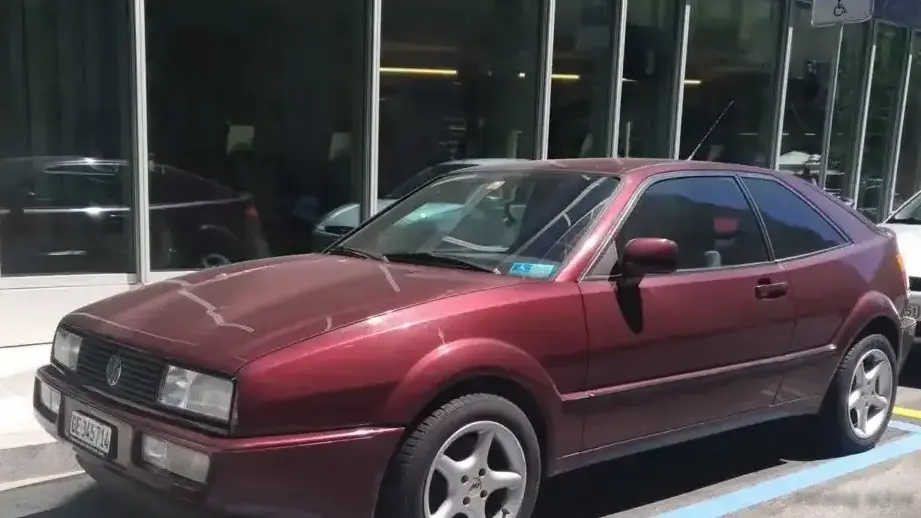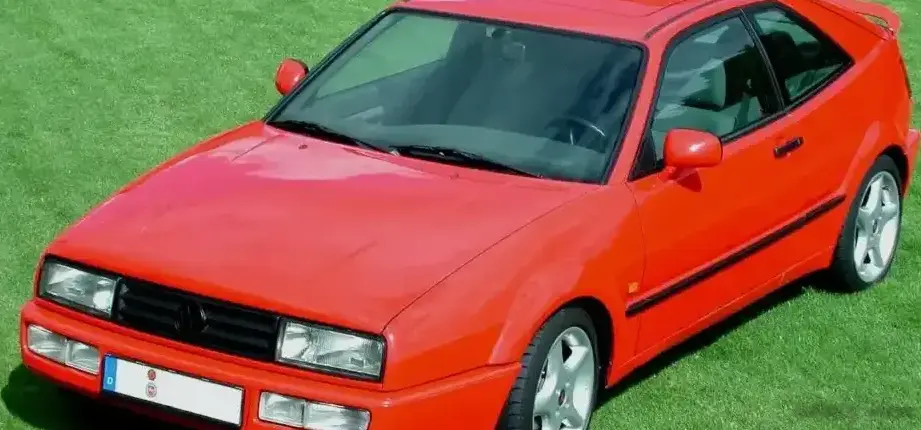
The Volkswagen Corrado VR6, specifically the 2.9-liter variant produced from 1991 to 1995, represents a high-performance iteration of the Corrado coupe. Positioned as the flagship model within the Corrado range, it offered a significant performance upgrade over the base 1.8-liter and 1.9-liter diesel options. Built on the Volkswagen Group’s B2 platform (internally designated 53I), the facelifted Corrado VR6 aimed to deliver a sporty and refined driving experience, appealing to enthusiasts seeking a compact, powerful coupe. This model was primarily marketed in Europe, though limited numbers were imported to North America.
Technical Specifications
| Brand | Volkswagen |
| Model | Corrado |
| Generation | Corrado (53I, facelift 1991) |
| Type (Engine) | 2.9 VR6 (190 Hp) |
| Start of production | 1991 |
| End of production | 1995 |
| Powertrain Architecture | Internal Combustion engine |
| Body type | Coupe |
| Seats | 4 |
| Doors | 3 |
| Fuel consumption (urban) | 12.8 l/100 km (18.4 US mpg, 22.1 UK mpg, 7.8 km/l) |
| Fuel consumption (extra urban) | 7.2 l/100 km (32.7 US mpg, 39.2 UK mpg, 13.9 km/l) |
| Fuel consumption (combined) | 8.5 l/100 km (27.7 US mpg, 33.2 UK mpg, 11.8 km/l) |
| Fuel Type | Petrol (Gasoline) |
| Acceleration 0 – 100 km/h | 6.9 sec |
| Acceleration 0 – 62 mph | 6.9 sec |
| Acceleration 0 – 60 mph | 6.6 sec |
| Maximum speed | 235 km/h (146.02 mph) |
| Weight-to-power ratio | 6.7 kg/Hp, 149.6 Hp/tonne |
| Weight-to-torque ratio | 5.2 kg/Nm, 192.9 Nm/tonne |
| Power | 190 Hp @ 5800 rpm |
| Power per litre | 66.4 Hp/l |
| Torque | 245 Nm @ 4200 rpm (180.7 lb.-ft. @ 4200 rpm) |
| Engine layout | Front, Transverse |
| Engine Model/Code | ABV |
| Engine displacement | 2861 cm3 (174.59 cu. in.) |
| Number of cylinders | 6 |
| Engine configuration | VR-engine |
| Cylinder Bore | 82 mm (3.23 in.) |
| Piston Stroke | 90.3 mm (3.56 in.) |
| Compression ratio | 10:1 |
| Number of valves per cylinder | 2 |
| Fuel injection system | Multi-port manifold injection |
| Engine aspiration | Naturally aspirated engine |
| Valvetrain | DOHC |
| Engine oil capacity | 6 l (6.34 US qt | 5.28 UK qt) |
| Coolant | 8.2 l (8.66 US qt | 7.21 UK qt) |
| Kerb Weight | 1270 kg (2799.87 lbs.) |
| Max. weight | 1580 kg (3483.3 lbs.) |
| Max load | 310 kg (683.43 lbs.) |
| Trunk (boot) space – minimum | 235 l (8.3 cu. ft.) |
| Trunk (boot) space – maximum | 810 l (28.6 cu. ft.) |
| Fuel tank capacity | 70 l (18.49 US gal | 15.4 UK gal) |
| Length | 4050 mm (159.45 in.) |
| Width | 1690 mm (66.54 in.) |
| Height | 1310 mm (51.57 in.) |
| Wheelbase | 2470 mm (97.24 in.) |
| Front track | 1435 mm (56.5 in.) |
| Rear (Back) track | 1430 mm (56.3 in.) |
| Drivetrain Architecture | The Internal combustion engine (ICE) drives the front wheels of the vehicle. |
| Drive wheel | Front wheel drive |
| Number of gears and type of gearbox | 5 gears, manual transmission |
| Front suspension | Wishbone |
| Rear suspension | Suspension with traction connecting levers |
| Front brakes | Ventilated discs |
| Rear brakes | Disc |
| Assisting systems | ABS (Anti-lock braking system) |
| Steering type | Steering rack and pinion |
| Power steering | Hydraulic Steering |
| Tires size | 205/50 R15 |
| Wheel rims size | 6.5J x 15 |
INTRODUCTION
The Volkswagen Corrado VR6, introduced in 1991 as part of the Corrado’s facelift, quickly became the performance halo car for the model line. The Corrado itself was intended as a replacement for the Scirocco, offering a more sophisticated and sporty alternative. The VR6 engine, a narrow-angle V6, was a revolutionary design for Volkswagen, offering a smooth power delivery and distinctive exhaust note. The 190 horsepower output, coupled with a front-wheel-drive configuration, made the Corrado VR6 a unique and engaging driving experience. It was produced until 1995, coinciding with the end of Corrado production.
Powertrain & Engine Architecture
The heart of the Corrado VR6 is the ABV engine code, a 2.9-liter naturally aspirated VR6. This engine is notable for its 15-degree V-angle, which allowed it to be packaged within the engine bay as a narrow inline-six, simplifying manufacturing and reducing engine length. The ABV featured multi-port fuel injection and a dual overhead camshaft (DOHC) valvetrain, contributing to its responsive performance. The engine produced 190 hp at 5800 rpm and 245 Nm (180.7 lb-ft) of torque at 4200 rpm. The standard transmission was a 5-speed manual, though a 4-speed automatic transmission was also available, albeit less common and generally considered to diminish the driving experience. The automatic transmission was a conventional hydraulic unit, not offering the advanced electronic controls found in some contemporary automatics.
Driving Characteristics
The Corrado VR6 offered a compelling blend of performance and handling. The 2.9-liter VR6 provided strong acceleration, with 0-60 mph times around 6.6 seconds. The front-wheel-drive layout, while offering good traction, could also exhibit torque steer under hard acceleration. The manual transmission provided precise shifts, while the automatic, though smoother, felt less engaging. The suspension, featuring wishbone front suspension and a multi-link rear setup, provided a relatively comfortable ride while maintaining good body control. The steering was responsive, offering a direct connection to the road. Compared to the 1.8-liter models, the VR6 offered a substantial power increase, resulting in a significantly more exhilarating driving experience. The 1.9 TDI diesel, while offering excellent fuel economy, lacked the VR6’s outright performance.
Equipment & Trim Levels
The Corrado VR6 typically came well-equipped, reflecting its position as the premium model. Standard features included power windows, power locks, central locking, and a sunroof. Interior upholstery was typically cloth, though leather options were available. The dashboard featured a sporty design with clear instrumentation. Optional extras included air conditioning, upgraded audio systems, and alloy wheels. The VR6 often featured unique badging and trim details to distinguish it from other Corrado models. The interior trim was generally well-appointed, though materials were not as luxurious as some contemporary grand tourers.
Chassis & Braking
The Corrado VR6 utilized a front-wheel-drive chassis with ventilated disc brakes at the front and solid discs at the rear. ABS (Anti-lock Braking System) was standard, enhancing braking performance and safety. The suspension was tuned to provide a balance between comfort and handling, with stabilizer bars to reduce body roll. The VR6 models often featured slightly stiffer suspension components compared to the lower-spec Corrados to better manage the increased power and weight. The chassis was relatively lightweight, contributing to the car’s agile handling characteristics.
Market Reception & Comparison
The Corrado VR6 was generally well-received by automotive critics, who praised its performance, handling, and distinctive engine. However, some criticized its front-wheel-drive layout, arguing that it couldn’t fully harness the VR6’s power. Compared to rivals like the BMW 3 Series and the Porsche 944, the Corrado VR6 offered a more affordable entry point into the sports coupe market. Fuel economy was reasonable for a performance car of its era, averaging around 27.7 US mpg combined. Reliability was generally good, though the VR6 engine could be prone to oil leaks and timing chain wear if not properly maintained. The automatic transmission versions were often criticized for feeling sluggish and detracting from the overall driving experience.
Legacy
The Volkswagen Corrado VR6 has become a sought-after classic car, appreciated by enthusiasts for its unique engine, sporty handling, and distinctive styling. The ABV VR6 engine is known for its durability, though regular maintenance is crucial to prevent oil leaks and timing chain issues. Well-maintained examples command a premium in the used car market. The Corrado VR6 represents a high point in Volkswagen’s engineering and design, and it remains a popular choice for collectors and enthusiasts alike. Its influence can be seen in subsequent Volkswagen performance models, and it continues to be celebrated as a unique and engaging driving machine.