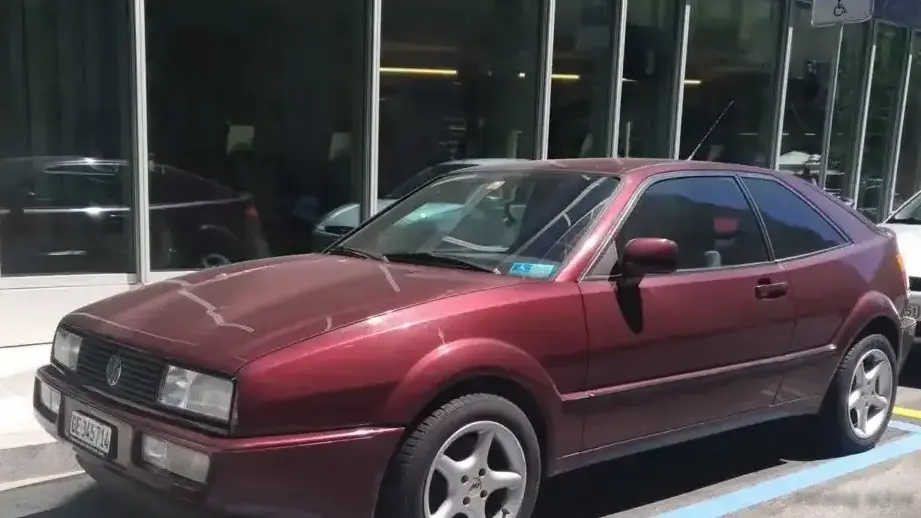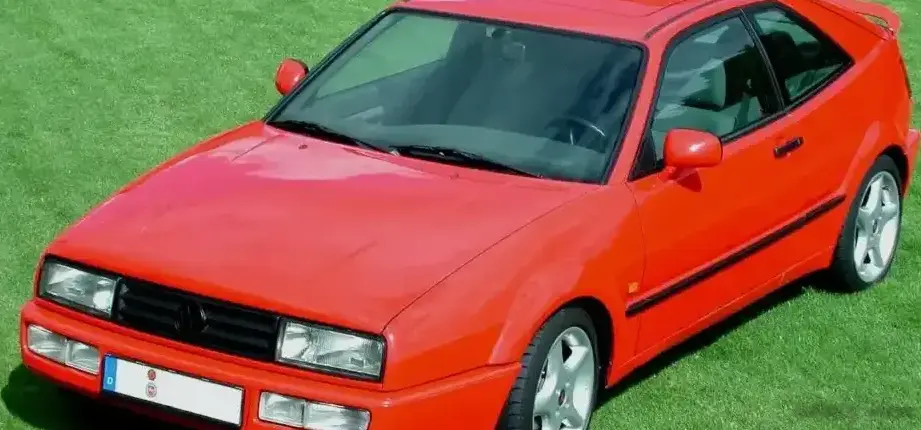
The Volkswagen Corrado 2.9 VR6 Automatic, produced from 1991 to 1995, represents the pinnacle of the Corrado model line. Positioned as the premium offering within the 53I (facelift) generation, it combined Volkswagen’s innovative VR6 engine technology with the convenience of an automatic transmission. The Corrado itself was a sporty coupe intended to bridge the gap between the Golf and the Scirocco, offering a more sophisticated and performance-oriented experience. This variant was primarily sold in Europe, though limited numbers found their way to other markets, including North America. It was a statement of Volkswagen’s engineering prowess and a popular choice for enthusiasts seeking a refined and capable sports coupe.
Technical Specifications
| Brand | Volkswagen |
| Model | Corrado |
| Generation | Corrado (53I, facelift 1991) |
| Type (Engine) | 2.9 VR6 (190 Hp) Automatic |
| Start of production | 1991 |
| End of production | 1995 |
| Powertrain Architecture | Internal Combustion engine |
| Body type | Coupe |
| Seats | 4 |
| Doors | 3 |
| Fuel consumption (urban) | 14.3 l/100 km (16.4 US mpg, 19.8 UK mpg, 7 km/l) |
| Fuel consumption (extra urban) | 7.9 l/100 km (29.8 US mpg, 35.8 UK mpg, 12.7 km/l) |
| Fuel consumption (combined) | 8.5 l/100 km (27.7 US mpg, 33.2 UK mpg, 11.8 km/l) |
| Fuel Type | Petrol (Gasoline) |
| Acceleration 0 – 100 km/h | 6.9 sec |
| Acceleration 0 – 62 mph | 6.9 sec |
| Acceleration 0 – 60 mph | 6.6 sec |
| Maximum speed | 225 km/h (139.81 mph) |
| Weight-to-power ratio | 6.7 kg/Hp, 149.6 Hp/tonne |
| Weight-to-torque ratio | 5.2 kg/Nm, 192.9 Nm/tonne |
| Power | 190 Hp @ 5800 rpm |
| Power per litre | 66.4 Hp/l |
| Torque | 245 Nm @ 4200 rpm (180.7 lb.-ft. @ 4200 rpm) |
| Engine layout | Front, Transverse |
| Engine Model/Code | ABV |
| Engine displacement | 2861 cm3 (174.59 cu. in.) |
| Number of cylinders | 6 |
| Engine configuration | VR-engine |
| Cylinder Bore | 82 mm (3.23 in.) |
| Piston Stroke | 90.3 mm (3.56 in.) |
| Compression ratio | 10:1 |
| Number of valves per cylinder | 2 |
| Fuel injection system | Multi-port manifold injection |
| Engine aspiration | Naturally aspirated engine |
| Valvetrain | DOHC |
| Engine oil capacity | 6 l (6.34 US qt | 5.28 UK qt) |
| Coolant capacity | 8.2 l (8.66 US qt | 7.21 UK qt) |
| Kerb Weight | 1270 kg (2799.87 lbs.) |
| Max. weight | 1580 kg (3483.3 lbs.) |
| Max load | 310 kg (683.43 lbs.) |
| Trunk (boot) space – minimum | 235 l (8.3 cu. ft.) |
| Trunk (boot) space – maximum | 810 l (28.6 cu. ft.) |
| Fuel tank capacity | 70 l (18.49 US gal | 15.4 UK gal) |
| Length | 4050 mm (159.45 in.) |
| Width | 1690 mm (66.54 in.) |
| Height | 1310 mm (51.57 in.) |
| Wheelbase | 2470 mm (97.24 in.) |
| Front track | 1435 mm (56.5 in.) |
| Rear track | 1430 mm (56.3 in.) |
| Drivetrain Architecture | Front wheel drive |
| Drive wheel | Front wheel drive |
| Number of gears | 4 |
| Gearbox type | Automatic transmission |
| Front suspension | Wishbone |
| Rear suspension | Suspension with traction connecting levers |
| Front brakes | Ventilated discs |
| Rear brakes | Disc |
| Assisting systems | ABS (Anti-lock braking system) |
| Steering type | Steering rack and pinion |
| Power steering | Hydraulic Steering |
| Tires size | 205/50 R15 |
| Wheel rims size | 6.5J x 15 |
Powertrain & Engine Architecture
The heart of the Corrado VR6 Automatic is the ABV engine, a 2.9-liter naturally aspirated VR6. This engine, a hallmark of Volkswagen engineering, features a unique 15-degree V-angle between the cylinder banks. This configuration allowed for a relatively narrow engine design, facilitating its fitment into a front-wheel-drive chassis. The ABV utilizes multi-port fuel injection and a dual overhead camshaft (DOHC) valvetrain, contributing to its smooth power delivery and respectable output of 190 horsepower and 245 Nm (180.7 lb-ft) of torque. The automatic transmission employed was a four-speed unit, designed to provide comfortable and convenient shifting. While not as sporty as a manual transmission, it was well-suited to the Corrado’s grand touring character.
Driving Characteristics
The 2.9 VR6 Automatic Corrado offered a compelling blend of performance and comfort. Acceleration to 60 mph took approximately 6.6-6.9 seconds, respectable for the early 1990s. The automatic transmission, while smooth, did result in some power loss compared to the manual versions. The gear ratios were tuned for everyday drivability rather than outright performance, prioritizing smooth transitions and fuel efficiency. The VR6 engine’s torque curve provided ample power for overtaking and cruising, but the automatic transmission sometimes felt hesitant during quick downshifts. Compared to the more economical four-cylinder Corrados, the VR6 offered a significantly more engaging driving experience, but at the cost of increased fuel consumption.
Equipment & Trim Levels
The VR6 Automatic typically came well-equipped, reflecting its position as the top-of-the-line Corrado variant. Standard features included power windows, central locking, power steering, and an anti-lock braking system (ABS). Interior upholstery was typically a high-quality cloth or optional leather. Dashboard trim was often woodgrain or metallic finish, adding to the car’s premium feel. Optional extras included a sunroof, upgraded audio system, and sport seats. The Corrado’s interior was known for its driver-focused design, with all controls within easy reach.
Chassis & Braking
The Corrado’s chassis featured independent suspension all around, with a wishbone setup at the front and a torsion beam arrangement at the rear. The VR6 models often received slightly stiffer suspension components to handle the increased power and weight. Braking was handled by ventilated discs at the front and solid discs at the rear, providing adequate stopping power for most driving situations. The ABS system further enhanced safety by preventing wheel lockup during hard braking. The VR6 models generally had a slightly thicker front stabilizer bar compared to the lower-spec Corrados.
Market Reception & Comparison
The Corrado VR6 Automatic was generally well-received by automotive critics. It was praised for its smooth engine, comfortable ride, and stylish design. However, some reviewers noted the automatic transmission’s slightly sluggish performance compared to the manual gearbox. Fuel economy was also a point of concern, as the VR6 engine was relatively thirsty. Compared to other coupes in its class, such as the BMW 3-Series and the Mazda MX-6, the Corrado offered a unique blend of German engineering and sporty styling. The VR6 Automatic was often seen as a more refined and comfortable alternative to the more performance-focused manual versions.
Legacy
The Corrado VR6 Automatic has become a sought-after classic among Volkswagen enthusiasts. The ABV engine, while complex, is generally considered reliable when properly maintained. However, the automatic transmission can be prone to issues with age, requiring careful inspection and servicing. Today, well-maintained examples command a premium in the used car market. The Corrado VR6 Automatic represents a high point in Volkswagen’s coupe history, showcasing the company’s engineering innovation and commitment to quality. Its unique VR6 engine and stylish design continue to appeal to enthusiasts seeking a distinctive and rewarding driving experience.