
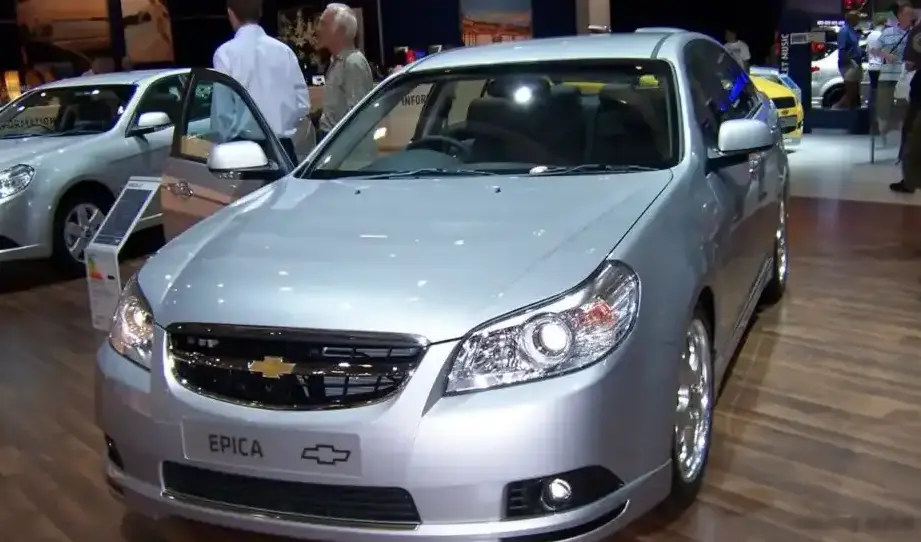
The Chevrolet Epica 2.0i 24V Automatic, produced between 2006 and 2011, represented a mid-range offering within the Epica lineup. The Epica, a D-segment sedan, was Chevrolet’s attempt to establish a presence in a market traditionally dominated by Japanese and European manufacturers. Built upon the GM Delta platform (also underpinning the Opel/Vauxhall Vectra and Saab 9-3), the Epica aimed to provide a spacious and well-equipped vehicle at a competitive price point, primarily targeting family buyers. The 2.0-liter engine with an automatic transmission was positioned as a balance between affordability and acceptable performance, appealing to drivers prioritizing comfort and ease of use over outright sportiness.
Technical Specifications
| Brand | Chevrolet |
| Model | Epica |
| Generation | Epica |
| Type (Engine) | 2.0 i 24V (143 Hp) Automatic |
| Start of production | 2006 |
| End of production | 2011 |
| Powertrain Architecture | Internal Combustion engine |
| Body type | Sedan |
| Seats | 5 |
| Doors | 4 |
| Fuel consumption (urban) | 12.4 l/100 km (19 US mpg, 22.8 UK mpg, 8.1 km/l) |
| Fuel consumption (extra urban) | 6.8 l/100 km (34.6 US mpg, 41.5 UK mpg, 14.7 km/l) |
| Fuel consumption (combined) | 8.9 l/100 km (26.4 US mpg, 31.7 UK mpg, 11.2 km/l) |
| Fuel Type | Petrol (Gasoline) |
| Acceleration 0 – 100 km/h | 11.8 sec |
| Acceleration 0 – 62 mph | 11.8 sec |
| Acceleration 0 – 60 mph | 11.2 sec |
| Maximum speed | 199 km/h (123.65 mph) |
| Weight-to-power ratio | 10.5 kg/Hp, 95.3 Hp/tonne |
| Weight-to-torque ratio | 7.7 kg/Nm, 130 Nm/tonne |
| Power | 143 Hp @ 6300 rpm |
| Power per litre | 71.8 Hp/l |
| Torque | 195 Nm @ 4600 rpm (143.82 lb.-ft. @ 4600 rpm) |
| Engine layout | Front, Transverse |
| Engine Model/Code | LBM, LF3 |
| Engine displacement | 1993 cm3 (121.62 cu. in.) |
| Number of cylinders | 6 |
| Engine configuration | Inline |
| Cylinder Bore | 75 mm (2.95 in.) |
| Piston Stroke | 75.2 mm (2.96 in.) |
| Compression ratio | 9.9:1 |
| Number of valves per cylinder | 4 |
| Fuel injection system | Multi-port manifold injection |
| Engine aspiration | Naturally aspirated engine |
| Valvetrain | DOHC |
| Engine oil capacity | 6.4 l (6.76 US qt | 5.63 UK qt) |
| Coolant | 8 l (8.45 US qt | 7.04 UK qt) |
| Kerb Weight | 1500 kg (3306.93 lbs.) |
| Max. weight | 1985 kg (4376.18 lbs.) |
| Max load | 485 kg (1069.24 lbs.) |
| Trunk (boot) space – minimum | 435 l (15.36 cu. ft.) |
| Fuel tank capacity | 65 l (17.17 US gal | 14.3 UK gal) |
| Length | 4804 mm (189.13 in.) |
| Width | 1807 mm (71.14 in.) |
| Height | 1449 mm (57.05 in.) |
| Wheelbase | 2700 mm (106.3 in.) |
| Front track | 1550 mm (61.02 in.) |
| Rear (Back) track | 1545 mm (60.83 in.) |
| Drivetrain Architecture | The Internal combustion engine (ICE) drives the front wheels of the vehicle. |
| Drive wheel | Front wheel drive |
| Number of gears and type of gearbox | 5 gears, automatic transmission |
| Front suspension | Spring Strut |
| Rear suspension | Transverse stabilizer |
| Front brakes | Ventilated discs |
| Rear brakes | Disc |
| Assisting systems | ABS (Anti-lock braking system) |
| Steering type | Steering rack and pinion |
| Tires size | 205/60 R16 |
| Wheel rims size | 6J X 16 |
Powertrain & Engine Architecture
The Chevrolet Epica 2.0i Automatic utilized the LBM/LF3 inline-six cylinder engine. This engine, a staple in various GM vehicles of the era, featured a double overhead camshaft (DOHC) valvetrain and multi-port fuel injection. The 1993cc displacement produced 143 horsepower at 6300 rpm and 195 Nm (143.82 lb-ft) of torque at 4600 rpm. The engine’s design prioritized smooth operation and reasonable fuel efficiency over outright performance. The automatic transmission was a conventional five-speed unit, chosen for its ease of use and suitability for the target demographic. While not known for particularly quick shifts, it provided a comfortable driving experience. The engine management system was designed to meet emissions standards prevalent at the time, though it lacked the advanced features found in more modern powertrains.
Driving Characteristics
The 2.0-liter automatic Epica offered a comfortable, if not particularly engaging, driving experience. Acceleration from 0-60 mph took around 11.2 seconds, and top speed was approximately 123.65 mph. The automatic transmission, while smooth, did contribute to a noticeable loss of power compared to the available manual transmission options. Gear ratios were tuned for fuel economy and relaxed cruising, meaning the engine often felt strained during aggressive acceleration. Compared to the higher-output engines available in the Epica range (such as the 2.5L V6), the 2.0L automatic was noticeably slower, but it offered a more economical and refined driving experience. The steering was light and easy, making it well-suited for city driving, but lacked the feedback desired by more enthusiastic drivers.
Equipment & Trim Levels
The 2.0i Automatic trim typically included standard features such as air conditioning, power windows and locks, a basic audio system, and alloy wheels. Interior upholstery was generally cloth, though leather options were available as upgrades. Dashboard design was functional but somewhat dated, even for its time. Optional extras included a sunroof, upgraded audio system with CD changer, and automatic climate control. Safety features included ABS brakes and dual front airbags, but lacked the advanced safety systems found in more contemporary vehicles.
Chassis & Braking
The Epica’s chassis featured a MacPherson strut front suspension and a multi-link rear suspension, providing a reasonably comfortable ride. Front brakes were ventilated discs, while rear brakes were solid discs. The suspension was tuned for comfort rather than sporty handling, resulting in a noticeable amount of body roll during cornering. The steering system utilized a rack and pinion setup, providing adequate precision for everyday driving. Tire size was typically 205/60 R16, offering a balance between ride comfort and grip.
Market Reception & Comparison
The Chevrolet Epica 2.0i Automatic received mixed reviews from automotive critics. It was generally praised for its spacious interior, comfortable ride, and competitive price. However, it was often criticized for its uninspired styling, lackluster performance, and somewhat dated interior. Compared to other trims in the Epica lineup, the 2.0L automatic offered the best fuel economy but the slowest acceleration. Reliability was generally considered average, with some reports of issues with the automatic transmission and engine sensors. Fuel economy figures of around 26.4 US mpg combined were respectable for the time, but not class-leading.
Legacy
The Chevrolet Epica, while not a resounding success in the market, provided Chevrolet with a foothold in the D-segment sedan category. The 2.0-liter engine and automatic transmission combination, while not particularly memorable, proved to be reasonably reliable in the long term, provided regular maintenance was performed. Today, the Epica 2.0i Automatic can be found on the used car market at very affordable prices. Its appeal lies primarily in its practicality, spaciousness, and low running costs, making it a suitable option for budget-conscious buyers seeking a comfortable and reliable family sedan. Parts availability can be a concern, as the Epica is no longer in production, but many components are shared with other GM vehicles of the era, making sourcing replacements relatively straightforward.
