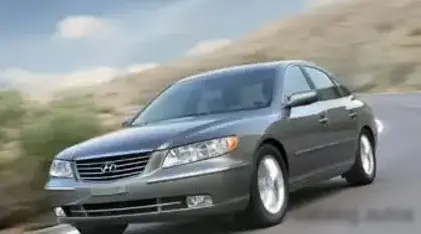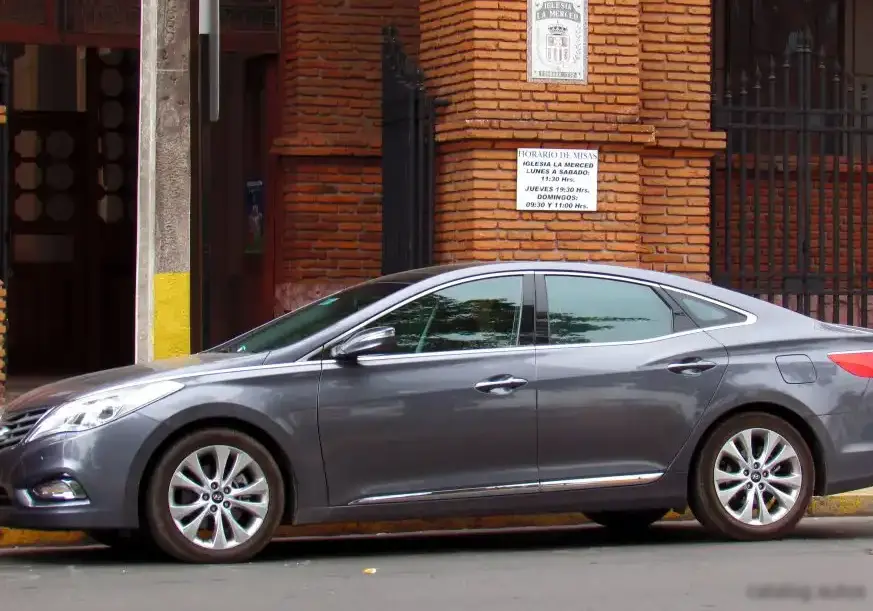
The Hyundai Grandeur/Azera IV (TG), specifically the facelifted model produced from 2009 to 2011, represented a significant step forward for Hyundai in the full-size sedan segment. This generation, marketed as the Azera in North America, aimed to compete with established Japanese and American luxury vehicles. The 2.7-liter V6 engine paired with an automatic transmission was a key variant within the TG lineup, positioned as a balance between affordability and respectable performance. It served as the entry point to the V6 engine options, slotting below the more powerful 3.3-liter and 3.8-liter variants.
Technical Specifications
| Brand | Hyundai |
| Model | Grandeur/Azera |
| Generation | Grandeur/Azera IV (TG, facelift 2009) |
| Type (Engine) | 2.7 V6 (195 Hp) Automatic |
| Start of production | 2010 |
| End of production | 2011 |
| Powertrain Architecture | Internal Combustion engine |
| Body type | Sedan |
| Seats | 5 |
| Doors | 4 |
| Fuel Type | Petrol (Gasoline) |
| Acceleration 0 – 100 km/h | 9.2 sec |
| Acceleration 0 – 62 mph | 9.2 sec |
| Acceleration 0 – 60 mph | 8.7 sec |
| Maximum speed | 216 km/h (134.22 mph) |
| Weight-to-power ratio | 8.1 kg/Hp, 123.7 Hp/tonne |
| Weight-to-torque ratio | 6.3 kg/Nm, 159.2 Nm/tonne |
| Power | 195 Hp @ 6000 rpm |
| Power per litre | 73.4 Hp/l |
| Torque | 251 Nm @ 4500 rpm (185.13 lb.-ft. @ 4500 rpm) |
| Engine layout | Front, Transverse |
| Engine Model/Code | Delta / G6BA |
| Engine displacement | 2656 cm3 (162.08 cu. in.) |
| Number of cylinders | 6 |
| Engine configuration | V-engine |
| Cylinder Bore | 86.7 mm (3.41 in.) |
| Piston Stroke | 75 mm (2.95 in.) |
| Compression ratio | 10.4:1 |
| Number of valves per cylinder | 4 |
| Fuel injection system | Multi-port manifold injection |
| Engine aspiration | Naturally aspirated engine |
| Valvetrain | DOHC |
| Engine oil capacity | 4.5 l (4.76 US qt | 3.96 UK qt) |
| Kerb Weight | 1577 kg (3476.69 lbs.) |
| Max. weight | 1902 kg (4193.19 lbs.) |
| Max load | 325 kg (716.5 lbs.) |
| Trunk (boot) space – minimum | 523 l (18.47 cu. ft.) |
| Fuel tank capacity | 75 l (19.81 US gal | 16.5 UK gal) |
| Length | 4895 mm (192.72 in.) |
| Width | 1850 mm (72.83 in.) |
| Height | 1490 mm (58.66 in.) |
| Wheelbase | 2780 mm (109.45 in.) |
| Front track | 1580 mm (62.2 in.) |
| Rear (Back) track | 1565 mm (61.61 in.) |
| Ride height (ground clearance) | 162 mm (6.38 in.) |
| Drag coefficient (Cd) | 0.29 |
| Minimum turning circle (turning diameter) | 12.5 m (41.01 ft.) |
| Drivetrain Architecture | The Internal combustion engine (ICE) drives the front wheels of the vehicle. |
| Drive wheel | Front wheel drive |
| Number of gears and type of gearbox | 6 gears, automatic transmission |
| Front suspension | Double wishbone |
| Rear suspension | Independent multi-link suspension |
| Front brakes | Ventilated discs |
| Rear brakes | Disc |
| Assisting systems | ABS (Anti-lock braking system) |
| Steering type | Steering rack and pinion |
| Tires size | 225/60 R16 H |
| Wheel rims size | 6.5J x 16 |
INTRODUCTION
The 2.7-liter V6 engine in the facelifted Hyundai Grandeur/Azera IV (TG) was introduced as a more accessible option within the range, particularly for buyers who prioritized a smoother driving experience over outright performance. Produced from 2010 to 2011, this variant aimed to broaden the appeal of the Grandeur/Azera, offering a comfortable and well-equipped sedan at a competitive price point. It was a key model in Hyundai’s strategy to establish itself as a credible contender in the mid-to-full size sedan market, challenging established brands with a combination of value, features, and a lengthy warranty.
Powertrain & Engine Architecture
The heart of this variant is Hyundai’s Delta engine family, specifically the G6BA 2.7-liter DOHC V6. This engine utilizes a 60-degree V-angle configuration, contributing to a relatively compact engine bay footprint. The engine employs multi-port fuel injection (MPI) for precise fuel delivery, and its dual overhead camshafts (DOHC) operate four valves per cylinder, optimizing breathing and contributing to its 195 horsepower output at 6000 rpm and 251 Nm (185 lb-ft) of torque at 4500 rpm. The engine’s block is constructed from cast iron for durability, while the cylinder heads are made of aluminum alloy to reduce weight. The automatic transmission paired with this engine is a six-speed unit, designed to provide smooth and efficient gear changes. This transmission was a significant upgrade from the older four-speed automatics found in previous generations, improving both acceleration and fuel economy.
Driving Characteristics
The 2.7-liter Grandeur/Azera offers a comfortable and refined driving experience, prioritizing smoothness over sporty handling. Acceleration from 0-60 mph takes approximately 8.7 seconds, which is adequate for everyday driving but noticeably slower than the 3.3-liter or 3.8-liter V6 models. The six-speed automatic transmission is well-tuned, providing seamless shifts and contributing to a relaxed cruising experience. The gear ratios are optimized for fuel efficiency and comfortable highway driving, rather than aggressive acceleration. Compared to the manual transmission options available on other Grandeur/Azera trims, the automatic offers greater convenience, particularly in urban traffic. However, it does result in a slight reduction in fuel economy and a less engaging driving experience.
Equipment & Trim Levels
The 2.7-liter automatic variant typically came standard with a respectable array of features. These generally included air conditioning, power windows and locks, a CD/MP3 stereo system, and alloy wheels. Higher trim levels added features such as leather upholstery, a sunroof, heated front seats, and a premium audio system. Safety features like ABS, front airbags, and side airbags were standard across the range. The interior design focused on providing a spacious and comfortable cabin, with ample legroom for both front and rear passengers. The dashboard layout was straightforward and user-friendly, with logically placed controls.
Chassis & Braking
The Grandeur/Azera IV utilizes a front-wheel-drive layout with a double wishbone suspension at the front and an independent multi-link suspension at the rear. This suspension setup provides a comfortable ride quality, effectively absorbing bumps and irregularities in the road surface. The braking system consists of ventilated discs at the front and solid discs at the rear, providing adequate stopping power for everyday driving. ABS (Anti-lock Braking System) is standard, enhancing safety by preventing wheel lockup during hard braking. The steering is rack and pinion, offering precise and responsive handling.
Market Reception & Comparison
The 2.7-liter Grandeur/Azera was generally well-received by critics as a value-oriented option in the full-size sedan segment. It was praised for its comfortable ride, spacious interior, and generous standard features. However, some reviewers noted that its acceleration was not as brisk as that of its competitors, particularly those equipped with larger engines. Compared to the 3.3-liter and 3.8-liter V6 models, the 2.7-liter version offered better fuel economy but sacrificed some performance. In terms of reliability, the Delta engine family has proven to be generally robust, although regular maintenance is crucial to prevent issues such as oil leaks and timing belt failures.
Legacy
The 2.7-liter Grandeur/Azera IV (TG) remains a relatively affordable and reliable used car option today. Its spacious interior, comfortable ride, and generous features make it a practical choice for families and commuters. While it may not offer the same level of performance as some of its competitors, its value proposition and proven reliability have ensured its continued presence on the used car market. The Delta engine, while not known for being particularly exciting, has demonstrated reasonable longevity when properly maintained, making this variant a potentially good long-term ownership prospect for budget-conscious buyers.