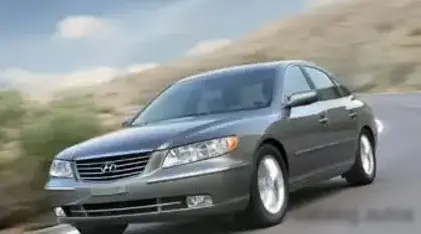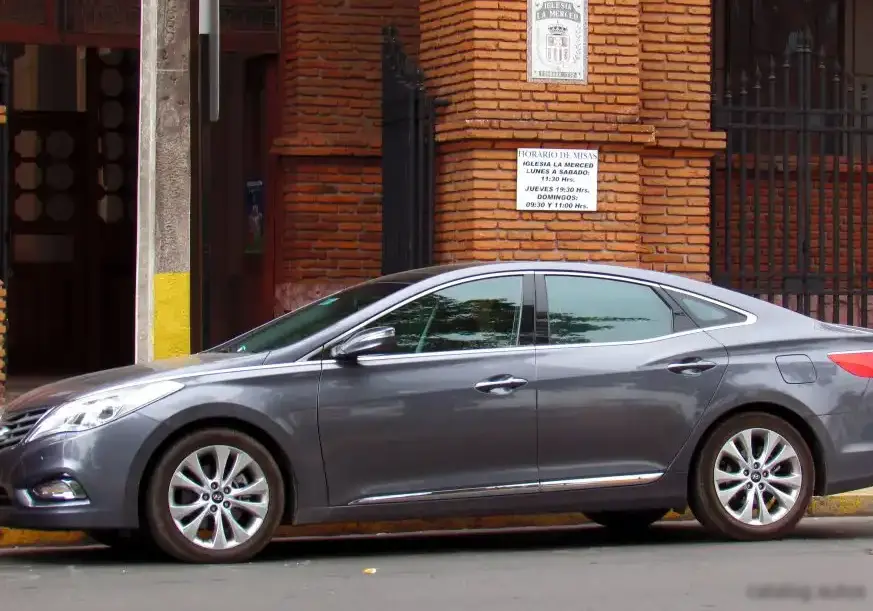
The Hyundai Grandeur/Azera IV (TG), specifically the facelifted model produced from 2009 to 2011, represented a significant step forward for Hyundai in the large sedan segment. This generation, positioned as a premium offering, aimed to compete with established Japanese and American brands. The 3.8-liter V6 engine paired with an automatic transmission was a key variant, offering a balance of power and comfort. It served as the top-tier engine option for the Azera/Grandeur, appealing to buyers seeking a refined driving experience without the complexity of emerging technologies like hybrid systems. This model was primarily marketed in South Korea (as the Grandeur) and North America (as the Azera), with smaller sales in select international markets.
Technical Specifications
| Brand | Hyundai |
| Model | Grandeur/Azera |
| Generation | Grandeur/Azera IV (TG, facelift 2009) |
| Type (Engine) | 3.8 V6 (264 Hp) Automatic |
| Start of production | 2009 |
| End of production | 2011 |
| Powertrain Architecture | Internal Combustion engine |
| Body type | Sedan |
| Seats | 5 |
| Doors | 4 |
| Fuel Type | Petrol (Gasoline) |
| Acceleration 0 – 100 km/h | 7.2 sec |
| Acceleration 0 – 62 mph | 7.2 sec |
| Acceleration 0 – 60 mph | 6.8 sec |
| Maximum speed | 230 km/h (142.92 mph) |
| Weight-to-power ratio | 6.6 kg/Hp, 152.6 Hp/tonne |
| Weight-to-torque ratio | 5 kg/Nm, 201.2 Nm/tonne |
| Power | 264 Hp @ 6000 rpm |
| Power per litre | 69.9 Hp/l |
| Torque | 348 Nm @ 4500 rpm (256.67 lb.-ft. @ 4500 rpm) |
| Engine layout | Front, Transverse |
| Engine Model/Code | Lambda / G6DA |
| Engine displacement | 3778 cm3 (230.55 cu. in.) |
| Number of cylinders | 6 |
| Engine configuration | V-engine |
| Cylinder Bore | 96 mm (3.78 in.) |
| Piston Stroke | 87 mm (3.43 in.) |
| Compression ratio | 10.4:1 |
| Number of valves per cylinder | 4 |
| Fuel injection system | Multi-port manifold injection |
| Engine aspiration | Naturally aspirated engine |
| Valvetrain | DOHC, CVVT |
| Engine oil capacity | 5.5 l (5.81 US qt | 4.84 UK qt) |
| Coolant | 8.8 l (9.3 US qt | 7.74 UK qt) |
| Kerb Weight | 1730 kg (3814 lbs.) |
| Max. weight | 2055 kg (4530.5 lbs.) |
| Max load | 325 kg (716.5 lbs.) |
| Trunk (boot) space – minimum | 523 l (18.47 cu. ft.) |
| Fuel tank capacity | 75 l (19.81 US gal | 16.5 UK gal) |
| Length | 4895 mm (192.72 in.) |
| Width | 1850 mm (72.83 in.) |
| Height | 1490 mm (58.66 in.) |
| Wheelbase | 2780 mm (109.45 in.) |
| Front track | 1580 mm (62.2 in.) |
| Rear (Back) track | 1565 mm (61.61 in.) |
| Drag coefficient (Cd) | 0.29 |
| Minimum turning circle | 12.5 m (41.01 ft.) |
| Drivetrain Architecture | The Internal combustion engine (ICE) drives the front wheels of the vehicle. |
| Drive wheel | Front wheel drive |
| Number of gears | 5 |
| Gearbox type | automatic transmission |
| Front suspension | Double wishbone |
| Rear suspension | Independent multi-link suspension |
| Front brakes | Ventilated discs |
| Rear brakes | Disc |
| Assisting systems | ABS (Anti-lock braking system) |
| Steering type | Steering rack and pinion |
| Power steering | Hydraulic Steering |
| Tires size | 235/55 R17 V |
| Wheel rims size | 17 |
Powertrain & Engine Architecture
The heart of this Azera/Grandeur variant is the Hyundai Lambda 3.8-liter V6 engine, designated as the G6DA. This engine is a naturally aspirated, 60-degree V6 featuring dual overhead camshafts (DOHC) and continuously variable valve timing (CVVT) on both intake and exhaust valves. The multi-port fuel injection system delivers fuel directly to each cylinder, optimizing combustion efficiency. The engine’s architecture prioritized smooth power delivery and refinement over outright performance. The 3.8L engine produced 264 horsepower at 6000 rpm and 256.67 lb-ft of torque at 4500 rpm. This power was routed through a five-speed automatic transmission, designed for comfortable cruising and responsive acceleration. The transmission featured adaptive shift logic, adjusting shift points based on driving conditions and driver input.
Driving Characteristics
The 3.8L V6 automatic combination delivered a comfortable and composed driving experience. Acceleration to 60 mph was achieved in approximately 6.8 seconds, making it adequately quick for everyday driving and highway merging. While not as sporty as some competitors, the engine provided ample power for passing maneuvers. The automatic transmission, while smooth, wasn’t particularly quick to downshift, and lacked the responsiveness of some newer transmissions. The gear ratios were tuned for fuel efficiency and relaxed cruising, rather than aggressive acceleration. Compared to the base 3.3L V6, the 3.8L offered a noticeable increase in power and torque, resulting in a more confident and effortless driving experience. It lacked the direct feel of a manual transmission, but provided a level of convenience that appealed to a broader audience.
Equipment & Trim Levels
The 3.8L V6 automatic trim typically represented the highest level of equipment available for the Azera/Grandeur. Standard features included leather upholstery, power-adjustable front seats with heating, a premium audio system, automatic climate control, and alloy wheels. Optional extras often included a sunroof, navigation system, and upgraded interior trim. The interior design focused on providing a luxurious and comfortable environment, with a spacious cabin and high-quality materials. The dashboard layout was straightforward and user-friendly, with intuitive controls. The overall aesthetic aimed for a sophisticated and understated elegance.
Chassis & Braking
The Azera/Grandeur IV utilized a front-wheel-drive platform with a double wishbone suspension at the front and an independent multi-link suspension at the rear. This suspension setup prioritized ride comfort and stability. The 3.8L variant typically featured larger stabilizer bars compared to lower trims, reducing body roll during cornering. Braking duties were handled by ventilated discs at the front and solid discs at the rear, equipped with an Anti-lock Braking System (ABS). The braking system provided adequate stopping power for everyday driving, but wasn’t particularly sporty or high-performance oriented. The steering was hydraulically assisted, providing a reasonably weighted feel.
Market Reception & Comparison
Critics generally praised the 3.8L Azera/Grandeur for its spacious interior, comfortable ride, and generous equipment list. However, some reviewers noted that the handling wasn’t as engaging as some competitors, and the automatic transmission could feel somewhat sluggish. Fuel economy was respectable for a V6-powered sedan, but not class-leading. Compared to the base 3.3L V6, the 3.8L offered a significant performance upgrade, justifying the higher price tag for buyers prioritizing power and acceleration. It competed directly with models like the Toyota Avalon, Honda Accord V6, and Buick LaCrosse, offering a compelling value proposition with its combination of features and performance.
Legacy
The Hyundai Grandeur/Azera IV 3.8L V6 automatic has proven to be a relatively reliable powertrain. The Lambda engine is known for its durability, and the five-speed automatic transmission, while not the most advanced, has generally held up well over time. Common maintenance items include regular oil changes, timing belt replacement (depending on mileage), and inspection of the cooling system. In the used car market, these models represent a good value for buyers seeking a comfortable and well-equipped large sedan. While not a collector’s item, the Azera/Grandeur IV 3.8L remains a practical and affordable option for those seeking a reliable and spacious vehicle.