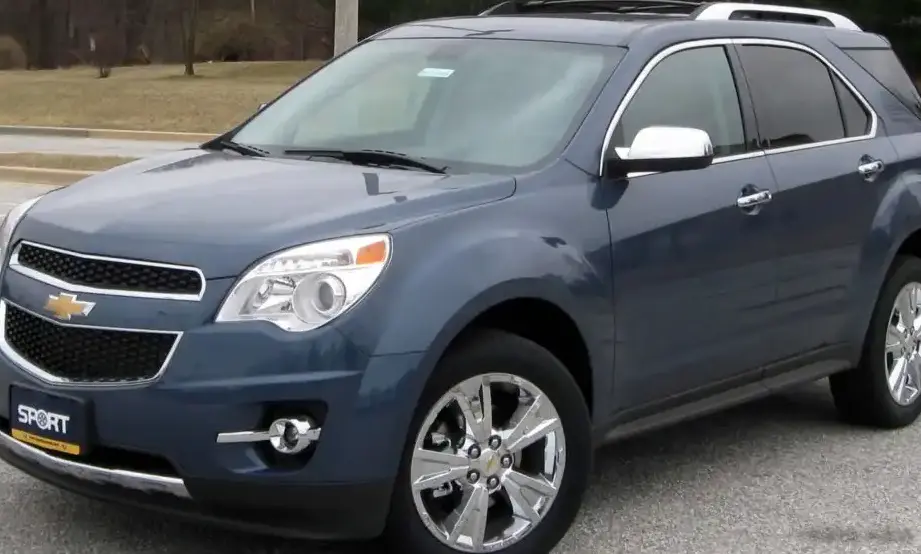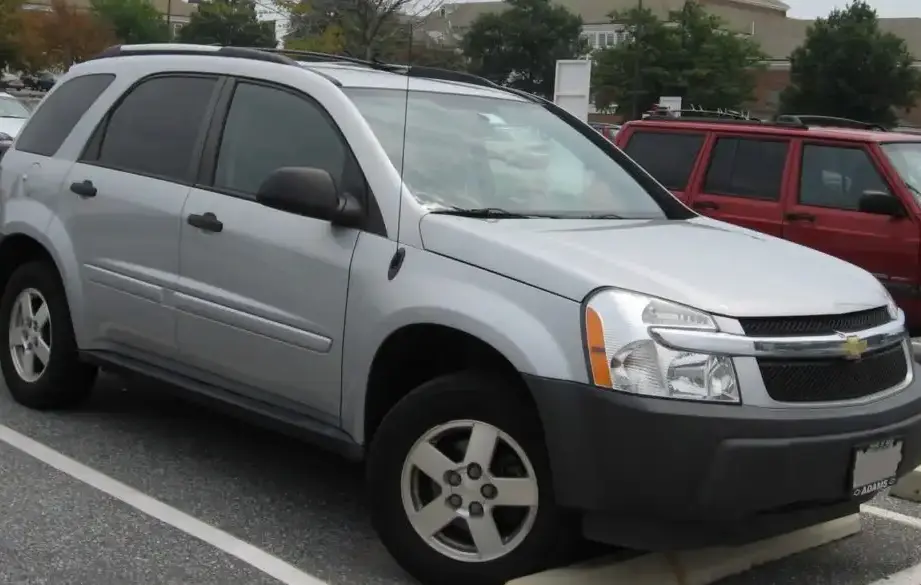
The Chevrolet Equinox 3.4L V6 AWD Automatic was a trim level offered for the first generation Equinox, produced between 2005 and 2009. This variant represented the top-of-the-line offering for the early Equinox models, positioned above the base 2.4L four-cylinder versions. It aimed to provide buyers with a more powerful and capable compact SUV, particularly appealing to those needing all-weather capability and towing capacity. The Equinox itself was Chevrolet’s entry into the burgeoning crossover SUV market, designed to compete with vehicles like the Honda CR-V and Toyota RAV4.
Technical Specifications
| Brand | Chevrolet |
| Model | Equinox |
| Type (Engine) | 3.4 i V6 (185 Hp) AWD Automatic |
| Start of production | 2005 |
| End of production | 2009 |
| Powertrain Architecture | Internal Combustion engine |
| Body type | SUV |
| Seats | 5 |
| Doors | 5 |
| Fuel consumption (urban) | 13.5 l/100 km (17.4 US mpg) |
| Fuel consumption (extra urban) | 9 l/100 km (26.1 US mpg) |
| Fuel consumption (combined) | 11.5 l/100 km (20.5 US mpg) |
| Fuel Type | Petrol (Gasoline) |
| Acceleration 0 – 100 km/h | 9 sec |
| Acceleration 0 – 62 mph | 9 sec |
| Acceleration 0 – 60 mph | 8.6 sec |
| Maximum speed | 180 km/h (111.85 mph) |
| Weight-to-power ratio | 9.2 kg/Hp |
| Weight-to-torque ratio | 5.9 kg/Nm |
| Power | 185 Hp @ 5200 rpm |
| Torque | 285 Nm @ 3800 rpm (210.21 lb.-ft. @ 3800 rpm) |
| Engine layout | Front, Transverse |
| Engine Model/Code | LNJ |
| Engine displacement | 3350 cm3 (204.43 cu. in.) |
| Number of cylinders | 6 |
| Engine configuration | V-engine |
| Cylinder Bore | 92 mm (3.62 in.) |
| Piston Stroke | 84 mm (3.31 in.) |
| Compression ratio | 9.5:1 |
| Number of valves per cylinder | 2 |
| Fuel injection system | Multi-port manifold injection |
| Engine aspiration | Naturally aspirated engine |
| Engine oil capacity | 3.8 l (4.02 US qt | 3.34 UK qt) |
| Coolant capacity | 9.9 l (10.46 US qt | 8.71 UK qt) |
| Kerb Weight | 1695 kg (3736.84 lbs.) |
| Trunk (boot) space – minimum | 860 l (30.37 cu. ft.) |
| Fuel tank capacity | 63 l (16.64 US gal | 13.86 UK gal) |
| Length | 4795 mm (188.78 in.) |
| Width | 1835 mm (72.24 in.) |
| Height | 1705 mm (67.13 in.) |
| Wheelbase | 2860 mm (112.6 in.) |
| Front track | 1565 mm (61.61 in.) |
| Rear (Back) track | 1570 mm (61.81 in.) |
| Drive wheel | All wheel drive (4×4) |
| Number of gears and type of gearbox | 5 gears, automatic transmission |
| Front suspension | Spring Strut |
| Rear suspension | Transverse stabilizer |
| Front brakes | Ventilated discs |
| Rear brakes | Disc |
| Assisting systems | ABS (Anti-lock braking system) |
| Steering type | Steering rack and pinion |
| Tires size | 235/65 R16 |
| Wheel rims size | 6.5J x 16 |
INTRODUCTION
The Chevrolet Equinox 3.4L V6 AWD Automatic debuted in 2005 as part of the first generation (2005-2009) of the Equinox. Built on the GM Theta platform, it was designed to offer a more refined and spacious alternative to traditional compact SUVs. The 3.4L V6 engine and automatic transmission combination was positioned as the premium offering, providing increased performance and all-weather capability through its all-wheel-drive system. This trim level aimed to attract buyers who desired a comfortable and capable family vehicle without sacrificing practicality.
Powertrain & Engine Architecture
The heart of this Equinox variant is the 3.4-liter (3350 cc) LNJ V6 engine. This engine is a 60-degree V-engine featuring a cast iron block and aluminum cylinder heads. It utilizes a multi-port fuel injection system, delivering fuel directly into the intake ports. The engine produces 185 horsepower at 5200 rpm and 285 Nm (210 lb-ft) of torque at 3800 rpm. The engine’s valvetrain consists of two valves per cylinder, operated by a single overhead camshaft. The engine is transversely mounted in the front of the vehicle.
The engine is paired with a five-speed automatic transmission (5L40-E). This transmission is a conventional hydraulic automatic, known for its reliability and smooth shifting characteristics. The all-wheel-drive system is an automatic, on-demand system that engages the rear wheels when wheel slippage is detected. This system enhances traction in adverse weather conditions and provides improved stability.
Driving Characteristics
The 3.4L V6 equipped Equinox offered a noticeable performance improvement over the base 2.4L four-cylinder model. Acceleration from 0-60 mph was achieved in approximately 8.6 seconds, making it reasonably quick for its class. The automatic transmission provided smooth and predictable shifts, although it wasn’t particularly sporty. The all-wheel-drive system provided confident handling in slippery conditions, but added some weight and slightly reduced fuel economy compared to the front-wheel-drive models. The gear ratios were tuned for a balance of acceleration and fuel efficiency, with a focus on providing adequate power for everyday driving and highway cruising. While not a performance vehicle, the 3.4L V6 offered sufficient power for most drivers and provided a more relaxed driving experience, especially when fully loaded with passengers or cargo.
Equipment & Trim Levels
The 3.4L V6 AWD Automatic trim typically included a generous list of standard features. These included air conditioning, power windows and locks, a CD player with an auxiliary input jack, and cloth upholstery. Optional extras included a sunroof, leather upholstery, heated front seats, and a premium sound system. Safety features such as anti-lock brakes (ABS) were standard. The interior design was functional and straightforward, with a focus on practicality and ease of use. The dashboard layout was clean and uncluttered, with logically placed controls.
Chassis & Braking
The Equinox utilized a front strut and rear multi-link suspension system. The suspension was tuned for a comfortable ride, prioritizing smoothness over sporty handling. The front suspension featured coil springs and a stabilizer bar, while the rear suspension also included a stabilizer bar to reduce body roll. Braking duties were handled by ventilated discs at the front and solid discs at the rear. The ABS system helped to maintain steering control during hard braking maneuvers. The chassis was designed to provide a stable and secure driving experience, with a focus on minimizing noise, vibration, and harshness.
Market Reception & Comparison
The Equinox 3.4L V6 AWD Automatic received generally positive reviews from automotive critics. It was praised for its spacious interior, comfortable ride, and available all-wheel-drive system. However, some critics noted that the fuel economy was relatively poor compared to some of its competitors. Compared to the base 2.4L four-cylinder model, the V6 offered significantly more power and a more refined driving experience, but at a higher price point. The V6 also had a slightly higher maintenance cost due to the increased complexity of the engine and drivetrain. Against competitors like the Honda CR-V and Toyota RAV4, the Equinox offered a competitive level of features and performance, but often came with a lower price tag.
Legacy
The Chevrolet Equinox 3.4L V6 AWD Automatic, while not known for any groundbreaking innovations, proved to be a reliable and capable vehicle. The 3.4L V6 engine, while not the most fuel-efficient, was generally durable and well-regarded. The automatic transmission also proved to be relatively trouble-free. Today, these Equinox models can be found on the used car market at affordable prices. While they may require some maintenance due to their age, they remain a viable option for buyers seeking a spacious and practical SUV. The 3.4L V6 version is often sought after by those who prioritize power and all-weather capability over fuel economy.