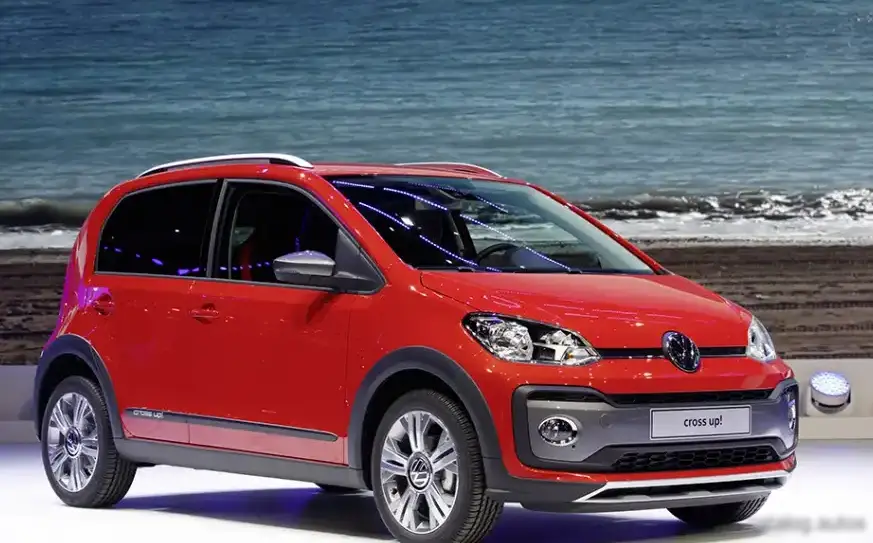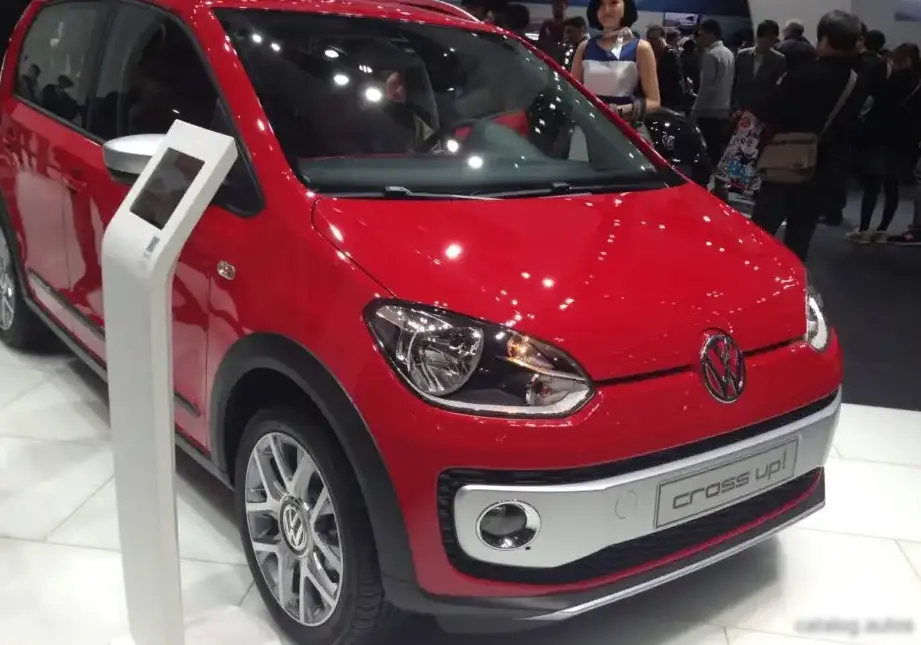
The Volkswagen Cross Up! 1.0, producing 75 horsepower, was a small city car produced between 2013 and 2016. It represented a more rugged, crossover-styled variant of the standard Volkswagen Up! hatchback, aiming to broaden the appeal of the Up! platform. Positioned as an entry-level option within the Up! range, the Cross Up! offered a slightly raised ride height and protective body cladding, giving it a more adventurous aesthetic. It was primarily marketed in Europe, where demand for small, fuel-efficient vehicles was high. This particular 1.0-liter, 75 hp configuration was a key offering, balancing affordability with reasonable performance for urban driving.
Technical Specifications
| Brand | Volkswagen |
| Model | Up! |
| Generation | Cross Up! |
| Type (Engine) | 1.0 (75 Hp) |
| Start of production | 2013 |
| End of production | 2016 |
| Powertrain Architecture | Internal Combustion engine |
| Body type | Hatchback |
| Seats | 4 |
| Doors | 4 |
| Fuel consumption (urban) | 5.8 l/100 km (40.6 US mpg, 48.7 UK mpg, 17.2 km/l) |
| Fuel consumption (extra urban) | 4.1 l/100 km (57.4 US mpg, 68.9 UK mpg, 24.4 km/l) |
| Fuel consumption (combined) | 4.7 l/100 km (50 US mpg, 60.1 UK mpg, 21.3 km/l) |
| CO2 emissions | 109 g/km |
| Fuel Type | Petrol (Gasoline) |
| Acceleration 0 – 100 km/h | 14.2 sec |
| Acceleration 0 – 62 mph | 14.2 sec |
| Acceleration 0 – 60 mph | 13.5 sec |
| Maximum speed | 167 km/h (103.77 mph) |
| Emission standard | Euro 5 |
| Weight-to-power ratio | 13.3 kg/Hp, 75.3 Hp/tonne |
| Weight-to-torque ratio | 10.5 kg/Nm, 95.4 Nm/tonne |
| Power | 75 Hp @ 6200 rpm |
| Power per litre | 75.1 Hp/l |
| Torque | 95 Nm @ 3000-4300 rpm (70.07 lb.-ft. @ 3000-4300 rpm) |
| Engine layout | Front, Transverse |
| Engine Model/Code | CHYB |
| Engine displacement | 999 cm3 (60.96 cu. in.) |
| Number of cylinders | 3 |
| Engine configuration | Inline |
| Number of valves per cylinder | 4 |
| Fuel injection system | Multi-port manifold injection |
| Engine aspiration | Naturally aspirated engine |
| Engine oil capacity | 3.4 l (3.59 US qt | 2.99 UK qt) |
| Kerb Weight | 996 kg (2195.8 lbs.) |
| Max. weight | 1300 kg (2866.01 lbs.) |
| Max load | 304 kg (670.21 lbs.) |
| Trunk (boot) space – minimum | 251 l (8.86 cu. ft.) |
| Trunk (boot) space – maximum | 959 l (33.87 cu. ft.) |
| Fuel tank capacity | 35 l (9.25 US gal | 7.7 UK gal) |
| Length | 3563 mm (140.28 in.) |
| Width | 1649 mm (64.92 in.) |
| Height | 1516 mm (59.69 in.) |
| Wheelbase | 2420 mm (95.28 in.) |
| Front track | 1417 mm (55.79 in.) |
| Rear (Back) track | 1416 mm (55.75 in.) |
| Minimum turning circle | 9.8 m (32.15 ft.) |
| Drivetrain Architecture | Front wheel drive |
| Number of gears | 5 gears, manual transmission |
| Front brakes | Ventilated discs |
| Assisting systems | ABS (Anti-lock braking system) |
| Steering type | Steering rack and pinion |
Introduction
The Volkswagen Cross Up! 1.0 (75 hp) was introduced in 2013 as part of the broader Up! range, which itself was based on the Volkswagen New Small Family (NSF) platform – also known internally as the 1HX0/A3 platform. This platform underpinned several Volkswagen Group vehicles, including the SEAT Mii and Škoda Citigo. The Cross Up! aimed to capitalize on the growing popularity of small crossovers by offering a slightly more rugged appearance and a marginally increased ground clearance compared to the standard Up!. It was designed for urban environments, prioritizing fuel efficiency, maneuverability, and ease of parking. The 1.0-liter, 75 hp engine and five-speed manual transmission combination represented a core offering, targeting buyers seeking a balance between cost and usability.
Powertrain & Engine Architecture
The heart of the Cross Up! 1.0 was the CHYB engine code, a naturally aspirated, three-cylinder 1.0-liter petrol engine. This engine featured multi-point fuel injection and four valves per cylinder. While relatively simple in design, it incorporated modern technologies to optimize fuel efficiency and reduce emissions. The engine’s 999cc displacement produced 75 horsepower at 6200 rpm and 95 Nm (70 lb-ft) of torque between 3000 and 4300 rpm. The five-speed manual transmission was the standard offering, chosen for its simplicity and contribution to fuel economy. The transmission’s gear ratios were tuned for urban driving, with a relatively short final drive to provide adequate acceleration from low speeds. The engine’s compact size and lightweight construction contributed to the Up!’s overall nimble handling.
Driving Characteristics
The 1.0-liter, 75 hp Cross Up! offered modest performance. Acceleration from 0 to 60 mph took around 13.5 seconds, and the top speed was approximately 104 mph. While not particularly quick, the engine provided sufficient power for navigating city streets and suburban roads. The manual transmission allowed for a degree of driver engagement, but the engine’s limited torque meant frequent gear changes were necessary, especially when climbing hills or overtaking. Compared to the more powerful 1.4-liter versions of the Up!, the 1.0-liter felt noticeably slower. However, it offered superior fuel economy and a lighter, more agile feel. The raised suspension of the Cross Up! provided a slightly more comfortable ride over uneven surfaces, but it didn’t significantly alter the car’s handling characteristics.
Equipment & Trim Levels
The Cross Up! 1.0 typically came equipped with features such as air conditioning, power steering, electric front windows, and a basic audio system. Safety features included ABS brakes, driver and passenger airbags, and stability control. The interior featured durable, hard-wearing materials, reflecting the car’s budget-oriented positioning. Optional extras included alloy wheels, a touchscreen infotainment system, and parking sensors. The Cross Up!’s interior design was functional and minimalist, prioritizing practicality over luxury. The exterior styling included black plastic cladding around the wheel arches and along the sills, giving it a more rugged appearance. Unique alloy wheel designs were also available.
Chassis & Braking
The Cross Up! utilized a MacPherson strut front suspension and a torsion beam rear suspension. The front brakes were ventilated discs, while the rear brakes were drums. This configuration was typical for vehicles in this weight class, balancing cost and performance. The steering was a rack and pinion system, providing precise and responsive handling. The Cross Up!’s relatively lightweight construction contributed to its nimble handling characteristics. The slightly raised ride height of the Cross Up! provided a marginal improvement in ground clearance, making it better suited to tackling rougher roads and speed bumps.
Market Reception & Comparison
The Volkswagen Cross Up! 1.0 was generally well-received by automotive critics as a practical and affordable city car. Its fuel efficiency and maneuverability were praised, but its modest performance was often noted. Compared to other trims in the Up! lineup, the 1.0-liter version offered the best fuel economy but the slowest acceleration. It was often seen as a sensible choice for drivers who prioritized practicality and running costs over outright performance. Competitors included the SEAT Mii and Škoda Citigo, which shared the same platform and powertrain options. The Cross Up! differentiated itself through its more rugged styling and slightly increased ride height.
Legacy
The Volkswagen Cross Up! 1.0, while not a high-performance vehicle, proved to be a reliable and economical city car. The 1.0-liter engine, while simple in design, is known for its durability. On the used car market, these models are generally affordable and represent a good value for buyers seeking a practical and fuel-efficient vehicle. Maintenance costs are relatively low, and parts availability is good. The Cross Up!’s simple construction and robust engine make it a relatively easy car to maintain, contributing to its long-term appeal. While no longer in production, the Cross Up! remains a popular choice for urban commuters and first-time car buyers.