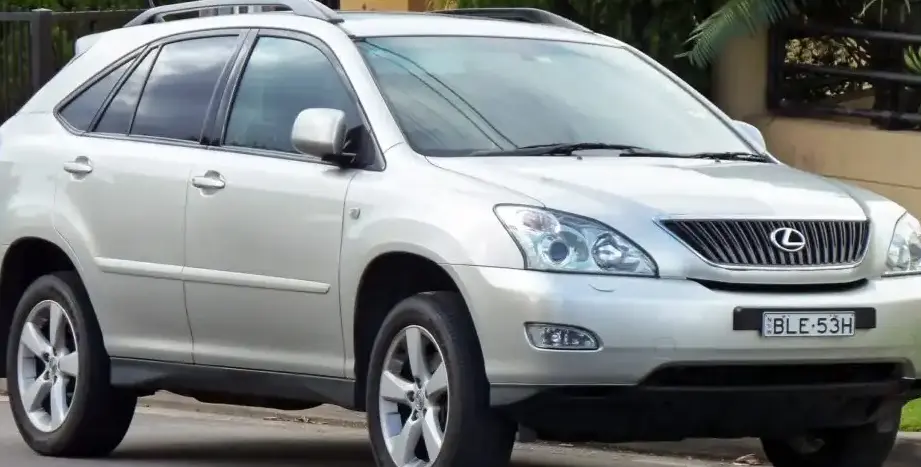
The Lexus RX 300, launched in 1997, represented a pivotal moment for the luxury SUV market. Often credited with popularizing the crossover SUV segment, the RX 300 offered a more comfortable and car-like driving experience compared to traditional, truck-based SUVs. Produced from 1997 through 2003, the first generation (designated the XU10 series) quickly became a sales success for Lexus, establishing the brand as a major player in the burgeoning luxury SUV class. This article focuses specifically on the 4WD variant equipped with the 1MZ-FE 3.0-liter V6 engine producing 223 horsepower, a configuration that was a mainstay of the RX 300 lineup throughout its production run.
Technical Specifications
| Brand | Lexus |
| Model | RX |
| Generation | RX I |
| Type (Engine) | 300 4WD (223 Hp) |
| Start of production | 1997 |
| End of production | 2003 |
| Powertrain Architecture | Internal Combustion engine |
| Body type | SUV |
| Seats | 5 |
| Doors | 5 |
| Fuel consumption (urban) | 17.7 l/100 km (13.3 US mpg) |
| Fuel consumption (extra urban) | 10.3 l/100 km (22.8 US mpg) |
| Fuel Type | Petrol (Gasoline) |
| Acceleration 0 – 100 km/h | 8.8 sec |
| Acceleration 0 – 62 mph | 8.8 sec |
| Acceleration 0 – 60 mph | 8.4 sec |
| Maximum speed | 180 km/h (111.85 mph) |
| Weight-to-power ratio | 8.2 kg/Hp |
| Weight-to-torque ratio | 6.1 kg/Nm |
| Power | 223 Hp @ 5800 rpm |
| Torque | 301 Nm @ 4400 rpm (222.01 lb.-ft. @ 4400 rpm) |
| Engine layout | Front, Transverse |
| Engine Model/Code | 1MZ-FE |
| Engine displacement | 2995 cm3 (182.77 cu. in.) |
| Number of cylinders | 6 |
| Engine configuration | V-engine |
| Cylinder Bore | 87.5 mm (3.44 in.) |
| Piston Stroke | 83 mm (3.27 in.) |
| Compression ratio | 10.5:1 |
| Number of valves per cylinder | 4 |
| Fuel injection system | Multi-port manifold injection |
| Engine aspiration | Naturally aspirated engine |
| Valvetrain | DOHC |
| Engine oil capacity | 4.7 l (4.97 US qt | 4.14 UK qt) |
| Coolant | 9 l (9.51 US qt | 7.92 UK qt) |
| Kerb Weight | 1830 kg (4034.46 lbs.) |
| Max. weight | 2245 kg (4949.38 lbs.) |
| Max load | 415 kg (914.92 lbs.) |
| Trunk (boot) space – minimum | 860 l (30.37 cu. ft.) |
| Trunk (boot) space – maximum | 2130 l (75.22 cu. ft.) |
| Length | 4580 mm (180.31 in.) |
| Width | 1815 mm (71.46 in.) |
| Height | 1660 mm (65.35 in.) |
| Wheelbase | 2619 mm (103.11 in.) |
| Front track | 1565 mm (61.61 in.) |
| Rear (Back) track | 1550 mm (61.02 in.) |
| Drive wheel | All wheel drive (4×4) |
| Number of gears | 4 |
| Gearbox type | automatic transmission |
| Front suspension | Coil spring |
| Rear suspension | Coil spring |
| Front brakes | Ventilated discs |
| Rear brakes | Disc |
| Assisting systems | ABS (Anti-lock braking system) |
| Steering type | Steering rack and pinion |
| Power steering | Hydraulic Steering |
| Tires size | 225/70 R16 |
INTRODUCTION
The RX 300 4WD, powered by the 1MZ-FE engine and a four-speed automatic transmission, was positioned as the premium offering within the initial RX lineup. While a front-wheel drive version was available, the 4WD model catered to buyers in regions with inclement weather or those desiring added stability and traction. It represented a significant step up from more basic SUVs of the era, offering a blend of luxury, comfort, and practicality. The RX 300 quickly became Lexus’s best-selling model, and its success paved the way for subsequent generations of the RX crossover.
Powertrain & Engine Architecture
The heart of the RX 300 4WD is the 1MZ-FE, a 3.0-liter (2995 cc) 60-degree V6 engine. This engine, a staple of Toyota and Lexus vehicles throughout the late 1990s and early 2000s, is known for its smoothness and reliability. It features a cast-iron block with an aluminum cylinder head, employing dual overhead camshafts (DOHC) and four valves per cylinder. Fuel delivery is managed by a multi-port fuel injection system, ensuring precise fuel atomization for optimal combustion. The 1MZ-FE produces 223 horsepower at 5800 rpm and 301 Nm (222 lb-ft) of torque at 4400 rpm. The four-speed automatic transmission, designated the A750E, was specifically chosen for its smooth shifting characteristics and ability to handle the engine’s torque output. This transmission features electronically controlled torque converter lock-up for improved fuel efficiency at highway speeds.
Driving Characteristics
The RX 300 4WD, with its 223 hp and four-speed automatic, offered a comfortable and refined driving experience. Acceleration from 0-60 mph took approximately 8.4 seconds, which was competitive for a luxury SUV of its time. However, it wasn’t designed for sporty performance. The automatic transmission prioritized smooth shifts over aggressive downshifts, resulting in a more relaxed driving style. Compared to the front-wheel drive RX 300, the 4WD version offered enhanced grip and stability, particularly in slippery conditions. The gear ratios were tuned for everyday usability, providing adequate power for merging onto highways and passing other vehicles. While not as nimble as smaller SUVs, the RX 300 4WD provided a composed and predictable ride.
Equipment & Trim Levels
The RX 300 4WD typically came well-equipped, reflecting its luxury positioning. Standard features included leather upholstery, power-adjustable front seats, a premium sound system, automatic climate control, and alloy wheels. Optional extras included a navigation system, sunroof, and upgraded audio options. The interior design emphasized comfort and ergonomics, with a focus on high-quality materials and a user-friendly layout. The dashboard featured wood trim accents, and the instrument cluster was clear and easy to read.
Chassis & Braking
The RX 300 4WD utilized a fully independent suspension system, with coil springs and shock absorbers at all four corners. This setup provided a comfortable ride and good handling characteristics. The 4WD system was an electronically controlled full-time system, automatically distributing torque between the front and rear axles as needed. Braking duties were handled by ventilated discs at the front and solid discs at the rear, equipped with an Anti-lock Braking System (ABS) as standard. The steering was rack-and-pinion with hydraulic power assistance, providing precise and responsive steering feel.
Market Reception & Comparison
The RX 300 4WD was widely praised by automotive critics for its comfortable ride, spacious interior, and refined driving experience. It was often compared favorably to other luxury SUVs, such as the Acura MDX and the BMW X5. While the RX 300 wasn’t the most powerful or sporty SUV in its class, it excelled in providing a comfortable and luxurious experience. Fuel economy was reasonable for a vehicle of its size and class, averaging around 17.7 l/100 km (13.3 US mpg) in the city and 10.3 l/100 km (22.8 US mpg) on the highway. Reliability was also a strong point, with the 1MZ-FE engine proving to be exceptionally durable.
Legacy
The Lexus RX 300 4WD has proven to be a remarkably reliable vehicle, with many examples still on the road today. The 1MZ-FE engine is known for its longevity, and with proper maintenance, it can easily exceed 200,000 miles. In the used car market, the RX 300 4WD remains a popular choice for buyers seeking a comfortable, reliable, and affordable luxury SUV. Its pioneering role in establishing the crossover SUV segment has cemented its place in automotive history, and it continues to be regarded as a benchmark for luxury and practicality.