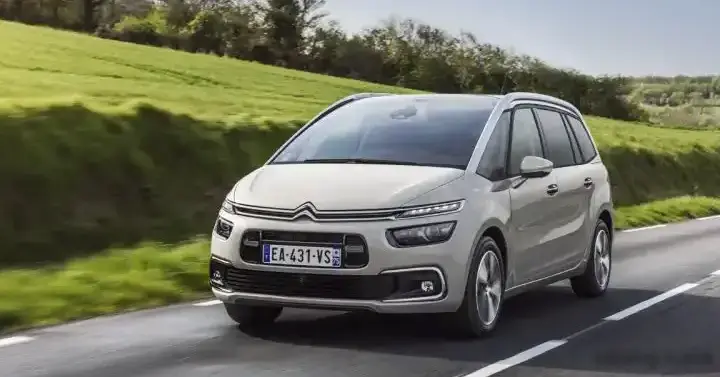
The Citroen C4 II Grand Picasso 1.6 BlueHDi 120 S&S, produced from 2016 to 2018, represents a mid-cycle refresh of the second-generation C4 Picasso, a popular seven-seat minivan (MPV) in the European market. This variant occupied a key position in the lineup, offering a balance between fuel efficiency, practicality, and affordability. It was designed to appeal to families seeking a spacious and economical vehicle for everyday use and longer journeys. The “S&S” designation indicates the inclusion of Citroen’s Stop & Start system, further enhancing fuel economy. This model is part of the broader C4 Picasso range built on the EMP2 platform, known for its modularity and lightweight construction.
Technical Specifications
| Brand | Citroen |
| Model | C4 |
| Generation | C4 II Grand Picasso (Phase II, 2016) |
| Type (Engine) | 1.6 BlueHDI (120 Hp) S&S |
| Start of production | 2016 |
| End of production | 2018 |
| Powertrain Architecture | Internal Combustion engine |
| Body type | Minivan, MPV |
| Seats | 7 |
| Doors | 5 |
| Fuel consumption (urban) | 4.5-4.6 l/100 km (52.3 – 51.1 US mpg) |
| Fuel consumption (extra urban) | 3.7-3.8 l/100 km (63.6 – 61.9 US mpg) |
| Fuel consumption (combined) | 4 l/100 km (58.8 US mpg) |
| CO2 emissions | 105-106 g/km |
| Fuel Type | Diesel |
| Acceleration 0 – 100 km/h | 11.7 sec |
| Acceleration 0 – 62 mph | 11.7 sec |
| Acceleration 0 – 60 mph | 11.1 sec |
| Maximum speed | 189 km/h (117.44 mph) |
| Emission standard | Euro 6 |
| Weight-to-power ratio | 11.2 kg/Hp |
| Weight-to-torque ratio | 4.5 kg/Nm |
| Power | 120 Hp @ 3500 rpm |
| Torque | 300 Nm @ 1750 rpm (221.27 lb.-ft. @ 1750 rpm) |
| Engine layout | Front, Transverse |
| Engine Model/Code | BHZ DV6FC |
| Engine displacement | 1560 cm3 (95.2 cu. in.) |
| Number of cylinders | 4 |
| Engine configuration | Inline |
| Cylinder Bore | 75 mm (2.95 in.) |
| Piston Stroke | 88.3 mm (3.48 in.) |
| Compression ratio | 16:1 |
| Number of valves per cylinder | 2 |
| Fuel injection system | Diesel Commonrail |
| Engine aspiration | Turbocharger, Intercooler |
| Engine oil capacity | 3.75 l (3.96 US qt | 3.3 UK qt) |
| Kerb Weight | 1347 kg (2969.63 lbs.) |
| Max. weight | 2175 kg (4795.05 lbs.) |
| Max load | 828 kg (1825.43 lbs.) |
| Trunk (boot) space – minimum | 165 l (5.83 cu. ft.) |
| Trunk (boot) space – maximum | 2181 l (77.02 cu. ft.) |
| Fuel tank capacity | 55 l (14.53 US gal | 12.1 UK gal) |
| AdBlue tank | 17 l (4.49 US gal | 3.74 UK gal) |
| Max. roof load | 80 kg (176.37 lbs.) |
| Permitted trailer load with brakes (12%) | 1200 kg (2645.55 lbs.) |
| Permitted trailer load without brakes | 674 kg (1485.92 lbs.) |
| Permitted towbar download | 70 kg (154.32 lbs.) |
| Length | 4602 mm (181.18 in.) |
| Width | 1826 mm (71.89 in.) |
| Width with mirrors folded | 1971 mm (77.6 in.) |
| Width including mirrors | 2117 mm (83.35 in.) |
| Height | 1638-1644 mm (64.49 – 64.72 in.) |
| Wheelbase | 2840 mm (111.81 in.) |
| Front track | 1573-1587 mm (61.93 – 62.48 in.) |
| Rear (Back) track | 1576-1590 mm (62.05 – 62.6 in.) |
| Front overhang | 889 mm (35 in.) |
| Rear overhang | 873 mm (34.37 in.) |
| Minimum turning circle | 11.3 m (37.07 ft.) |
| Drivetrain Architecture | Front wheel drive |
| Number of gears and type of gearbox | 6 gears, manual transmission |
| Front suspension | Independent, type McPherson with coil spring and anti-roll bar |
| Rear suspension | Semi-independent, coil spring |
| Front brakes | Ventilated discs |
| Rear brakes | Disc |
| Assisting systems | ABS (Anti-lock braking system) |
| Steering type | Steering rack and pinion |
| Power steering | Electric Steering |
| Tires size | 205/60 R16; 205/55 R17 |
| Wheel rims size | 16; 17 |
Powertrain & Engine Architecture
The heart of this C4 Grand Picasso variant is the 1.6-liter BlueHDi engine, specifically the BHZ DV6FC variant. This engine is a four-cylinder, inline diesel engine utilizing a common-rail direct injection system and a turbocharger with an intercooler. The BlueHDi technology incorporates a Selective Catalytic Reduction (SCR) system using AdBlue (Diesel Exhaust Fluid) to significantly reduce nitrogen oxide (NOx) emissions, meeting stringent Euro 6 standards. The engine produces 120 horsepower at 3500 rpm and 300 Nm (221 lb-ft) of torque at 1750 rpm. This torque output, available from relatively low engine speeds, is a key characteristic of modern diesel engines, providing good pulling power for a family vehicle. The engine features a compression ratio of 16:1. The engine is transversely mounted at the front of the vehicle. The 6-speed manual transmission was the standard offering for this variant, chosen for its efficiency and cost-effectiveness.
Driving Characteristics
The 1.6 BlueHDi 120 hp engine, paired with the 6-speed manual gearbox, delivers adequate performance for everyday driving. Acceleration from 0-100 km/h (0-62 mph) takes around 11.7 seconds, which is not particularly brisk but sufficient for most situations. The engine’s strong low-end torque makes it feel more responsive than the figures suggest, particularly when overtaking or climbing hills. The gear ratios are well-chosen to maximize fuel efficiency and provide a comfortable driving experience. Compared to higher-output versions of the C4 Picasso, such as those with more powerful diesel engines, this variant feels less eager to accelerate, but it compensates with significantly improved fuel economy. The Stop & Start system contributes to this efficiency, automatically shutting off the engine when the vehicle is stationary, such as at traffic lights.
Equipment & Trim Levels
The 1.6 BlueHDi 120 S&S trim typically included a good level of standard equipment. This generally encompassed features like air conditioning, a touchscreen infotainment system with Bluetooth connectivity, electric windows and mirrors, remote central locking, and a height-adjustable driver’s seat. Safety features included ABS, ESP (Electronic Stability Program), and multiple airbags. Higher trim levels offered additional features such as panoramic sunroof, leather upholstery, navigation system, and parking sensors. Interior upholstery was typically cloth, with options for upgraded materials available. The dashboard layout was modern and functional, with a focus on ergonomics and ease of use.
Chassis & Braking
The C4 Grand Picasso features a McPherson strut front suspension and a semi-independent coil spring rear suspension. This setup provides a comfortable ride quality, absorbing bumps and imperfections in the road surface effectively. The front brakes are ventilated discs, while the rear brakes are solid discs. ABS (Anti-lock Braking System) is standard, enhancing braking performance and stability, especially in emergency situations. The steering is electric power-assisted, providing a light and responsive feel. Stabilizer bars are fitted to both the front and rear axles to reduce body roll during cornering.
Market Reception & Comparison
The Citroen C4 Grand Picasso 1.6 BlueHDi 120 S&S was generally well-received by critics and consumers alike. It was praised for its spacious interior, comfortable ride, and excellent fuel economy. The 1.6-liter engine was considered a good compromise between performance and efficiency. Compared to other trims in the lineup, this variant offered the best fuel economy, making it an attractive option for those prioritizing running costs. However, some reviewers noted that the engine could feel strained when fully loaded or driving uphill. Compared to competitors like the Renault Scenic and Volkswagen Touran, the C4 Grand Picasso offered a distinctive design and a focus on comfort.
Legacy
The 1.6 BlueHDi engine has proven to be a relatively reliable powertrain, although, like all diesel engines, it is susceptible to issues related to the diesel particulate filter (DPF) if not driven on longer journeys regularly. The C4 Grand Picasso 1.6 BlueHDi 120 S&S remains a popular choice in the used car market, offering a practical and economical option for families. Its spacious interior, comfortable ride, and good fuel economy continue to appeal to buyers seeking a versatile and affordable MPV. Regular maintenance, including oil changes and DPF regeneration, is crucial to ensure the long-term reliability of this powertrain.