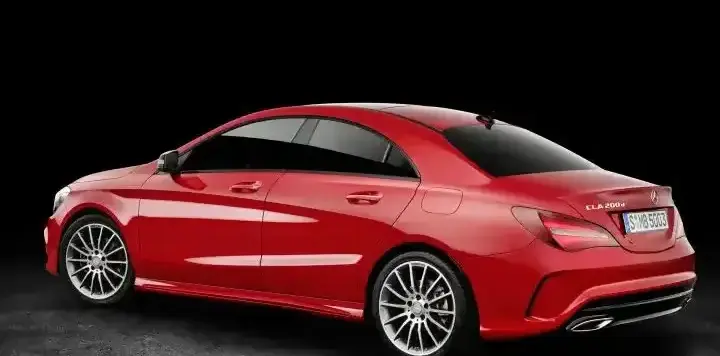
The Mercedes-Benz CLA 250 Sport, produced from April 2016 to May 2018, represents a compelling entry point into the premium compact coupe market. Part of the C117 CLA generation (following the 2016 facelift), this variant aimed to deliver a balance of performance, style, and technology. Positioned as a mid-range offering within the CLA lineup, it slotted between the base CLA 250 and the more potent CLA 45 AMG models. The CLA, in general, was designed to attract a younger demographic to the Mercedes-Benz brand, offering a more accessible price point and a sleeker, more contemporary design than traditional Mercedes offerings.
Technical Specifications
| Brand | Mercedes-Benz |
| Model | CLA |
| Generation | CLA Coupe (C117, facelift 2016) |
| Type (Engine) | CLA 250 (218 Hp) Sport |
| Start of production | April, 2016 |
| End of production | May, 2018 |
| Powertrain Architecture | Internal Combustion engine |
| Body type | Coupe |
| Seats | 5 |
| Doors | 4 |
| Fuel consumption (urban) | 8.9 l/100 km (26.4 US mpg) |
| Fuel consumption (extra urban) | 5.4 l/100 km (43.6 US mpg) |
| Fuel consumption (combined) | 6.7 l/100 km (35.1 US mpg) |
| CO2 emissions | 156 g/km |
| Fuel Type | Petrol (Gasoline) |
| Acceleration 0 – 100 km/h | 6.5 sec |
| Acceleration 0 – 62 mph | 6.5 sec |
| Acceleration 0 – 60 mph | 6.2 sec |
| Maximum speed | 250 km/h (155.34 mph) |
| Emission standard | Euro 6 |
| Weight-to-power ratio | 6.4 kg/Hp |
| Weight-to-torque ratio | 4 kg/Nm |
| Power | 218 Hp @ 5500 rpm |
| Torque | 350 Nm @ 1200-4000 rpm (258.15 lb.-ft.) |
| Engine layout | Front, Transverse |
| Engine Model/Code | M 270.920 |
| Engine displacement | 1991 cm3 (121.5 cu. in.) |
| Number of cylinders | 4 |
| Engine configuration | Inline |
| Compression ratio | 9.8:1 |
| Number of valves per cylinder | 4 |
| Fuel injection system | Direct injection |
| Engine aspiration | Turbocharger, Intercooler |
| Engine oil capacity | 5.6 l (5.92 US qt | 4.93 UK qt) |
| Coolant | 7.8 l (8.24 US qt | 6.86 UK qt) |
| Kerb Weight | 1385 kg (3053.4 lbs.) |
| Max. weight | 1965 kg (4332.08 lbs.) |
| Max load | 580 kg (1278.68 lbs.) |
| Trunk (boot) space – minimum | 470 l (16.6 cu. ft.) |
| Fuel tank capacity | 56 l (14.79 US gal | 12.32 UK gal) |
| Max. roof load | 100 kg (220.46 lbs.) |
| Length | 4640 mm (182.68 in.) |
| Width | 1777 mm (69.96 in.) |
| Width including mirrors | 2032 mm (80 in.) |
| Height | 1432 mm (56.38 in.) |
| Wheelbase | 2699 mm (106.26 in.) |
| Front track | 1549 mm (60.98 in.) |
| Rear (Back) track | 1547 mm (60.91 in.) |
| Drag coefficient (Cd) | 0.28 |
| Minimum turning circle | 11.00 m (36.09 ft.) |
| Drivetrain Architecture | Front wheel drive |
| Number of gears | 6 |
| Type of gearbox | Manual transmission |
| Front suspension | Independent type McPherson |
| Rear suspension | Independent multi-link suspension |
| Front brakes | Ventilated discs |
| Rear brakes | Disc |
| Assisting systems | ABS (Anti-lock braking system) |
| Steering type | Steering rack and pinion |
| Power steering | Electric Steering |
| Tires size | 235/40 R18 |
| Wheel rims size | 18 |
Powertrain & Engine Architecture
The CLA 250 Sport is powered by the M270.920 2.0-liter inline-four cylinder engine. This engine is a key component of Mercedes-Benz’s modular engine family, known for its efficiency and relatively compact size. It utilizes direct fuel injection and a single turbocharger with an intercooler to boost power output. The engine’s aluminum block and head contribute to weight reduction. The 218 horsepower and 350 Nm (258 lb-ft) of torque are delivered across a broad rev range (1200-4000 rpm), providing good responsiveness. The engine is paired with a 7-speed dual-clutch transmission (7G-DCT) which was standard for this trim. This transmission offers quick and smooth gear changes, enhancing both performance and fuel economy. The 7G-DCT is known for its efficiency and responsiveness, contributing to the CLA 250 Sport’s overall driving experience.
Driving Characteristics
The CLA 250 Sport, with its 218 hp and 7-speed dual-clutch transmission, delivers a respectable level of performance. Acceleration from 0 to 60 mph takes approximately 6.2 seconds. While not as blistering as the CLA 45 AMG, the 250 Sport provides ample power for everyday driving and confident highway merging. The 7G-DCT transmission contributes to a smooth and engaging driving experience, with quick shifts and minimal torque interruption. The suspension is tuned for a balance between comfort and handling, offering a reasonably compliant ride without feeling overly soft in corners. Compared to the base CLA 250, the Sport trim typically includes sport-tuned suspension and steering, resulting in a slightly firmer ride and more responsive handling. The manual transmission option, while available, was less common and offered a more traditional driving experience, appealing to enthusiasts.
Equipment & Trim Levels
The “Sport” designation for this variant included several standard features designed to enhance both the aesthetic and driving experience. These typically included sport seats with enhanced bolstering, a sport steering wheel, aluminum pedal pads, and unique exterior styling elements such as a rear spoiler and upgraded wheels. Interior upholstery was generally a combination of leatherette and fabric, with options for full leather available. Standard equipment also included Mercedes-Benz’s MBUX infotainment system (later models), automatic climate control, and a suite of safety features like collision prevention assist and attention assist. Optional extras included a panoramic sunroof, premium sound system, and advanced driver-assistance systems like lane keeping assist and blind spot monitoring.
Chassis & Braking
The CLA 250 Sport utilizes an independent McPherson strut front suspension and a multi-link rear suspension. This setup provides a good balance of ride comfort and handling precision. The front brakes are ventilated discs, while the rear brakes are solid discs. ABS (Anti-lock Braking System) is standard, along with electronic stability control. The steering is electric power-assisted, offering a precise and responsive feel. The chassis is designed to be relatively lightweight, contributing to the car’s agility. The Sport trim often included a slightly lowered suspension compared to the base model, further enhancing handling.
Market Reception & Comparison
The CLA 250 Sport was generally well-received by automotive critics. It was praised for its stylish design, comfortable interior, and engaging driving dynamics. Fuel economy was also a strong point, with combined figures around 35 mpg. Compared to the base CLA 250, the Sport trim offered a noticeable improvement in driving experience thanks to the sport-tuned suspension and steering. However, some critics noted that the rear seat space was somewhat limited, and the ride could be a bit firm for some passengers. Compared to the CLA 45 AMG, the 250 Sport offered a more affordable entry point into the CLA range, sacrificing some outright performance for a lower price tag and better fuel economy.
Legacy
The M270 engine family, including the one used in the CLA 250 Sport, has proven to be relatively reliable, although preventative maintenance is crucial. Common issues include potential oil leaks and occasional problems with the turbocharger. The 7G-DCT transmission is generally robust, but regular fluid changes are essential to ensure smooth operation. On the used car market, the CLA 250 Sport remains a popular choice for buyers seeking a stylish and well-equipped compact coupe. Its combination of performance, fuel economy, and technology continues to appeal to a wide range of drivers. The CLA, as a whole, helped redefine Mercedes-Benz’s image, attracting a younger and more diverse customer base.