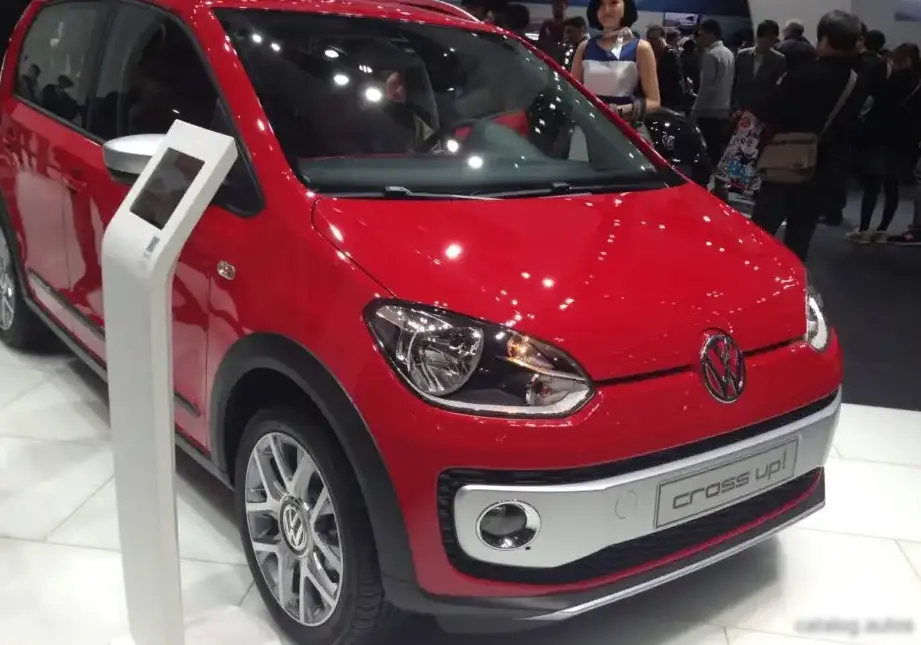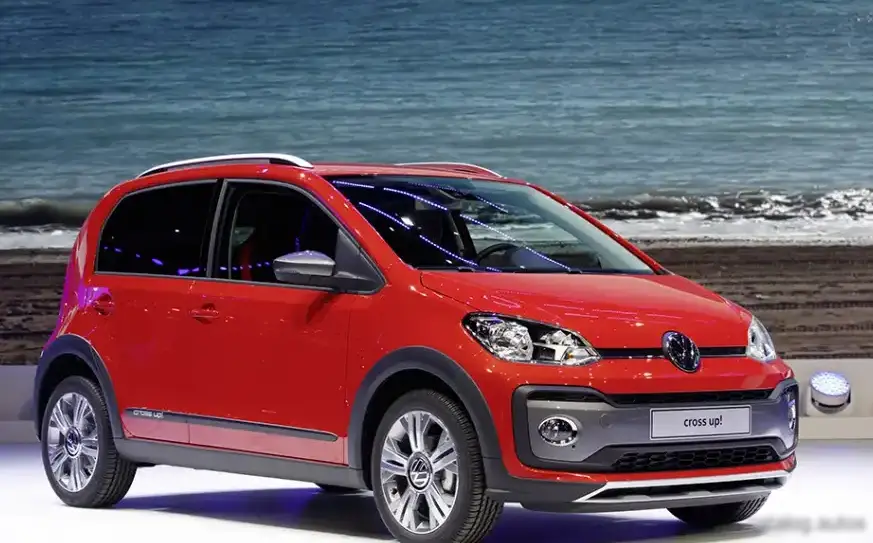
The Volkswagen Cross Up! facelift, specifically the 1.0-liter 75 horsepower variant produced from 2016 to 2018, represents a niche offering within the broader Up! city car range. Positioned as a slightly more rugged and visually distinct version of the standard Up!, the Cross Up! aimed to appeal to buyers seeking a vehicle with a hint of outdoor capability and a more adventurous aesthetic. This particular engine and transmission combination – a 1.0L naturally aspirated engine paired with a five-speed manual gearbox – served as an entry point into the Cross Up! lineup, prioritizing fuel efficiency and affordability over outright performance. It was primarily sold in European markets, where the demand for small, economical vehicles remains strong.
Technical Specifications
| Brand | Volkswagen |
| Model | Up! |
| Generation | Cross Up! (facelift 2016) |
| Type (Engine) | 1.0 (75 Hp) |
| Start of production | 2016 |
| End of production | 2018 |
| Powertrain Architecture | Internal Combustion engine |
| Body type | Hatchback |
| Seats | 4 |
| Doors | 4 |
| Fuel consumption (urban) | 5 l/100 km (47 US mpg, 56.5 UK mpg, 20 km/l) |
| Fuel consumption (extra urban) | 3.9 l/100 km (60.3 US mpg, 72.4 UK mpg, 25.6 km/l) |
| Fuel consumption (combined) | 4.3 l/100 km (54.7 US mpg, 65.7 UK mpg, 23.3 km/l) |
| CO2 emissions | 100 g/km |
| Fuel Type | Petrol (Gasoline) |
| Acceleration 0 – 100 km/h | 14.5 sec |
| Acceleration 0 – 62 mph | 14.5 sec |
| Acceleration 0 – 60 mph | 13.8 sec |
| Maximum speed | 158 km/h (98.18 mph) |
| Emission standard | Euro 6 |
| Weight-to-power ratio | 12.5 kg/Hp, 80.3 Hp/tonne |
| Weight-to-torque ratio | 9.8 kg/Nm, 101.7 Nm/tonne |
| Power | 75 Hp |
| Power per litre | 75.1 Hp/l |
| Torque | 95 Nm @ 3000-4300 rpm (70.07 lb.-ft. @ 3000-4300 rpm) |
| Engine layout | Front, Transverse |
| Engine Model/Code | CHYB |
| Engine displacement | 999 cm3 (60.96 cu. in.) |
| Engine configuration | Inline |
| Fuel injection system | Multi-port manifold injection |
| Engine aspiration | Naturally aspirated engine |
| Engine oil capacity | 3.4 l (3.59 US qt | 2.99 UK qt) |
| Kerb Weight | 934 kg (2059.12 lbs.) |
| Max. weight | 1330 kg (2932.15 lbs.) |
| Max load | 396 kg (873.03 lbs.) |
| Trunk (boot) space – minimum | 251 l (8.86 cu. ft.) |
| Fuel tank capacity | 35 l (9.25 US gal | 7.7 UK gal) |
| Max. roof load | 50 kg (110.23 lbs.) |
| Length | 3628 mm (142.83 in.) |
| Width | 1649 mm (64.92 in.) |
| Height | 1516 mm (59.69 in.) |
| Wheelbase | 2411 mm (94.92 in.) |
| Front track | 1412-1433 mm (55.59 – 56.42 in.) |
| Rear (Back) track | 1408-1428 mm (55.43 – 56.22 in.) |
| Drivetrain Architecture | Front wheel drive |
| Number of gears and type of gearbox | 5 gears, manual transmission |
| Front brakes | Ventilated discs |
| Rear brakes | Disc |
| Assisting systems | ABS (Anti-lock braking system) |
| Steering type | Steering rack and pinion |
| Power steering | Electric Steering |
INTRODUCTION
The Volkswagen Cross Up! facelift, launched in 2016, built upon the foundation of the standard Up! – a small, front-wheel-drive hatchback designed as an affordable and practical city car. The facelift brought minor cosmetic updates, including revised bumpers and interior trim. The 1.0-liter 75 horsepower version, coupled with a five-speed manual transmission, was a key component of the Cross Up! range. It was intended to provide a balance between acceptable performance for urban driving and excellent fuel economy, making it an attractive option for cost-conscious buyers. The Cross Up! differentiated itself from the standard Up! through its raised ride height, plastic body cladding, and roof rails, giving it a more rugged appearance. It was positioned as a competitor to other small crossovers and city cars like the Fiat Panda Cross and Suzuki Ignis.
Powertrain & Engine Architecture
At the heart of the Cross Up! 1.0 75 Hp lies the CHYB engine code, a three-cylinder, 999cc naturally aspirated petrol engine. This engine is part of Volkswagen’s EA288 family, known for its compact size and efficiency. The CHYB utilizes a multi-point fuel injection system, delivering fuel directly into the intake ports. The engine features a single overhead camshaft (SOHC) operating four valves per cylinder. This configuration contributes to a reasonable power output for its size. The five-speed manual transmission is a standard unit found in many Volkswagen Group vehicles. It’s characterized by relatively long gearing, prioritizing fuel economy over rapid acceleration. The transmission is mechanically simple and known for its durability. The engine’s modest torque output of 95 Nm (70 lb-ft) is available between 3000 and 4300 rpm, requiring drivers to utilize the gearbox to maintain momentum, especially when carrying passengers or cargo.
Driving Characteristics
The driving experience in the Cross Up! 1.0 75 Hp is best described as adequate for city driving. Acceleration is not brisk, with a 0-60 mph time of around 13.8 seconds. The long gearing of the five-speed manual transmission means that the engine can feel strained when climbing hills or overtaking at higher speeds. However, within urban environments, the engine provides sufficient power for navigating traffic and performing everyday maneuvers. The raised suspension, a defining feature of the Cross Up!, provides a slightly more comfortable ride than the standard Up!, absorbing bumps and potholes more effectively. The steering is light and precise, making it easy to maneuver in tight spaces. Compared to higher-output versions of the Up! (such as the TSI turbocharged engine), the 1.0-liter 75 Hp feels significantly less powerful, but it offers a smoother and more predictable power delivery.
Equipment & Trim Levels
The Cross Up! 1.0 75 Hp typically came equipped with a reasonable level of standard features. These included air conditioning, power steering, ABS brakes, front airbags, and a basic audio system with USB connectivity. The interior featured durable cloth upholstery and a functional dashboard layout. The “Cross” trim level added unique exterior styling elements, such as black plastic wheel arch extensions, side sills, and front and rear bumpers. Optional extras included alloy wheels, a navigation system, and parking sensors. The interior, while functional, was generally basic in terms of materials and design, reflecting the car’s affordable price point.
Chassis & Braking
The Cross Up! utilizes a MacPherson strut front suspension and a torsion beam rear suspension. The torsion beam rear suspension is a cost-effective solution commonly found in small cars. The front brakes are ventilated discs, providing adequate stopping power, while the rear brakes are solid discs. The ABS (Anti-lock Braking System) is standard, enhancing safety during emergency braking situations. The raised ride height of the Cross Up! compared to the standard Up! provides slightly improved ground clearance, making it more capable on rough roads. However, it’s not a true off-roader and is best suited for light off-pavement use.
Market Reception & Comparison
The Volkswagen Cross Up! 1.0 75 Hp received generally positive reviews for its fuel efficiency, practicality, and affordability. Critics praised its nimble handling and comfortable ride, but noted its lack of outright performance. Compared to other trims in the Up! lineup, the 1.0-liter 75 Hp offered the most affordable entry point, but at the expense of power and refinement. The more powerful TSI engine provided significantly better acceleration and overall driving experience, but came at a higher price. In terms of fuel economy, the 1.0-liter engine was comparable to other small petrol engines in its class, achieving around 54.7 US mpg on the combined cycle. Reliability was generally good, with few reported issues with the engine or transmission.
Legacy
The Volkswagen Cross Up! 1.0 75 Hp, while not a high-performance vehicle, has proven to be a reliable and economical city car. In the used car market, these models are generally well-regarded for their low running costs and practicality. The CHYB engine is known for its durability, and maintenance costs are relatively low. However, potential buyers should be aware of the engine’s limited power output and the basic nature of the interior. As a whole, the Cross Up! represents a sensible and affordable option for buyers seeking a small, fuel-efficient vehicle for urban driving.