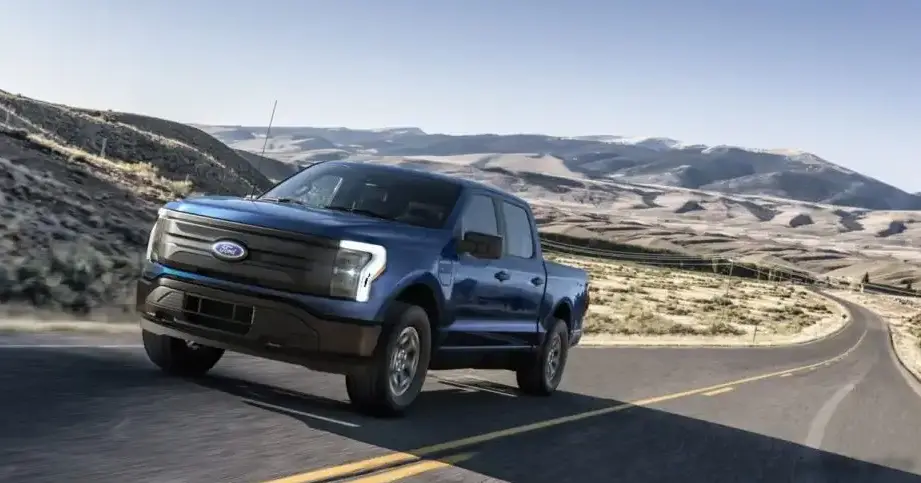
The Ford F-150 Lightning XIV SuperCrew Standard Range, launched in May 2021, represents Ford’s first foray into the all-electric full-size pickup truck market. Positioned as the entry-level variant of the Lightning lineup, it offered a compelling combination of capability, technology, and a more accessible price point compared to the Extended Range model. This version utilizes a 98 kWh usable battery pack and dual electric motors, delivering 426 horsepower and all-wheel drive. It’s built on the fourteenth generation of the F-Series, specifically tailored for electric propulsion within the SuperCrew body style, offering seating for five passengers. The Lightning aimed to retain the core values of the F-150 – toughness, utility, and capability – while embracing the benefits of an electric powertrain.
Technical Specifications
| Brand | Ford |
| Model | F-Series F-150 |
| Generation | F-Series F-150 Lightning XIV SuperCrew |
| Type (Engine) | Standard Range 98 kWh (426 Hp) 4WD |
| Start of production | May, 2021 |
| Powertrain Architecture | BEV (Electric Vehicle) |
| Body type | Pick-up |
| Seats | 5 |
| Doors | 4 |
| Fuel Type | Electricity |
| Net (usable) battery capacity | 98 kWh |
| Battery technology | Lithium-ion (Li-Ion) |
| Battery location | Below the floor |
| All-electric range | 370 km (229.91 mi) |
| System power | 426 Hp |
| System torque | 1051 Nm (775.18 lb.-ft.) |
| Trunk (boot) space – minimum | 1495 l (52.8 cu. ft.) |
| Permitted trailer load with brakes (12%) | 3493 kg (7700.75 lbs.) |
| Length | 5911 mm (232.72 in.) |
| Width | 2032 mm (80 in.) |
| Width with mirrors folded | 2123 mm (83.58 in.) |
| Width including mirrors | 2438 mm (95.98 in.) |
| Height | 2004 mm (78.9 in.) |
| Wheelbase | 3696 mm (145.51 in.) |
| Front track | 1730 mm (68.11 in.) |
| Rear (Back) track | 1735 mm (68.31 in.) |
| Front overhang | 960 mm (37.8 in.) |
| Rear overhang | 1255 mm (49.41 in.) |
| Ride height (ground clearance) | 226 mm (8.9 in.) |
| Approach angle | 25.4° |
| Departure angle | 24.2° |
| Ramp-over (brakeover) angle | 17.8° |
| Drivetrain Architecture | One electric motor drives the front wheels, one electric motor drives the rear wheels. |
| Drive wheel | All wheel drive (4×4) |
| Number of gears and type of gearbox | 1 gears, automatic transmission |
| Front suspension | Double wishbone, Transverse stabilizer |
| Rear suspension | Transverse stabilizer, Trailing arm, Coil spring |
| Front brakes | Ventilated discs |
| Rear brakes | Ventilated discs |
| Assisting systems | ABS (Anti-lock braking system) |
| Steering type | Steering rack and pinion |
| Power steering | Electric Steering |
| Wheel rims size | 18; 20 |
Powertrain & Engine Architecture
The F-150 Lightning Standard Range utilizes a dual-motor, all-wheel-drive powertrain. Unlike traditional internal combustion engines, it features an electric motor driving both the front and rear axles. These motors are of the AC induction type, chosen for their robustness and efficiency. The 98 kWh lithium-ion battery pack is positioned low in the chassis, contributing to a lower center of gravity and improved stability. The battery pack employs liquid thermal management to maintain optimal operating temperatures. The system delivers a combined output of 426 horsepower and a substantial 775 lb-ft of torque, available instantly. The single-speed automatic transmission is a direct-drive unit, simplifying the powertrain and maximizing efficiency. The absence of a multi-gear transmission is typical of electric vehicles, as electric motors produce peak torque across a wide RPM range.
Driving Characteristics
The Standard Range F-150 Lightning offers brisk acceleration, typical of electric vehicles. The immediate torque delivery provides responsive performance in everyday driving situations. While not as quick as the Extended Range model, it still delivers a satisfying driving experience. The single-speed transmission provides seamless acceleration, and the all-wheel-drive system offers excellent traction in various conditions. Compared to gasoline-powered F-150s, the Lightning provides a quieter and smoother ride. The lower center of gravity, thanks to the battery pack’s placement, contributes to improved handling and reduced body roll. The regenerative braking system allows for one-pedal driving, enhancing efficiency and driver control. The range of 229.91 miles is suitable for many daily commutes and light-duty tasks, but may require more frequent charging for longer trips.
Equipment & Trim Levels
The F-150 Lightning XIV SuperCrew Standard Range came standard with a comprehensive suite of features. Interior appointments included cloth upholstery, a 12-inch touchscreen infotainment system with Ford’s SYNC 4A software, and a digital instrument cluster. Standard safety features included Ford Co-Pilot360 2.0, a suite of advanced driver-assistance systems such as automatic emergency braking, lane-keeping assist, and adaptive cruise control. Optional extras included larger touchscreen displays, premium sound systems, leather upholstery, and the Pro Power Onboard system, which provides exportable power from the truck’s battery. The SuperCrew configuration offered comfortable seating for five passengers and a spacious cabin. Trim levels beyond the base model added features like heated and ventilated seats, power-adjustable pedals, and upgraded exterior styling.
Chassis & Braking
The F-150 Lightning utilizes a fully independent suspension system, featuring double wishbones at the front and a trailing arm setup at the rear. Both ends incorporate a transverse stabilizer bar to reduce body roll. The suspension is tuned to provide a comfortable ride while maintaining good handling characteristics. Braking duties are handled by ventilated discs at all four corners, providing ample stopping power. The anti-lock braking system (ABS) is standard, enhancing safety and control. The frame is a high-strength steel construction, reinforced to accommodate the weight of the battery pack and provide a solid foundation for the vehicle. Ground clearance is a respectable 8.9 inches, allowing for moderate off-road capability.
Market Reception & Comparison
The F-150 Lightning Standard Range was generally well-received by critics and consumers. It was praised for its impressive performance, comfortable ride, and innovative technology. However, some reviewers noted the limited range compared to the Extended Range model and other electric trucks. Compared to gasoline-powered F-150s, the Lightning offered lower running costs due to the elimination of fuel expenses and reduced maintenance requirements. The Standard Range model was positioned as a more affordable entry point into the electric truck market, appealing to buyers who prioritized value and practicality. Against competitors like the Rivian R1T and GMC Hummer EV, the Lightning offered a more mainstream and accessible option.
Legacy
The Ford F-150 Lightning Standard Range played a pivotal role in accelerating the adoption of electric pickup trucks in the United States. It demonstrated that electric vehicles could be both capable and practical for everyday use. The powertrain, while not without its limitations in range, has proven to be relatively reliable in early ownership reports. On the used car market, the Lightning holds its value well, reflecting the strong demand for electric trucks. The success of the Lightning has prompted other manufacturers to develop their own electric pickup trucks, further expanding the market and driving innovation. The Standard Range model, in particular, broadened the appeal of electric trucks to a wider audience, paving the way for a more sustainable future for the automotive industry.