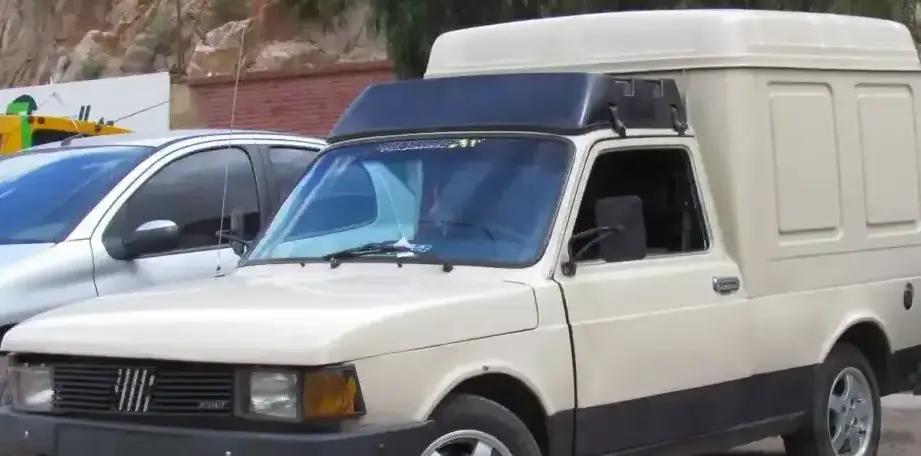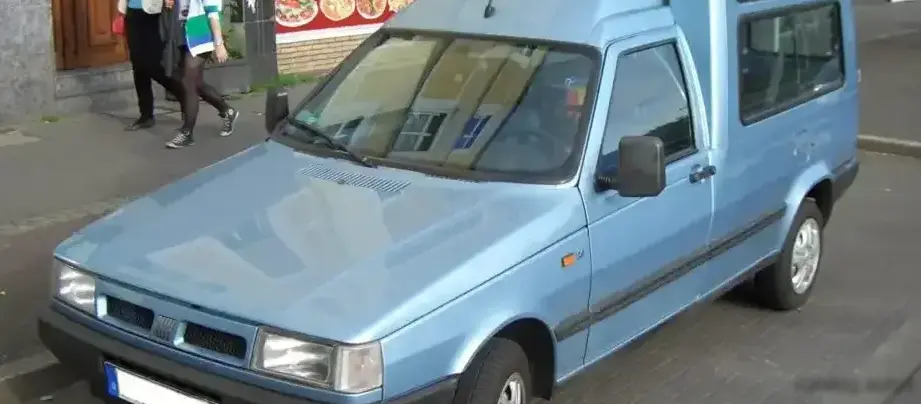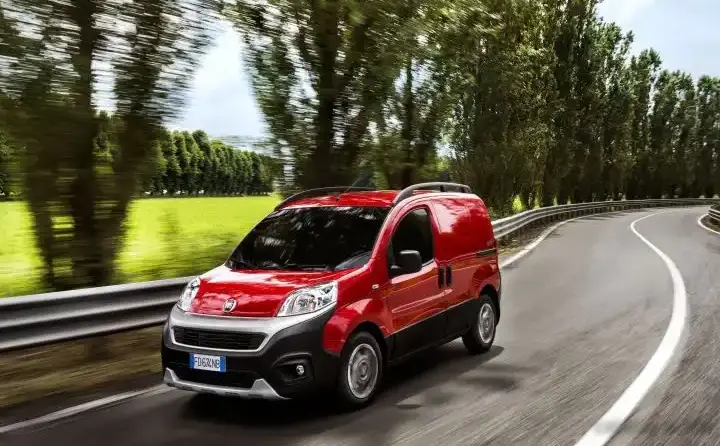
The Fiat Fiorino, specifically the facelifted model introduced in 2016 with the 1.3 16V MultiJet2 (95 hp) Ecojet S&S engine, represents a practical and economical choice within the compact van segment. Launched as part of the Fiorino’s second generation (introduced in 2008, with the facelift arriving in 2016), this variant was primarily aimed at the European market, offering a blend of utility, fuel efficiency, and affordability. The Fiorino shares its platform with the Citroën Nemo and Peugeot Bipper, a result of a collaborative venture between the PSA Group and Fiat. This particular engine and trim level occupied a mid-range position in the Fiorino lineup, offering a balance between performance and running costs.
Technical Specifications
| Brand | Fiat |
| Model | Fiorino |
| Generation | Fiorino (facelift 2016) |
| Type (Engine) | 1.3 16V MultiJet2 (95 Hp) Ecojet S&S |
| Start of production | 2016 |
| Powertrain Architecture | Internal Combustion engine |
| Body type | Minivan |
| Seats | 2-5 |
| Doors | 5 |
| Fuel consumption (urban) | 4.7 l/100 km (50 US mpg, 60.1 UK mpg, 21.3 km/l) |
| Fuel consumption (extra urban) | 3.5 l/100 km (67.2 US mpg, 80.7 UK mpg, 28.6 km/l) |
| Fuel consumption (combined) | 3.9 l/100 km (60.3 US mpg, 72.4 UK mpg, 25.6 km/l) |
| CO2 emissions | 104 g/km |
| Fuel Type | Diesel |
| Maximum speed | 167 km/h (103.77 mph) |
| Emission standard | Euro 6 |
| Weight-to-power ratio | 11.5 kg/Hp, 87.2 Hp/tonne |
| Weight-to-torque ratio | 5.5 kg/Nm, 183.5 Nm/tonne |
| Power | 95 Hp @ 4000 rpm |
| Power per litre | 76.1 Hp/l |
| Torque | 200 Nm @ 1500 rpm (147.51 lb.-ft. @ 1500 rpm) |
| Engine layout | Front, Transverse |
| Engine Model/Code | 330 A1.000 |
| Engine displacement | 1248 cm3 (76.16 cu. in.) |
| Number of cylinders | 4 |
| Engine configuration | Inline |
| Compression ratio | 16.8:1 |
| Number of valves per cylinder | 4 |
| Fuel injection system | Diesel Commonrail |
| Engine aspiration | Turbocharger, Intercooler |
| Engine oil capacity | 3.9 l (4.12 US qt | 3.43 UK qt) |
| Coolant capacity | 6.5 l (6.87 US qt | 5.72 UK qt) |
| Engine systems | Start & Stop System, Particulate filter |
| Kerb Weight | 1090 kg (2403.04 lbs.) |
| Max. weight | 1750 kg (3858.09 lbs.) |
| Max load | 660 kg (1455.05 lbs.) |
| Trunk (boot) space – maximum | 2800 l (98.88 cu. ft.) |
| Fuel tank capacity | 45 l (11.89 US gal | 9.9 UK gal) |
| Length | 3957 mm (155.79 in.) |
| Width | 1716 mm (67.56 in.) |
| Height | 1721 mm (67.76 in.) |
| Wheelbase | 2513 mm (98.94 in.) |
| Front track | 1469 mm (57.83 in.) |
| Rear track | 1465 mm (57.68 in.) |
| Front overhang | 854 mm (33.62 in.) |
| Rear overhang | 590 mm (23.23 in.) |
| Minimum turning circle | 9.95 m (32.64 ft.) |
| Drivetrain Architecture | Front wheel drive |
| Drive wheel | Front wheel drive |
| Number of gears | 5 gears, manual transmission |
| Front suspension | Independent type McPherson |
| Rear suspension | Torsion |
| Front brakes | Ventilated discs |
| Rear brakes | Drum |
| Assisting systems | ABS (Anti-lock braking system) |
| Steering type | Steering rack and pinion |
| Tires size | 185/65 R15 |
| Wheel rims size | 15 |
INTRODUCTION
The 2016 Fiat Fiorino 1.3 MultiJet2 represents a significant update to a vehicle designed for practicality and efficiency. The Fiorino, in its various iterations, has served as a popular choice for small businesses, delivery services, and individuals needing a versatile, compact vehicle. The facelift brought styling revisions, improved safety features, and refinements to the interior. This 95 hp diesel variant, coupled with a five-speed manual transmission, was positioned as a sweet spot in the range, offering a reasonable level of performance without sacrificing the Fiorino’s renowned fuel economy. It was a key offering in markets where diesel-powered small vans were highly favored, such as Italy, France, and Spain.
Powertrain & Engine Architecture
At the heart of this Fiorino variant lies Fiat’s 330 A1.000 1.3-liter MultiJet2 diesel engine. This is a four-cylinder, inline engine featuring a turbocharger with intercooler, and a common rail direct injection system. The MultiJet2 technology, a second-generation common rail system, allows for multiple fuel injections per combustion cycle, optimizing combustion efficiency and reducing noise. The engine boasts 16 valves (four per cylinder) and a relatively high compression ratio of 16.8:1. The five-speed manual transmission is a standard unit, chosen for its simplicity and durability. The Start & Stop (S&S) system, standard on the Ecojet models, automatically shuts off the engine when the vehicle is stationary (at traffic lights, for example) to further reduce fuel consumption and emissions. The engine is transversely mounted in the front of the vehicle, driving the front wheels.
Driving Characteristics
The 95 hp 1.3 MultiJet2 engine, while not exceptionally powerful, provides adequate performance for everyday driving and light commercial duties. Acceleration is modest, but the 200 Nm (147.51 lb-ft) of torque available from 1500 rpm provides good low-end grunt, making it suitable for carrying loads or navigating urban environments. The five-speed manual transmission is well-matched to the engine’s characteristics, with gear ratios geared towards maximizing fuel efficiency. Compared to higher-output versions of the Fiorino (which were less common), this variant prioritizes economy over outright speed. The manual transmission offers more driver engagement than an automatic would, but also requires more effort in stop-and-go traffic. The Fiorino’s relatively light weight helps to mitigate the engine’s modest power output.
Equipment & Trim Levels
The Ecojet S&S trim level typically included features such as air conditioning, power steering, a radio with MP3 compatibility, and basic safety equipment like ABS and driver/passenger airbags. The interior was functional and durable, with hard-wearing plastics and cloth upholstery. Optional extras could include a passenger airbag deactivation switch (useful for load carrying), electric windows, and upgraded audio systems. The Fiorino’s interior is designed with practicality in mind, offering a comfortable driving position and easy-to-use controls. The rear seats could be folded or removed entirely to maximize cargo space.
Chassis & Braking
The Fiorino utilizes a McPherson strut independent suspension setup at the front, providing a reasonable level of ride comfort and handling. The rear suspension employs a torsion beam, which is a simpler and more cost-effective solution. The front brakes are ventilated discs, offering good stopping power, while the rear brakes are drums. ABS (Anti-lock Braking System) is standard, enhancing safety during emergency braking. The Fiorino’s suspension is tuned for a balance between comfort and load-carrying capability. The relatively narrow tires (185/65 R15) contribute to fuel efficiency but offer limited grip in extreme conditions.
Market Reception & Comparison
The Fiat Fiorino 1.3 MultiJet2 Ecojet S&S was generally well-received by critics for its fuel efficiency, practicality, and affordability. It was often praised as a sensible choice for businesses and individuals needing a small, economical van. Compared to other trims in the Fiorino lineup, this variant offered the best balance between running costs and performance. Its fuel economy was significantly better than that of petrol-powered versions, and its torque output was sufficient for most tasks. Competitors included the Citroën Nemo and Peugeot Bipper (with which it shared its platform), as well as the Renault Kangoo and Volkswagen Caddy. The Fiorino often undercut these rivals on price.
Legacy
The 1.3 MultiJet2 engine has proven to be a relatively reliable unit, although regular maintenance is crucial. Common issues can include injector problems and turbocharger wear, particularly on higher-mileage examples. The Fiorino’s simple construction and readily available parts contribute to its relatively low cost of ownership. On the used car market, these Fiorinos are often sought after for their affordability and fuel efficiency. They remain a popular choice for small businesses and individuals needing a practical and economical vehicle. The 2016 facelifted model, with its improved styling and features, is generally considered a more desirable option than earlier versions.