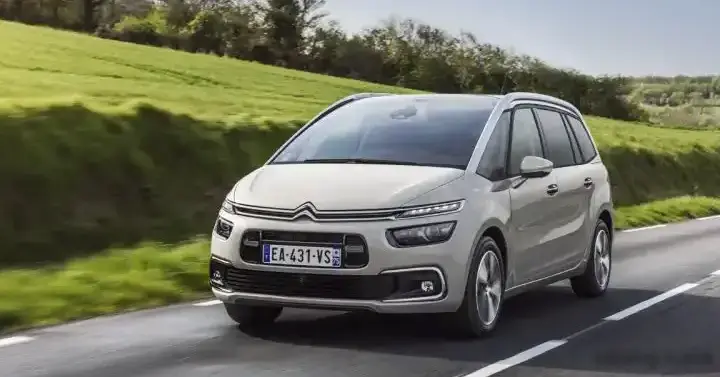
The Citroen C4 II Grand Picasso, specifically the Phase II model produced from 2016 to 2018, represented a significant evolution of Citroen’s popular MPV (Multi-Purpose Vehicle). This iteration of the C4 Picasso, built on the EMP2 platform (also known as the 1HX0/A3 platform), focused on improved efficiency, technology, and comfort. The 1.6 BlueHDi 99 horsepower variant with Start & Stop (S&S) technology was positioned as an entry-level offering, aimed at buyers prioritizing fuel economy and practicality over outright performance. It served as a key model in Citroen’s lineup, particularly in European markets where MPVs remained highly sought after for family transport.
Technical Specifications
| Brand | Citroen |
| Model | C4 |
| Generation | C4 II Grand Picasso (Phase II, 2016) |
| Type (Engine) | 1.6 BlueHDI (99 Hp) S&S |
| Start of production | 2016 |
| End of production | 2018 |
| Powertrain Architecture | Internal Combustion engine |
| Body type | Minivan, MPV |
| Seats | 7 |
| Doors | 5 |
| Fuel consumption (urban) | 4.5 l/100 km (52.3 US mpg, 62.8 UK mpg, 22.2 km/l) |
| Fuel consumption (extra urban) | 3.5 l/100 km (67.2 US mpg, 80.7 UK mpg, 28.6 km/l) |
| Fuel consumption (combined) | 3.8 l/100 km (61.9 US mpg, 74.3 UK mpg, 26.3 km/l) |
| CO2 emissions | 100 g/km |
| Fuel Type | Diesel |
| Acceleration 0 – 100 km/h | 13.1 sec |
| Acceleration 0 – 62 mph | 13.1 sec |
| Acceleration 0 – 60 mph | 12.4 sec |
| Maximum speed | 176 km/h (109.36 mph) |
| Emission standard | Euro 6 |
| Weight-to-power ratio | 13.3 kg/Hp, 75 Hp/tonne |
| Weight-to-torque ratio | 5.2 kg/Nm, 192.4 Nm/tonne |
| Power | 99 Hp @ 3750 rpm |
| Power per litre | 63.5 Hp/l |
| Torque | 254 Nm @ 1750 rpm (187.34 lb.-ft. @ 1750 rpm) |
| Engine layout | Front, Transverse |
| Engine Model/Code | DV6FD |
| Engine displacement | 1560 cm3 (95.2 cu. in.) |
| Number of cylinders | 4 |
| Engine configuration | Inline |
| Cylinder Bore | 75 mm (2.95 in.) |
| Piston Stroke | 88.3 mm (3.48 in.) |
| Compression ratio | 16:1 |
| Number of valves per cylinder | 2 |
| Fuel injection system | Diesel Commonrail |
| Engine aspiration | Turbocharger, Intercooler |
| Engine oil capacity | 3.75 l (3.96 US qt | 3.3 UK qt) |
| Coolant | 6.5 l (6.87 US qt | 5.72 UK qt) |
| Kerb Weight | 1320 kg (2910.1 lbs.) |
| Max. weight | 2175 kg (4795.05 lbs.) |
| Max load | 855 kg (1884.95 lbs.) |
| Trunk (boot) space – minimum | 165 l (5.83 cu. ft.) |
| Trunk (boot) space – maximum | 2181 l (77.02 cu. ft.) |
| Fuel tank capacity | 55 l (14.53 US gal | 12.1 UK gal) |
| AdBlue tank | 17 l (4.49 US gal | 3.74 UK gal) |
| Max. roof load | 80 kg (176.37 lbs.) |
| Permitted trailer load with brakes (12%) | 1000 kg (2204.62 lbs.) |
| Permitted trailer load without brakes | 660 kg (1455.05 lbs.) |
| Permitted towbar download | 70 kg (154.32 lbs.) |
| Length | 4602 mm (181.18 in.) |
| Width | 1826 mm (71.89 in.) |
| Width with mirrors folded | 1971 mm (77.6 in.) |
| Width including mirrors | 2117 mm (83.35 in.) |
| Height | 1638-1644 mm (64.49 – 64.72 in.) |
| Wheelbase | 2840 mm (111.81 in.) |
| Front track | 1573-1587 mm (61.93 – 62.48 in.) |
| Rear (Back) track | 1576-1590 mm (62.05 – 62.6 in.) |
| Front overhang | 889 mm (35 in.) |
| Rear overhang | 873 mm (34.37 in.) |
| Minimum turning circle | 11.3 m (37.07 ft.) |
| Drivetrain Architecture | Front wheel drive |
| Number of gears and type of gearbox | 5 gears, manual transmission |
| Front suspension | Independent, type McPherson with coil spring and anti-roll bar |
| Rear suspension | Semi-independent, coil spring |
| Front brakes | Ventilated discs |
| Rear brakes | Disc |
| Assisting systems | ABS (Anti-lock braking system) |
| Steering type | Steering rack and pinion |
| Power steering | Electric Steering |
| Tires size | 205/60 R16; 205/55 R17 |
| Wheel rims size | 16; 17 |
Powertrain & Engine Architecture
The heart of this C4 Grand Picasso variant is the 1.6-liter DV6FD BlueHDi diesel engine. This engine is part of the PSA Group’s (Peugeot Citroen) DV engine family, known for its compact size and efficiency. The DV6FD utilizes a common-rail direct fuel injection system, delivering fuel at extremely high pressure for optimized combustion. A turbocharger with an intercooler is employed to boost power output and improve torque across a wider rev range. The engine features 16 valves (two per cylinder) and a compression ratio of 16:1. The Start & Stop system automatically shuts off the engine when the vehicle is stationary (at traffic lights, for example) to further reduce fuel consumption and emissions. The engine is transversely mounted at the front of the vehicle. The transmission is a 5-speed manual gearbox, chosen for its simplicity and cost-effectiveness in this entry-level trim.
Driving Characteristics
The 99 horsepower output and 254 Nm (187 lb-ft) of torque provide adequate, but not exhilarating, performance. Acceleration from 0-60 mph takes around 12.4 seconds, and top speed is approximately 109 mph. The engine’s peak torque is available from 1750 rpm, offering reasonable responsiveness for everyday driving situations. However, the 5-speed gearbox, while functional, doesn’t offer the same level of refinement or fuel efficiency as a 6-speed unit found in higher-spec models. The gear ratios are geared towards economy rather than performance, meaning the engine can feel strained when climbing hills or accelerating quickly with a full load. Compared to the more powerful 1.6 BlueHDi 115 hp or the 2.0 BlueHDi variants, this version feels noticeably slower and requires more driver input to maintain speed.
Equipment & Trim Levels
The 1.6 BlueHDi 99 hp S&S trim typically included standard features such as air conditioning, electric front windows, a basic audio system with USB connectivity, and ABS brakes. Safety features included multiple airbags and stability control. Interior upholstery was typically cloth, and the dashboard featured a functional but relatively basic design. Optional extras included rear parking sensors, a touchscreen infotainment system, and alloy wheels. This trim level was designed to be affordable and practical, focusing on essential features for family use.
Chassis & Braking
The C4 Grand Picasso utilizes an independent McPherson strut suspension setup at the front, providing a comfortable ride quality. The rear suspension is a semi-independent coil spring arrangement. Front brakes are ventilated discs, while rear brakes are solid discs. Electric power steering is standard. The suspension is tuned for comfort, prioritizing ride quality over sporty handling. The relatively modest power output of this variant meant that the braking system was generally adequate for its intended use.
Market Reception & Comparison
The 1.6 BlueHDi 99 hp variant was generally well-received by critics for its excellent fuel economy and low running costs. However, some reviewers noted its lack of outright performance and the somewhat basic interior trim. Compared to the higher-powered BlueHDi engines, this version offered a more affordable entry point into the C4 Grand Picasso range, but at the expense of driving enjoyment. Its fuel economy figures of around 62 mpg combined were a major selling point, making it an attractive option for budget-conscious buyers.
Legacy
The 1.6 BlueHDi engine proved to be a reliable unit, although, like all modern diesels, it is susceptible to issues with the diesel particulate filter (DPF) if not driven on longer journeys regularly. The C4 Grand Picasso 1.6 BlueHDi 99 hp remains a popular choice on the used car market, particularly for families seeking a spacious and economical MPV. Its relatively simple mechanicals and readily available parts contribute to its ongoing appeal. While not the most exciting vehicle to drive, its practicality, fuel efficiency, and affordability have ensured its continued relevance in the used car landscape.