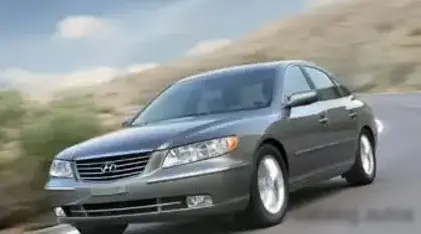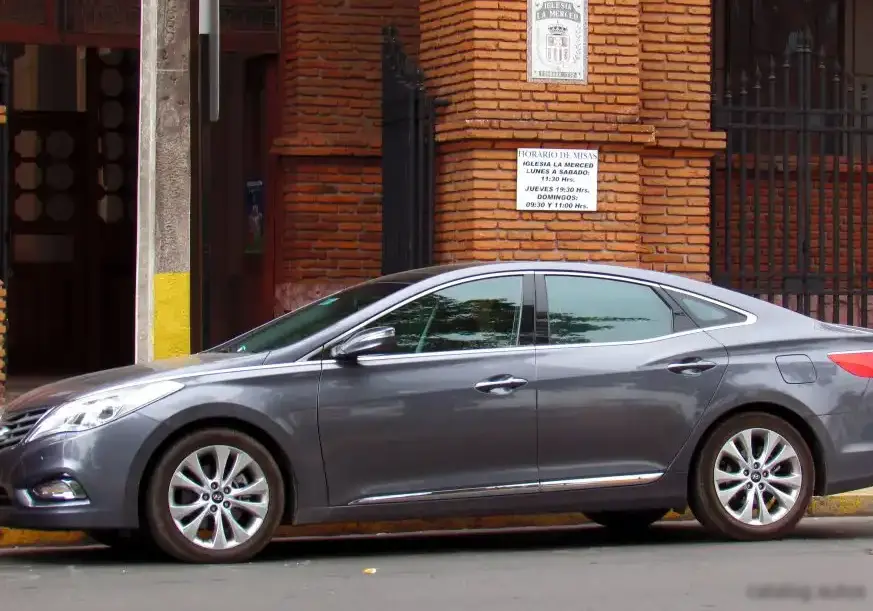
The Hyundai Grandeur, known as the Azera in North America, represents Hyundai’s flagship sedan, positioned above the Sonata and Elantra. The fifth generation, designated HG, was produced from 2011 to 2016 and marked a significant step forward in terms of design, technology, and refinement for the brand. Within the HG generation, the 3.0-liter V6 model with an automatic transmission occupied a premium position, offering a balance of power, comfort, and features aimed at buyers seeking a luxurious and capable full-size sedan. This variant was a key player in Hyundai’s efforts to challenge established luxury brands in the US market.
Technical Specifications
| Brand | Hyundai |
| Model | Grandeur/Azera |
| Generation | Grandeur/Azera V (HG) |
| Type (Engine) | 3.0 V6 (250 Hp) Automatic |
| Start of production | 2011 |
| End of production | 2016 |
| Powertrain Architecture | Internal Combustion engine |
| Body type | Sedan |
| Seats | 5 |
| Doors | 4 |
| Fuel consumption (economy) – urban | 14 l/100 km (16.8 US mpg, 20.2 UK mpg, 7.1 km/l) |
| Fuel consumption (economy) – extra urban | 7.1 l/100 km (33.1 US mpg, 39.8 UK mpg, 14.1 km/l) |
| Fuel consumption (economy) – combined | 9.6 l/100 km (24.5 US mpg, 29.4 UK mpg, 10.4 km/l) |
| Fuel Type | Petrol (Gasoline) |
| Acceleration 0 – 100 km/h | 8.4 sec |
| Acceleration 0 – 62 mph | 8.4 sec |
| Acceleration 0 – 60 mph | 8 sec |
| Maximum speed | 223 km/h (138.57 mph) |
| Emission standard | Euro 4 |
| Weight-to-power ratio | 6.6 kg/Hp, 150.4 Hp/tonne |
| Weight-to-torque ratio | 5.9 kg/Nm, 169.7 Nm/tonne |
| Power | 250 Hp @ 6400 rpm |
| Power per litre | 83.4 Hp/l |
| Torque | 282 Nm @ 5000 rpm (207.99 lb.-ft. @ 5000 rpm) |
| Engine layout | Front, Transverse |
| Engine Model/Code | Lambda II / G6DE |
| Engine displacement | 2999 cm3 (183.01 cu. in.) |
| Number of cylinders | 6 |
| Engine configuration | V-engine |
| Cylinder Bore | 92 mm (3.62 in.) |
| Piston Stroke | 75.2 mm (2.96 in.) |
| Compression ratio | 10.6:1 |
| Number of valves per cylinder | 4 |
| Fuel injection system | Multi-port manifold injection |
| Engine aspiration | Naturally aspirated engine |
| Valvetrain | DOHC, D-CVVT |
| Engine oil capacity | 5.2 l (5.49 US qt | 4.58 UK qt) |
| Coolant | 8.4 l (8.88 US qt | 7.39 UK qt) |
| Kerb Weight | 1662 kg (3664.08 lbs.) |
| Max. weight | 2120 kg (4673.8 lbs.) |
| Max load | 458 kg (1009.72 lbs.) |
| Trunk (boot) space – minimum | 546 l (19.28 cu. ft.) |
| Fuel tank capacity | 70 l (18.49 US gal | 15.4 UK gal) |
| Length | 4910 mm (193.31 in.) |
| Width | 1860 mm (73.23 in.) |
| Height | 1470 mm (57.87 in.) |
| Wheelbase | 2845 mm (112.01 in.) |
| Front track | 1606-1613 mm (63.23 – 63.5 in.) |
| Rear (Back) track | 1607-1614 mm (63.27 – 63.54 in.) |
| Front overhang | 950 mm (37.4 in.) |
| Rear overhang | 1115 mm (43.9 in.) |
| Ride height (ground clearance) | 151 mm (5.94 in.) |
| Drag coefficient (Cd) | 0.29 |
| Minimum turning circle (turning diameter) | 11.1 m (36.42 ft.) |
| Drivetrain Architecture | The Internal combustion engine (ICE) drives the front wheels of the vehicle. |
| Drive wheel | Front wheel drive |
| Number of gears and type of gearbox | 6 gears, automatic transmission |
| Front suspension | Independent type McPherson |
| Rear suspension | Independent multi-link suspension |
| Front brakes | Ventilated discs |
| Rear brakes | Disc |
| Assisting systems | ABS (Anti-lock braking system) |
| Steering type | Steering rack and pinion |
| Power steering | Hydraulic Steering |
| Tires size | 225/55 R17; 245/45 R18 |
| Wheel rims size | 7.0J x 17; 7.5J x 18 |
INTRODUCTION
The Hyundai Grandeur/Azera HG, launched in 2011, represented a significant evolution for Hyundai. Building upon the success of previous generations, the HG aimed to deliver a more sophisticated and refined experience, directly competing with established mid-size and full-size sedans from Japanese and American manufacturers. The 3.0-liter V6 engine paired with a six-speed automatic transmission was positioned as the premium offering within the HG lineup, providing a step up in performance and features compared to the base 2.4-liter four-cylinder model. This combination targeted buyers who prioritized a smooth, powerful driving experience and a well-equipped vehicle.
Powertrain & Engine Architecture
The heart of this variant is Hyundai’s Lambda II 3.0-liter V6 engine, internally designated G6DE. This engine is a naturally aspirated, 60-degree V6 featuring dual overhead camshafts (DOHC) and Hyundai’s Dual Continuously Variable Valve Timing (D-CVVT) system. D-CVVT optimizes valve timing based on engine load and speed, improving both performance and fuel efficiency. The engine utilizes multi-port fuel injection, delivering fuel directly into the intake ports. The 2999cc displacement is achieved with a bore of 92mm and a stroke of 75.2mm, operating at a compression ratio of 10.6:1.
The engine is mated to a six-speed automatic transmission, designed to provide smooth and responsive shifts. This transmission features SHIFTRONIC manual shift control, allowing drivers to select gears manually for more engaging driving. The transmission’s gear ratios are tuned to balance acceleration and fuel economy, with a focus on providing comfortable cruising at highway speeds. The front-wheel-drive configuration was standard for this variant.
Driving Characteristics
The 3.0-liter V6 automatic Grandeur/Azera delivers a refined and comfortable driving experience. With 250 horsepower and 207.99 lb-ft of torque, acceleration from 0-60 mph takes approximately 8 seconds, making it adequately quick for everyday driving and highway merging. While not a sports sedan, the engine provides ample power for confident overtaking maneuvers. The automatic transmission contributes to a smooth and seamless driving experience, with well-timed shifts. Compared to the base 2.4-liter engine, the V6 offers noticeably stronger acceleration and a more relaxed feel, especially when fully loaded or climbing hills. The six-speed automatic, while not as quick-shifting as some dual-clutch transmissions, provides a good balance of responsiveness and smoothness.
Equipment & Trim Levels
The 3.0-liter V6 Grandeur/Azera typically came well-equipped, often representing the higher trim levels. Standard features generally included leather upholstery, heated front seats, a power-adjustable driver’s seat, automatic climate control, a premium audio system, and alloy wheels. Optional extras often included a panoramic sunroof, navigation system, rear-seat entertainment system, and advanced safety features like lane departure warning and blind-spot monitoring. Interior materials were generally of high quality, contributing to a luxurious feel. The dashboard layout was clean and modern, with intuitive controls.
Chassis & Braking
The HG Grandeur/Azera utilizes an independent McPherson strut suspension in the front and an independent multi-link suspension in the rear. This suspension setup provides a comfortable ride, effectively absorbing bumps and irregularities in the road. The suspension tuning prioritizes comfort over sporty handling, resulting in a smooth and stable ride. Braking duties are handled by ventilated discs in the front and solid discs in the rear, equipped with an Anti-lock Braking System (ABS). The hydraulic power steering provides a light and easy steering feel.
Market Reception & Comparison
The 3.0-liter V6 Grandeur/Azera received generally positive reviews from automotive critics. It was praised for its spacious interior, comfortable ride, and generous features list. The V6 engine was considered a strong performer, providing ample power for most driving situations. Fuel economy, however, was a common criticism, being lower than some competitors. Compared to the 2.4-liter four-cylinder model, the V6 offered a significant improvement in performance and refinement, but at a higher price point. Against competitors like the Toyota Avalon and Honda Accord V6, the Grandeur/Azera offered a compelling value proposition, often undercutting them in price while offering similar levels of equipment and performance.
Legacy
The Hyundai Grandeur/Azera HG 3.0 V6 automatic has proven to be a relatively reliable powertrain. The Lambda II V6 engine is known for its durability, and the six-speed automatic transmission has also demonstrated good longevity. Common maintenance items include regular oil changes, timing belt replacement (depending on mileage), and inspection of cooling system components. In the used car market, these models represent a good value for buyers seeking a spacious, comfortable, and well-equipped full-size sedan. While not as sought-after as some Japanese competitors, the Grandeur/Azera HG offers a compelling alternative, particularly for those looking for a vehicle with a unique style and a generous features list.