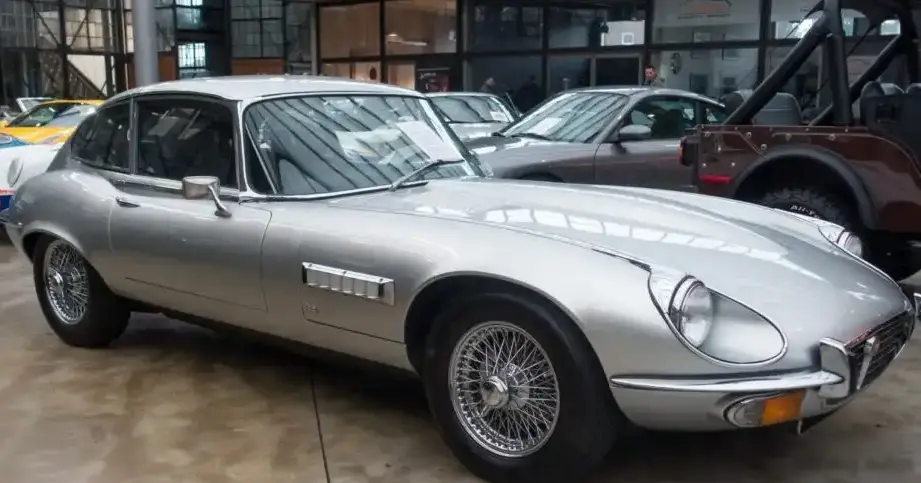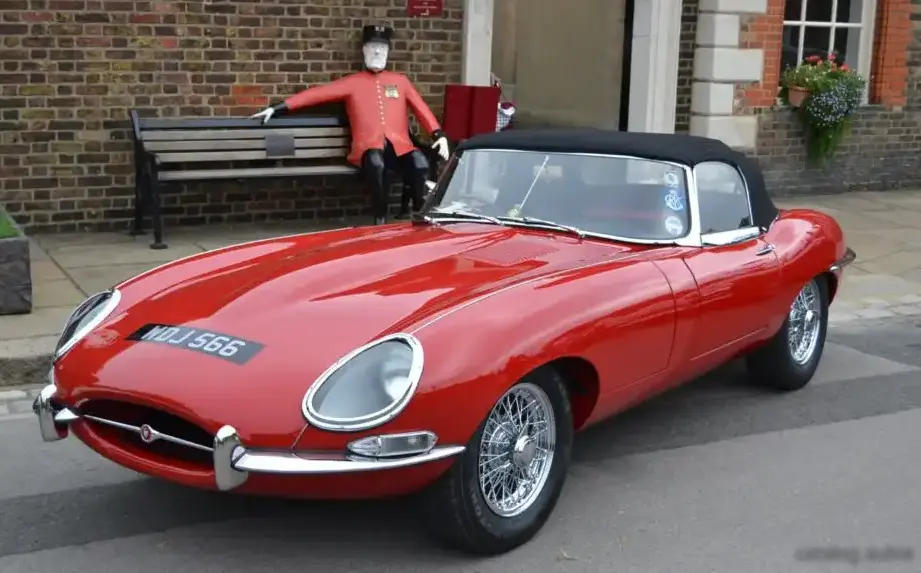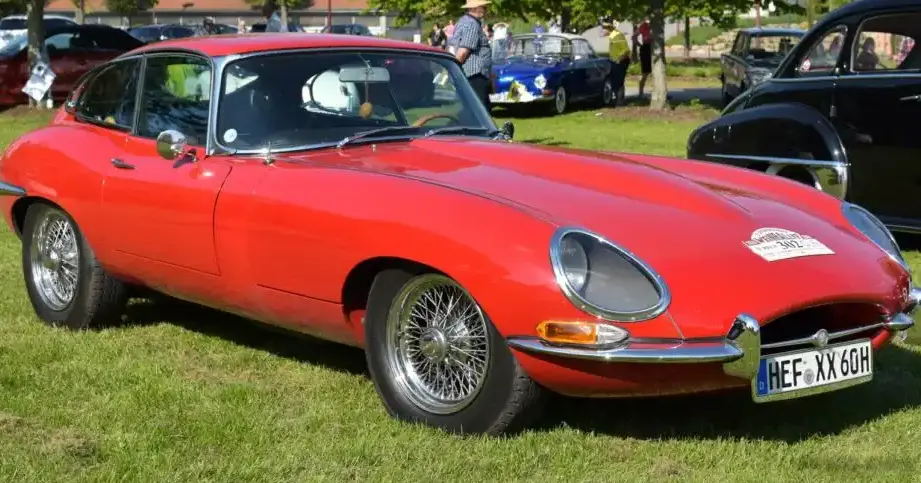
The Jaguar E-Type 3.8 (Series 1), produced between 1961 and 1964, represents the initial iteration of what many consider one of the most beautiful and iconic sports cars ever created. This first series established the E-Type’s reputation for breathtaking performance and striking aesthetics, quickly becoming a symbol of British automotive engineering and design. It was a direct descendant of the Jaguar D-Type racing car, bringing racing technology and styling to the road-going public at a relatively affordable price point. The 3.8-liter engine variant was the original powerplant, setting the standard for all subsequent E-Type models. It was a pivotal car in Jaguar’s history, solidifying their position as a manufacturer of world-class grand tourers.
Technical Specifications
| Brand | Jaguar |
| Model | E-type |
| Generation | E-Type |
| Type (Engine) | 3.8 (Series1) (265 Hp) |
| Start of production | 1961 |
| End of production | 1964 |
| Powertrain Architecture | Internal Combustion engine |
| Body type | Coupe |
| Seats | 2 |
| Doors | 2 |
| Fuel Type | Petrol (Gasoline) |
| Power | 265 Hp |
| Engine aspiration | Naturally aspirated engine |
| Drivetrain | Rear wheel drive |
Powertrain & Engine Architecture
The heart of the E-Type 3.8 Series 1 is its 3.8-liter (3781 cc) XK inline-six cylinder engine. This engine, derived from the successful Jaguar XK engine family used in the D-Type, featured an aluminum cylinder head and block – a remarkably advanced construction for the early 1960s. The engine utilized a single overhead camshaft (SOHC) design, operating three SU HD8 carburetors. These carburetors were crucial to the engine’s power delivery, providing a responsive and linear power curve. The engine produced 265 horsepower at 5,500 rpm and 240 lb-ft of torque at 4,000 rpm. The engine code is typically referred to as the XK6, with specific variations within the early production run. The transmission was a four-speed manual gearbox, initially a Moss gearbox, later replaced by a fully synchronized Jaguar gearbox. The drivetrain is a classic rear-wheel-drive configuration, contributing to the car’s balanced handling characteristics.
Driving Characteristics
The E-Type 3.8 Series 1 offered exhilarating performance for its time. Acceleration from 0 to 60 mph was achieved in approximately 6.4 seconds, and it could reach a top speed of around 150 mph. The car’s relatively light weight (around 2,850 lbs) combined with the potent 3.8-liter engine resulted in a thrilling driving experience. The steering was unassisted, providing direct feedback to the driver, while the suspension – independent front suspension with torsion bars and a live axle rear suspension – offered a comfortable yet sporty ride. The four-speed manual transmission required a skilled driver to extract the most performance, demanding precise gear changes. Compared to later E-Type variants with larger engines or automatic transmissions, the 3.8 Series 1 offered a more raw and engaging driving experience, prioritizing driver involvement over outright speed or convenience. The gear ratios were optimized for acceleration, making it a lively performer on winding roads.
Equipment & Trim Levels
The E-Type 3.8 Series 1 was relatively spartan in its standard equipment compared to modern luxury cars, but it offered a refined interior for a sports car of its era. Standard features included leather bucket seats, a wood-rimmed steering wheel, and a comprehensive instrument panel with gauges for speed, tachometer, oil pressure, water temperature, and fuel level. The dashboard was typically finished in wood veneer. Early models featured a flat floorpan, while later Series 1 cars incorporated a transmission tunnel. Optional extras included a radio, wire wheels (replacing the standard steel disc wheels with hubcaps), and a hardtop roof in addition to the standard soft top. Interior upholstery was typically Connolly leather, available in a range of colors. The trim level was largely consistent across all 3.8 Series 1 models, with variations primarily stemming from customer choices in upholstery and optional equipment.
Chassis & Braking
The E-Type 3.8 Series 1 utilized a monocoque chassis construction, providing a strong and lightweight platform. The suspension system consisted of independent front suspension with torsion bars and a live axle rear suspension with half-elliptic leaf springs. Braking was initially accomplished with Dunlop disc brakes all around, a significant advancement for the time. However, early production cars (1961) featured Girling disc brakes on the front and drum brakes on the rear. This was quickly rectified, with all subsequent Series 1 models receiving four-wheel disc brakes. Steering was unassisted, providing a direct connection between the driver and the road. The car lacked modern safety features such as anti-lock brakes or traction control, relying on the driver’s skill and judgment for safe handling.
Market Reception & Comparison
The Jaguar E-Type 3.8 Series 1 was an instant success upon its launch in 1961. Enthusiasts and critics alike praised its stunning design, impressive performance, and relatively affordable price. It was often compared to more expensive sports cars from Ferrari and Aston Martin, offering similar performance at a fraction of the cost. The E-Type quickly became a cultural icon, appearing in numerous films and television shows. Compared to later E-Type variants, the 3.8 Series 1 was often favored by purists for its simplicity and raw driving experience. The later 4.2-liter engine offered more power, but some felt it lacked the responsiveness of the 3.8. Fuel economy was not a primary concern for E-Type buyers, but the 3.8-liter engine offered reasonable fuel consumption for a high-performance sports car of its era. Reliability was generally good, although the SU carburetors required periodic maintenance and tuning.
Legacy
The Jaguar E-Type 3.8 Series 1 remains highly sought after by collectors and enthusiasts today. Its iconic design and exhilarating driving experience continue to captivate audiences. The early Series 1 models, particularly those with the desirable flat floorpan and four-wheel disc brakes, command premium prices in the used car market. The XK6 engine, while requiring regular maintenance, is generally considered a robust and reliable powerplant. Parts availability is good, thanks to a thriving aftermarket and the continued support of Jaguar enthusiasts. The E-Type 3.8 Series 1 cemented Jaguar’s reputation as a manufacturer of world-class sports cars and continues to be celebrated as a masterpiece of automotive design and engineering. It’s a car that continues to inspire and influence automotive design to this day, and a testament to the brilliance of Jaguar’s engineers and designers in the early 1960s.