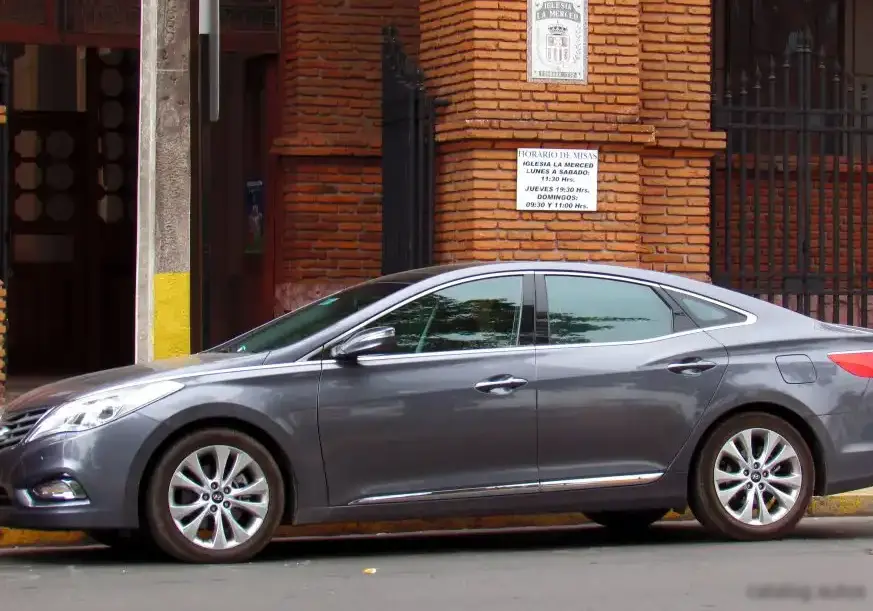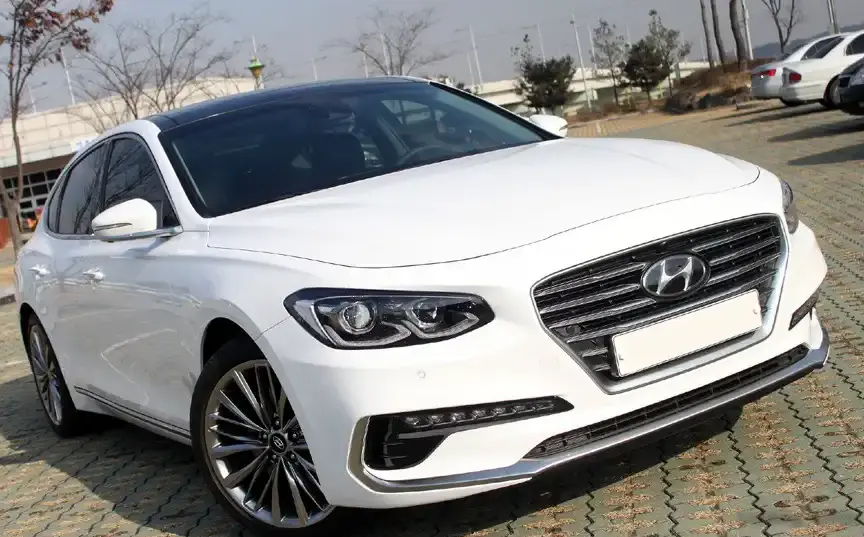
The Hyundai Grandeur, known as the Azera in North American markets, represents Hyundai’s flagship sedan, positioned above the Sonata and Elantra. The sixth generation, designated IG, was produced from 2016 to 2019 and marked a significant step forward in terms of design, technology, and refinement for the brand. Within the IG lineup, the 2.4 GDi (Gasoline Direct Injection) variant with a six-speed automatic transmission served as the entry-level engine option in many markets, offering a balance of fuel efficiency and adequate performance for everyday driving. This model aimed to attract buyers seeking a comfortable and well-equipped large sedan without the higher price tag associated with the more powerful 3.3-liter V6 engine.
Technical Specifications
| Brand | Hyundai |
| Model | Grandeur/Azera |
| Generation | Grandeur/Azera VI (IG) |
| Type (Engine) | 2.4 GDi (190 Hp) Automatic |
| Start of production | 2016 |
| End of production | November, 2019 |
| Powertrain Architecture | Internal Combustion engine |
| Body type | Sedan |
| Seats | 5 |
| Doors | 4 |
| Fuel consumption (urban) | 10.2 l/100 km (23.1 US mpg) |
| Fuel consumption (extra urban) | 7.4 l/100 km (31.8 US mpg) |
| Fuel consumption (combined) | 8.9 l/100 km (26.4 US mpg) |
| Fuel Type | Petrol (Gasoline) |
| Weight-to-power ratio | 8.2 kg/Hp |
| Weight-to-torque ratio | 6.5 kg/Nm |
| Power | 190 Hp @ 6000 rpm |
| Power per litre | 80.5 Hp/l |
| Torque | 240 Nm @ 4000 rpm (177.01 lb.-ft. @ 4000 rpm) |
| Engine layout | Front, Transverse |
| Engine Model/Code | Theta II / G4KJ |
| Engine displacement | 2359 cm3 (143.96 cu. in.) |
| Number of cylinders | 4 |
| Engine configuration | Inline |
| Compression ratio | 11.3:1 |
| Number of valves per cylinder | 4 |
| Fuel injection system | Direct injection |
| Engine aspiration | Naturally aspirated engine |
| Valvetrain | DOHC |
| Engine oil capacity | 4.8 l (5.07 US qt | 4.22 UK qt) |
| Kerb Weight | 1550 kg (3417.17 lbs.) |
| Fuel tank capacity | 70 l (18.49 US gal | 15.4 UK gal) |
| Length | 4930 mm (194.09 in.) |
| Width | 1865 mm (73.43 in.) |
| Height | 1470 mm (57.87 in.) |
| Wheelbase | 2845 mm (112.01 in.) |
| Front track | 1602 mm (63.07 in.) |
| Rear track | 1610 mm (63.39 in.) |
| Drivetrain Architecture | Front wheel drive |
| Number of gears | 6 |
| Gearbox type | automatic transmission |
| Front brakes | Ventilated discs |
| Rear brakes | Disc |
| Tires size | 225/55 R17; 245/45 R18 |
| Wheel rims size | 7.0J x 17; 7.5J x 18 |
Powertrain & Engine Architecture
The heart of the Grandeur 2.4 GDi is Hyundai’s Theta II inline-four cylinder engine, specifically the G4KJ code. This engine utilizes direct fuel injection (GDi) to enhance both power and fuel efficiency. The direct injection system precisely meters fuel directly into the combustion chamber, allowing for a higher compression ratio (11.3:1) and more complete combustion. The engine features a double overhead camshaft (DOHC) valvetrain with four valves per cylinder, optimizing airflow for improved performance. The 2.4-liter engine produces 190 horsepower at 6000 rpm and 240 Nm (177 lb-ft) of torque at 4000 rpm. This power is then sent to the front wheels via a six-speed automatic transmission. This transmission was chosen for its smooth shifting characteristics and contribution to overall fuel economy. While not a sport-tuned gearbox, it offered adequate responsiveness for typical driving scenarios.
Driving Characteristics
The 2.4 GDi automatic Grandeur delivers a comfortable and refined driving experience. Acceleration is adequate for merging onto highways and passing slower traffic, but it doesn’t offer the briskness of the optional 3.3-liter V6. The six-speed automatic transmission is well-programmed, providing smooth gear changes and minimizing noticeable hunting for the right gear. The gear ratios are tuned for fuel efficiency, meaning the engine doesn’t rev aggressively during acceleration. Compared to a manual transmission equipped 2.4L, the automatic sacrifices some responsiveness, but gains in ease of use, particularly in urban environments. The suspension is tuned for comfort, absorbing bumps and imperfections in the road effectively. Steering is light and precise, making the Grandeur easy to maneuver in city traffic.
Equipment & Trim Levels
The 2.4 GDi trim typically came standard with a generous array of features. These included automatic climate control, a touchscreen infotainment system with Bluetooth connectivity, power-adjustable front seats, and a rearview camera. Higher trim levels added features such as leather upholstery, a panoramic sunroof, a premium sound system, and advanced safety technologies like lane departure warning and automatic emergency braking. Interior upholstery was typically cloth on the base trims, with leather options available on higher-spec models. Dashboard configurations were generally consistent across the 2.4 GDi range, featuring a clean and modern design with intuitive controls.
Chassis & Braking
The Grandeur IG utilizes a front-wheel-drive platform with a MacPherson strut front suspension and a multi-link rear suspension. This setup provides a good balance of ride comfort and handling. The 2.4 GDi models typically featured ventilated front disc brakes and solid rear disc brakes. Anti-lock Braking System (ABS) was standard, enhancing safety during emergency braking situations. Stabilizer bars were fitted to both the front and rear axles to reduce body roll during cornering. The suspension tuning was geared towards providing a comfortable ride rather than sporty handling, reflecting the Grandeur’s positioning as a luxury sedan.
Market Reception & Comparison
The Hyundai Grandeur 2.4 GDi was generally well-received by automotive critics. It was praised for its spacious interior, comfortable ride, and long list of standard features. However, some reviewers noted that the 2.4-liter engine could feel underpowered, especially when fully loaded with passengers and cargo. Compared to the 3.3-liter V6, the 2.4 GDi offered significantly better fuel economy, but at the expense of performance. In terms of reliability, the Theta II engine family has had some reported issues with oil consumption in certain model years, but the 2.4 GDi variant generally proved to be relatively reliable with proper maintenance.
Legacy
The Hyundai Grandeur/Azera IG 2.4 GDi represents a pivotal moment for Hyundai, showcasing the brand’s increasing ability to compete with established luxury carmakers. While the Theta II engine has faced some scrutiny regarding oil consumption, the powertrain, when properly maintained, has proven to be durable. On the used car market, these models offer a compelling value proposition, providing a spacious, well-equipped, and comfortable sedan at an affordable price point. The 2.4 GDi variant remains a popular choice for buyers seeking a reliable and fuel-efficient large sedan, and its legacy continues to contribute to Hyundai’s growing reputation for quality and value.