
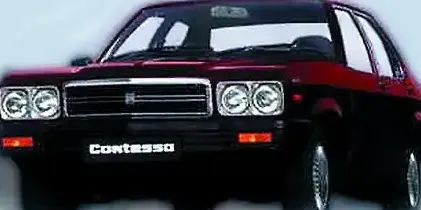
The Hindustan Contessa 1.8 Classic, produced between 1995 and 1998, represents a significant chapter in Indian automotive history. Derived from the Vauxhall Victor FE series, originally licensed from General Motors in 1963, the Contessa was Hindustan Motors’ attempt to provide an Indian-built alternative to imported sedans. The “1.8 Classic” designation refers to the engine displacement and trim level, positioned as a relatively affordable and practical option within the Contessa range. It served as a popular choice for families and businesses seeking a spacious and reasonably well-equipped vehicle, though it faced increasing competition from newer entrants in the Indian market during its final years of production.
Technical Specifications
| Brand | Hindustan |
| Model | Contessa |
| Generation | Contessa |
| Type (Engine) | 1.8 Classic (88 Hp) |
| Start of production | 1995 |
| End of production | 1998 |
| Powertrain Architecture | Internal Combustion engine |
| Body type | Sedan |
| Seats | 5 |
| Doors | 4 |
| Fuel consumption (combined) | 9 l/100 km (26.1 US mpg, 31.4 UK mpg, 11.1 km/l) |
| Fuel Type | Petrol (Gasoline) |
| Maximum speed | 140 km/h (86.99 mph) |
| Weight-to-power ratio | 12.9 kg/Hp, 77.3 Hp/tonne |
| Weight-to-torque ratio | 8.4 kg/Nm, 119.5 Nm/tonne |
| Power | 88 Hp @ 5000 rpm |
| Power per litre | 48.4 Hp/l |
| Torque | 136 Nm @ 3000 rpm (100.31 lb.-ft. @ 3000 rpm) |
| Engine layout | Front, Longitudinal |
| Engine displacement | 1817 cm3 (110.88 cu. in.) |
| Number of cylinders | 4 |
| Engine configuration | Inline |
| Cylinder Bore | 84 mm (3.31 in.) |
| Piston Stroke | 82 mm (3.23 in.) |
| Compression ratio | 8.5:1 |
| Number of valves per cylinder | 2 |
| Fuel injection system | Carburettor |
| Engine aspiration | Naturally aspirated engine |
| Valvetrain | OHC |
| Kerb Weight | 1138 kg (2508.86 lbs.) |
| Max. weight | 1730 kg (3814 lbs.) |
| Max load | 592 kg (1305.14 lbs.) |
| Trunk (boot) space – minimum | 600 l (21.19 cu. ft.) |
| Fuel tank capacity | 65 l (17.17 US gal | 14.3 UK gal) |
| Length | 4591 mm (180.75 in.) |
| Width | 1699 mm (66.89 in.) |
| Height | 1376 mm (54.17 in.) |
| Wheelbase | 2667 mm (105 in.) |
| Front track | 1420 mm (55.91 in.) |
| Rear (Back) track | 1400 mm (55.12 in.) |
| Drivetrain Architecture | The Internal combustion engine (ICE) drives the rear wheels of the vehicle. |
| Drive wheel | Rear wheel drive |
| Number of gears and type of gearbox | 5 gears, manual transmission |
| Front suspension | Coil spring |
| Rear suspension | Coil spring |
| Front brakes | Disc |
| Rear brakes | Drum |
| Assisting systems | ABS (Anti-lock braking system) |
| Tires size | 175/80 R13 S |
| Wheel rims size | 13 |
Powertrain & Engine Architecture
The Hindustan Contessa 1.8 Classic was powered by a 1817cc inline-four cylinder engine. This engine, designated as a derivative of the Isuzu 4ZE1, was adapted for Indian production. Notably, the 1.8 Classic utilized a carbureted fuel system, a common feature for vehicles of this era and price point in the Indian market. The overhead camshaft (OHC) valvetrain operated two valves per cylinder. While relatively simple in design, this engine provided adequate power for the vehicle’s weight and intended use. The engine’s longitudinal front-engine, rear-wheel-drive layout was a carryover from the original Vauxhall design. The five-speed manual transmission was the standard offering, providing a reasonable spread of gears for both city driving and highway cruising. The transmission was not known for its refinement, but it was generally durable.
Driving Characteristics
The 1.8 Classic, with its 88 horsepower and 136 Nm of torque, offered modest performance. Acceleration was adequate for everyday driving, but overtaking required careful planning. The rear-wheel-drive configuration provided a balanced feel, though the car was prone to oversteer if pushed hard. The five-speed manual transmission allowed drivers to keep the engine in its optimal power band, but the gear ratios were somewhat widely spaced. Compared to potential upgrades like a diesel engine, the 1.8 Classic offered a more responsive and engaging driving experience, albeit with lower fuel economy. The steering, while not power-assisted, was reasonably light and provided decent feedback.
Equipment & Trim Levels
The “Classic” trim level represented a mid-range offering within the Contessa lineup. Standard features typically included basic cloth upholstery, a simple dashboard layout with analog gauges, and manual windows and door locks. Air conditioning was often an optional extra. The interior was functional rather than luxurious, reflecting the car’s price point. Exterior features included steel wheels with hubcaps, and relatively basic chrome trim. Optional extras could include a radio/cassette player and upgraded seat covers.
Chassis & Braking
The Contessa 1.8 Classic utilized a body-on-frame construction, a design common in older vehicles. The front suspension consisted of coil springs, while the rear suspension also employed coil springs. The front brakes were disc brakes, providing better stopping power than the drum brakes fitted to the rear wheels. An Anti-lock Braking System (ABS) was included as a safety feature, which was relatively advanced for an Indian-made car of that era. The tires were typically 175/80 R13 size, providing a reasonable balance of comfort and grip.
Market Reception & Comparison
The Hindustan Contessa 1.8 Classic received mixed reviews. Critics praised its spacious interior and relatively affordable price, but noted its outdated design and lack of modern features. Compared to other vehicles in the Indian market at the time, such as the Maruti Esteem and the Ambassador, the Contessa offered a more substantial and robust feel. However, its fuel economy was lower than that of the Esteem, and its reliability was not as well-established as the Ambassador. The 1.8 Classic was generally considered a better value proposition than the higher-spec Contessa models, offering a good balance of performance and affordability.
Legacy
The Hindustan Contessa, and particularly the 1.8 Classic variant, holds a nostalgic place in the hearts of many Indian car enthusiasts. While production ceased in 1998, a significant number of these vehicles remain on the road today, often lovingly maintained by their owners. The engine, while not particularly powerful or efficient by modern standards, is known for its durability and relative simplicity. Parts availability can be a challenge, but a dedicated community of enthusiasts helps to keep these cars running. The Contessa 1.8 Classic represents a unique chapter in Indian automotive history, a testament to the country’s early attempts at indigenous car manufacturing.
