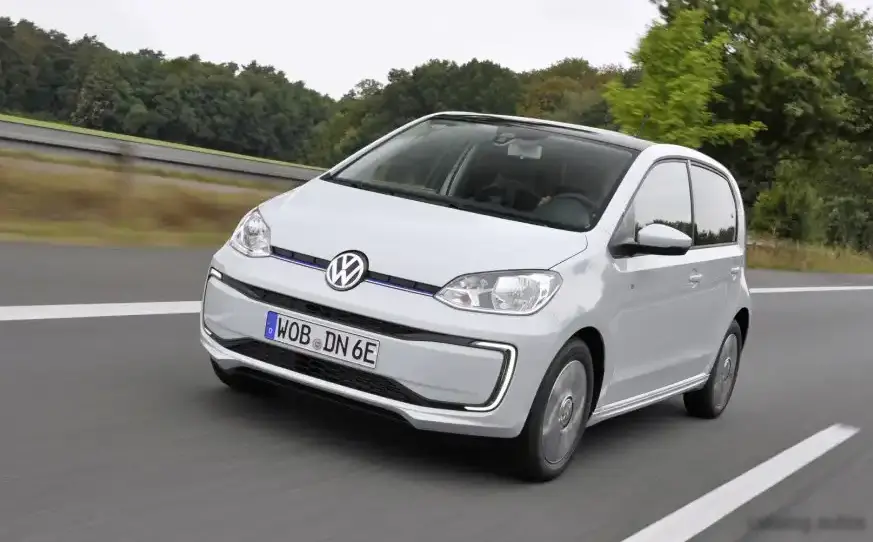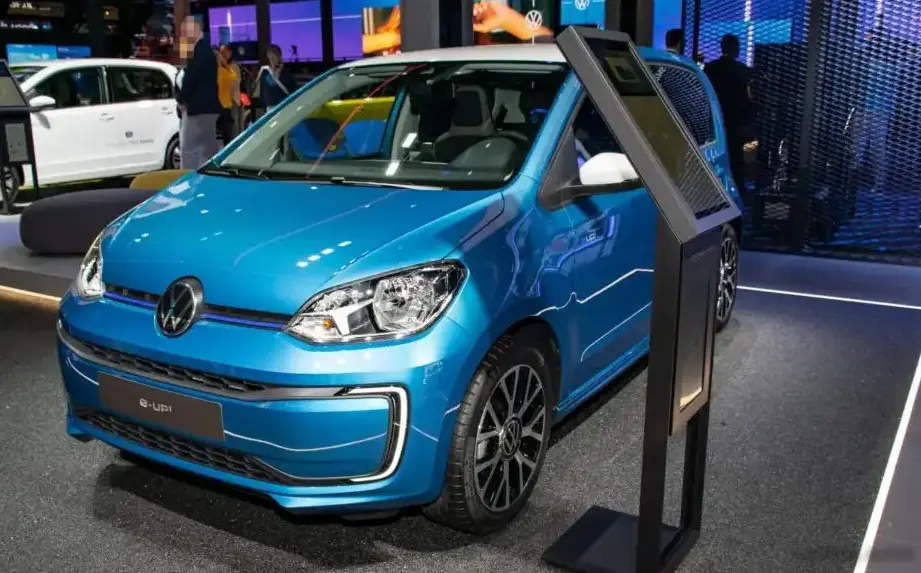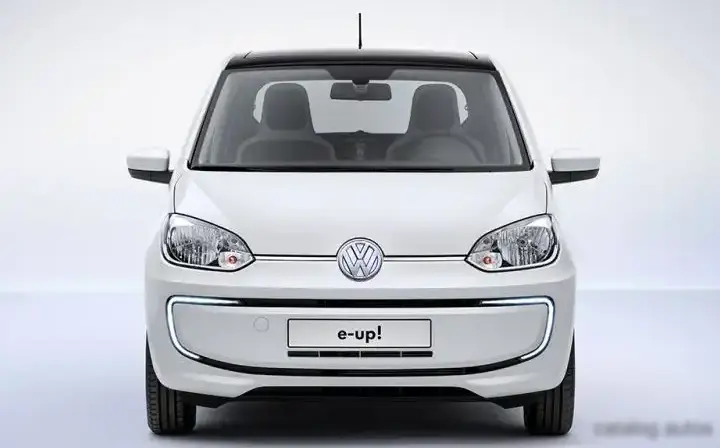
The Volkswagen e-Up! 18.7 kWh, producing 82 horsepower, represents Volkswagen’s initial foray into the all-electric city car segment. Production spanned from November 2013 to June 2016, positioning it as a key model within the broader Up! range and a precursor to Volkswagen’s wider electric vehicle strategy. This variant was primarily aimed at the European market, where demand for compact, efficient urban transportation was – and remains – high. It utilized the Volkswagen Group’s New Small Family (NSF) platform, also known as the A05 platform, shared with the SEAT Mii Electric and Škoda Citigoe iV.
Technical Specifications
| Brand | Volkswagen |
| Model | Up! |
| Generation | e-Up! |
| Type (Engine) | 18.7 kWh (82 Hp) |
| Start of production | November, 2013 |
| End of production | June, 2016 |
| Powertrain Architecture | BEV (Electric Vehicle) |
| Body type | Hatchback |
| Seats | 5 |
| Doors | 5 |
| Fuel Type | Electricity |
| Acceleration 0 – 100 km/h | 12.4 sec |
| Acceleration 0 – 62 mph | 12.4 sec |
| Acceleration 0 – 60 mph | 11.8 sec |
| Maximum speed | 130 km/h (80.78 mph) |
| Weight-to-power ratio | 13.9 kg/Hp |
| Weight-to-torque ratio | 5.4 kg/Nm |
| Gross battery capacity | 18.7 kWh |
| Net (usable) battery capacity | 16 kWh |
| Battery voltage | 374 V |
| Battery technology | Lithium-ion (Li-Ion) |
| Battery weight | 230 kg (507.06 lbs) |
| Battery location | Below the floor |
| All-electric range | 160 km (99.42 mi) |
| Average Energy consumption | 11.7 kWh/100 km (18.83 kWh/100 mi) |
| MPGe | 179 |
| km/kWh | 8.5 |
| mi/kWh | 5.3 |
| Electric motor power | 82 Hp @ 2800-12000 rpm |
| Electric motor Torque | 210 Nm @ 0-2800 rpm (154.89 lb.-ft. @ 0-2800 rpm) |
| Electric motor location | Front axle, Transverse |
| System power | 82 Hp @ 2800-12000 rpm |
| System torque | 210 Nm @ 0-2800 rpm (154.89 lb.-ft. @ 0-2800 rpm) |
| Kerb Weight | 1139 kg (2511.07 lbs) |
| Max. weight | 1500 kg (3306.93 lbs) |
| Max load | 361 kg (795.87 lbs) |
| Trunk (boot) space – minimum | 250 l (8.83 cu. ft.) |
| Trunk (boot) space – maximum | 923 l (32.6 cu. ft.) |
| Max. roof load | 50 kg (110.23 lbs) |
| Length | 3540 mm (139.37 in) |
| Width | 1645 mm (64.76 in) |
| Width including mirrors | 1910 mm (75.2 in) |
| Height | 1498 mm (58.98 in) |
| Wheelbase | 2421 mm (95.31 in) |
| Front track | 1428 mm (56.22 in) |
| Rear (Back) track | 1424 mm (56.06 in) |
| Ride height (ground clearance) | 135 mm (5.31 in) |
| Minimum turning circle | 9.8 m (32.15 ft) |
| Drivetrain Architecture | One electric motor drives the front wheels |
| Drive wheel | Front wheel drive |
| Number of gears | 1 |
| Gearbox type | Automatic transmission |
| Front suspension | Independent type McPherson, Transverse stabilizer |
| Rear suspension | Torsion |
| Front brakes | Ventilated discs |
| Rear brakes | Drum |
| Assisting systems | ABS (Anti-lock braking system) |
| Steering type | Steering rack and pinion |
| Power steering | Electric |
| Tires size | 165/70 R14; 165/65 R15 |
| Wheel rims size | 5J x 14; 5J x 15 |
Introduction
The Volkswagen e-Up! 18.7 kWh was Volkswagen’s first mass-produced all-electric vehicle. Introduced as part of a broader push towards electrification, it aimed to provide a zero-emission alternative for urban commuters. The “18.7 kWh” designation refers to the gross capacity of the lithium-ion battery pack, with a usable capacity of 16 kWh. This model occupied the entry-level position within the Up! range, offering a more affordable electric option compared to larger Volkswagen EVs that would follow. It was a significant step for Volkswagen, demonstrating their commitment to sustainable mobility and paving the way for future electric models like the ID.3 and ID.4.
Powertrain & Engine Architecture
At the heart of the e-Up! is a single electric motor producing 82 horsepower (61 kW) and 210 Nm (155 lb-ft) of torque. The motor is transversely mounted on the front axle, driving the front wheels. The electric motor utilizes a three-phase synchronous motor design, known for its efficiency and smooth power delivery. The 18.7 kWh battery pack, composed of lithium-ion cells, is located under the floor of the vehicle, contributing to a low center of gravity and improved handling. The battery management system (BMS) carefully monitors and controls the battery’s charging and discharging processes, ensuring optimal performance and longevity. The e-Up! features a single-speed automatic transmission, simplifying the driving experience and maximizing efficiency. The car doesn’t have a traditional multi-gear gearbox as electric motors deliver peak torque across a wide RPM range.
Driving Characteristics
The e-Up! 18.7 kWh offers a distinctly different driving experience compared to its gasoline-powered siblings. Acceleration, while not blistering, is adequate for city driving, with a 0-60 mph time of around 11.8 seconds. The instant torque delivery of the electric motor provides brisk acceleration from a standstill, making it easy to navigate urban traffic. The single-speed transmission means there’s no gear shifting, resulting in a smooth and seamless driving experience. Compared to the 1.0-liter gasoline Up!, the e-Up! offers significantly quieter operation and a more refined feel. The regenerative braking system allows for deceleration by simply lifting off the accelerator pedal, recovering energy and extending the driving range. However, the limited range of 160 km (99 miles) meant it was best suited for short commutes and city errands.
Equipment & Trim Levels
The e-Up! was generally well-equipped for its price point, although trim levels varied depending on the market. Standard features typically included air conditioning, central locking, electric front windows, and an infotainment system with a touchscreen display. Safety features such as ABS, ESP (Electronic Stability Program), and multiple airbags were also standard. Optional extras included parking sensors, a navigation system, and upgraded upholstery. The interior design was functional and minimalist, reflecting the car’s focus on practicality and efficiency. The dashboard layout was similar to that of the gasoline-powered Up!, but with unique instrumentation to display battery charge level and energy consumption.
Chassis & Braking
The e-Up! utilizes a McPherson strut front suspension and a torsion beam rear suspension. The low weight of the electric powertrain, combined with the low center of gravity afforded by the underfloor battery pack, contributes to stable and predictable handling. The front brakes are ventilated discs, providing ample stopping power, while the rear brakes are drums. The electric power steering offers light and precise steering feel, making it easy to maneuver in tight spaces. The car’s relatively small size and nimble handling make it well-suited for navigating congested city streets.
Market Reception & Comparison
The e-Up! received generally positive reviews from automotive critics, who praised its affordability, ease of use, and zero-emission credentials. However, the limited range and relatively slow charging times were often cited as drawbacks. Compared to the gasoline-powered Up!, the e-Up! offered a more environmentally friendly alternative, but at a higher initial cost. Compared to other electric vehicles available at the time, such as the Renault Zoe and Nissan Leaf, the e-Up! was more compact and affordable, but offered a shorter range. Fuel economy, expressed as energy consumption, was excellent at 11.7 kWh/100km, translating to a MPGe of 179.
Legacy
The Volkswagen e-Up! 18.7 kWh served as an important stepping stone in Volkswagen’s transition to electric mobility. While production was relatively short-lived, it demonstrated the viability of small, affordable electric cars. The e-Up! helped to raise awareness of electric vehicles and paved the way for Volkswagen’s more ambitious EV plans. On the used car market, the e-Up! remains a popular choice for those seeking a cost-effective and environmentally friendly city car. The longevity of the battery pack is a key concern for potential buyers, but many examples have proven to be reliable with proper maintenance. The e-Up!’s simple design and readily available parts contribute to relatively low maintenance costs.