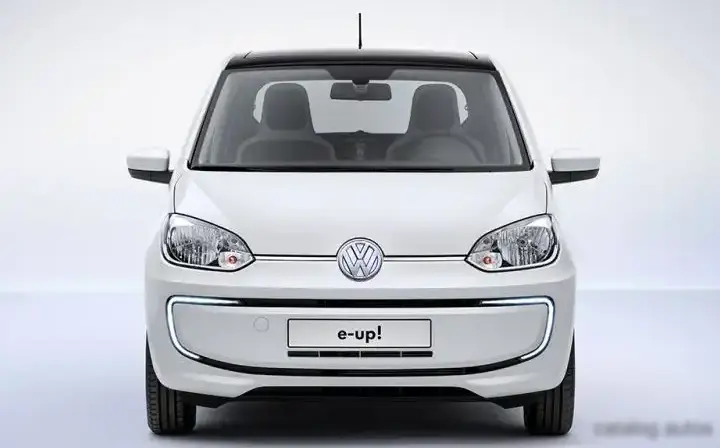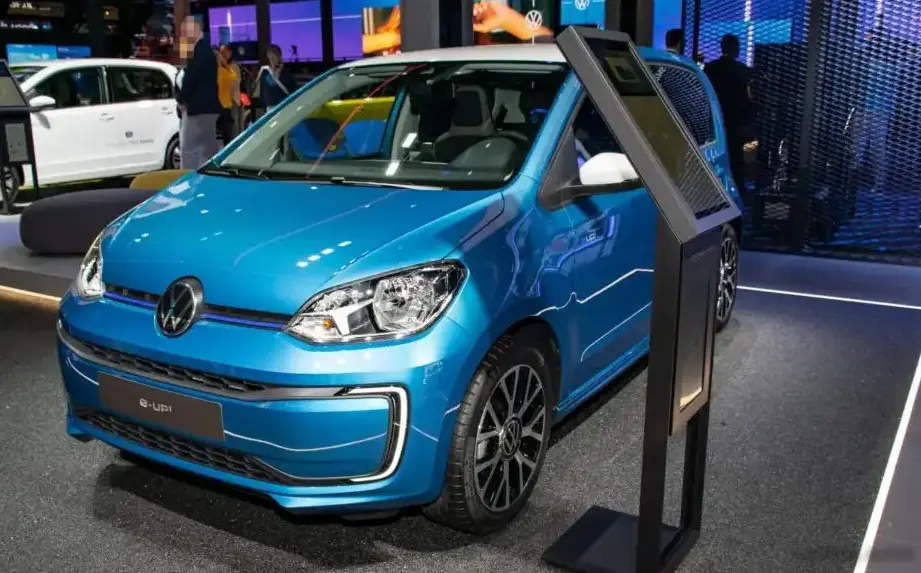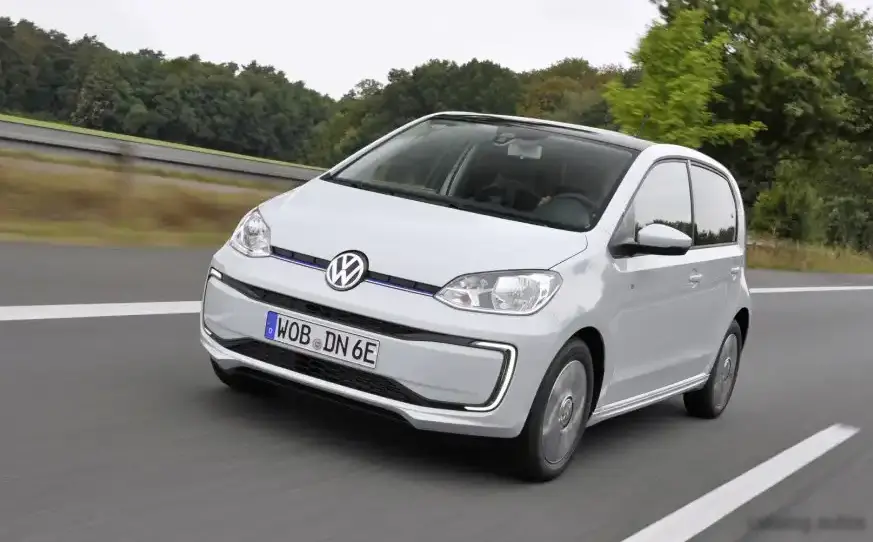
The Volkswagen e-Up! facelift, introduced in August 2016 and produced through July 2019, represented Volkswagen’s entry into the burgeoning all-electric city car segment. This variant, equipped with an 18.7 kWh battery and an 82 horsepower electric motor, was a key component of Volkswagen’s broader electrification strategy, designed to offer a practical and affordable electric vehicle option within the Up! model range. Positioned as the primary electric offering within the Up! family, it aimed to appeal to environmentally conscious urban drivers seeking a compact and efficient mode of transportation. The facelift brought styling updates and improvements to the electric powertrain, enhancing its appeal and range compared to the initial e-Up! release.
Technical Specifications
| Brand | Volkswagen |
| Model | Up! |
| Generation | e-Up! (facelift 2016) |
| Type (Engine) | 18.7 kWh (82 Hp) |
| Start of production | August, 2016 |
| End of production | July, 2019 |
| Powertrain Architecture | BEV (Electric Vehicle) |
| Body type | Hatchback |
| Seats | 5 |
| Doors | 5 |
| Fuel Type | Electricity |
| Acceleration 0 – 100 km/h | 12.4 sec |
| Acceleration 0 – 62 mph | 12.4 sec |
| Acceleration 0 – 60 mph | 11.8 sec |
| Maximum speed | 130 km/h (80.78 mph) |
| Weight-to-power ratio | 14.1 kg/Hp, 71.1 Hp/tonne |
| Weight-to-torque ratio | 5.5 kg/Nm, 182 Nm/tonne |
| Gross battery capacity | 18.7 kWh |
| Net (usable) battery capacity | 16 kWh |
| Battery voltage | 374 V |
| Battery technology | Lithium-ion (Li-Ion) |
| Battery weight | 230 kg (507.06 lbs) |
| Battery location | Below the floor |
| All-electric range | 160 km (99.42 mi) |
| Average Energy consumption | 11.7 kWh/100 km (18.83 kWh/100 mi, 179 MPGe, 8.5 km/kWh, 5.3 mi/kWh) |
| Electric motor power | 82 Hp @ 2800-12000 rpm |
| Electric motor Torque | 210 Nm @ 0-2800 rpm (154.89 lb.-ft. @ 0-2800 rpm) |
| Electric motor location | Front axle, Transverse |
| System power | 82 Hp @ 2800-12000 rpm |
| System torque | 210 Nm @ 0-2800 rpm (154.89 lb.-ft. @ 0-2800 rpm) |
| Kerb Weight | 1154 kg (2544.13 lbs) |
| Max. weight | 1530 kg (3373.07 lbs) |
| Max load | 376 kg (828.94 lbs) |
| Trunk (boot) space – minimum | 250 l (8.83 cu. ft) |
| Trunk (boot) space – maximum | 923 l (32.6 cu. ft) |
| Max. roof load | 50 kg (110.23 lbs) |
| Length | 3600 mm (141.73 in) |
| Width | 1645 mm (64.76 in) |
| Width including mirrors | 1910 mm (75.2 in) |
| Height | 1492 mm (58.74 in) |
| Wheelbase | 2417 mm (95.16 in) |
| Front track | 1428 mm (56.22 in) |
| Rear (Back) track | 1424 mm (56.06 in) |
| Ride height (ground clearance) | 135 mm (5.31 in) |
| Minimum turning circle | 9.8 m (32.15 ft) |
| Drivetrain Architecture | One electric motor drives the front wheels |
| Drive wheel | Front wheel drive |
| Number of gears and type of gearbox | 1 gears, automatic transmission |
| Front suspension | Independent type McPherson, Transverse stabilizer |
| Rear suspension | Torsion |
| Front brakes | Ventilated discs |
| Rear brakes | Drum |
| Assisting systems | ABS (Anti-lock braking system) |
| Steering type | Steering rack and pinion |
| Power steering | Electric Steering |
| Tires size | 165/70 R14; 165/65 R15 |
| Wheel rims size | 5J x 14; 5J x 15 |
Powertrain & Engine Architecture
The e-Up! facelift utilizes a single electric motor producing 82 horsepower and 210 Nm (154.89 lb-ft) of torque. This motor is transversely mounted on the front axle, driving the front wheels. The heart of the system is the 18.7 kWh lithium-ion battery pack, providing a usable capacity of 16 kWh. This battery is positioned under the floor of the vehicle, contributing to a low center of gravity and maximizing interior space. The motor operates within a voltage range of 374V. The e-Up! employs a single-speed automatic transmission, simplifying the driving experience and focusing on efficient power delivery. The motor’s torque curve is characteristic of electric motors, providing instant torque from 0 rpm, resulting in brisk acceleration in urban environments. The charging port location varies depending on market and specification.
Driving Characteristics
The 82 hp electric motor and single-speed automatic transmission deliver a smooth and linear driving experience. Acceleration to 60 mph takes approximately 11.8 seconds, and the top speed is limited to 80.78 mph (130 km/h). While not designed for outright performance, the e-Up! offers sufficient power for navigating city streets and highways. The instant torque provides responsive acceleration, making it easy to merge into traffic. The single-speed transmission eliminates the need for gear changes, contributing to a relaxed driving experience. Compared to the gasoline-powered Up! models, the e-Up! offers a quieter and more refined ride. The regenerative braking system allows for one-pedal driving in many situations, further enhancing efficiency and convenience. Compared to higher-powered EVs, the e-Up! prioritizes efficiency and affordability over outright speed.
Equipment & Trim Levels
The e-Up! facelift typically came equipped with a reasonable level of standard equipment, reflecting its position as a modern city car. Standard features often included air conditioning, power windows, central locking, and an infotainment system with a touchscreen display. Safety features such as ABS, airbags, and stability control were also standard. Higher trim levels offered additional features such as parking sensors, a navigation system, and upgraded interior upholstery. The interior design was functional and modern, with a focus on maximizing space and usability. Optional extras included features like a leather steering wheel and heated front seats.
Chassis & Braking
The e-Up! facelift utilizes a McPherson strut suspension system at the front and a torsion beam suspension at the rear. This setup provides a comfortable ride quality and predictable handling. The front brakes are ventilated discs, while the rear brakes are drums. The steering is electrically assisted, providing light and precise control. The vehicle’s relatively low weight, thanks to the battery placement and compact size, contributes to its agility. The suspension is tuned for urban driving, prioritizing comfort and maneuverability over sporty handling. The ABS system ensures effective braking performance in various conditions.
Market Reception & Comparison
The Volkswagen e-Up! facelift was generally well-received by critics, who praised its practicality, efficiency, and affordability. It was seen as a viable option for urban commuters seeking a zero-emission vehicle. Compared to other gasoline-powered Up! models, the e-Up! offered significantly lower running costs and a more environmentally friendly driving experience. However, its limited range and relatively slow charging speed were noted as drawbacks. Compared to other electric vehicles on the market, the e-Up! was positioned as an entry-level option, offering a more affordable price point. Fuel economy, measured in kWh/100km, was competitive within its class, and the vehicle achieved a respectable MPGe rating.
Legacy
The Volkswagen e-Up! facelift played a significant role in popularizing electric vehicles in Europe. While production ended in 2019, the e-Up! remains a popular choice on the used car market, particularly among those seeking an affordable and reliable electric city car. The powertrain has proven to be relatively reliable, with few widespread issues reported. The battery pack’s longevity is a key consideration for potential buyers, but many e-Up! models still retain a significant portion of their original battery capacity. The e-Up! paved the way for Volkswagen’s broader electric vehicle strategy, contributing to the development of more advanced EVs like the ID.3 and ID.4.