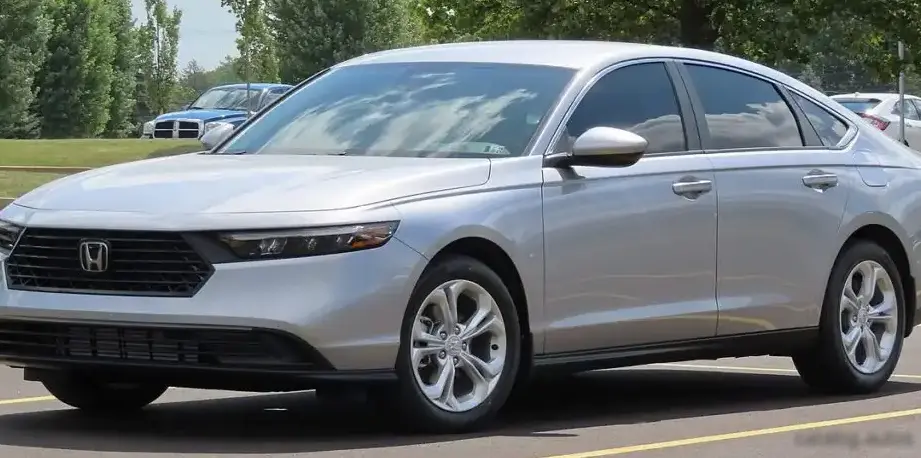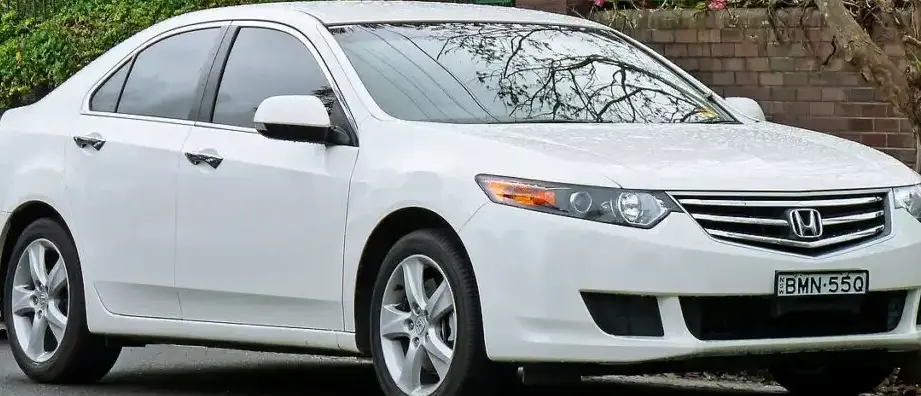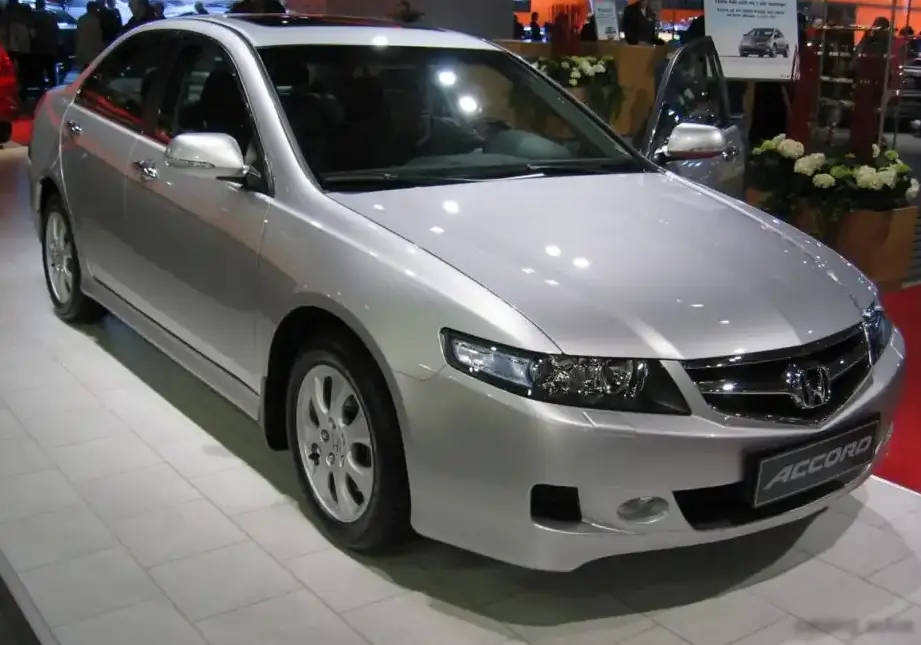
The Honda Accord VII 2.2 i-CTDi, produced between 2002 and 2007, represented a significant step forward for Honda’s presence in the European diesel market. This variant, powered by Honda’s N22A1 engine, was a key component of the seventh-generation Accord (CG/CH) lineup, which utilized the globally recognized Accord platform. Positioned as a more efficient and torque-rich alternative to the gasoline-powered models, the 2.2 i-CTDi aimed to appeal to drivers prioritizing fuel economy and long-distance comfort. It was a popular choice in Europe, where diesel engines held a substantial market share, and offered a blend of practicality, refinement, and Honda’s reputation for reliability.
Technical Specifications
| Brand | Honda |
| Model | Accord |
| Generation | Accord VII |
| Type (Engine) | 2.2 i-CTDi (140 Hp) |
| Start of production | 2002 |
| End of production | 2007 |
| Powertrain Architecture | Internal Combustion engine |
| Body type | Sedan |
| Seats | 5 |
| Doors | 4 |
| Fuel consumption (urban) | 6.7 l/100 km (35.1 US mpg) |
| Fuel consumption (extra urban) | 4.6 l/100 km (51.1 US mpg) |
| Fuel consumption (combined) | 5.4 l/100 km (43.6 US mpg) |
| Fuel Type | Diesel |
| Acceleration 0 – 100 km/h | 9.4 sec |
| Acceleration 0 – 62 mph | 9.4 sec |
| Acceleration 0 – 60 mph | 8.9 sec |
| Maximum speed | 210 km/h (130.49 mph) |
| Weight-to-power ratio | 10.5 kg/Hp |
| Weight-to-torque ratio | 4.3 kg/Nm |
| Power | 140 Hp @ 4000 rpm |
| Torque | 340 Nm @ 2000 rpm (250.77 lb.-ft. @ 2000 rpm) |
| Engine layout | Front, Transverse |
| Engine Model/Code | N22A1 |
| Engine displacement | 2204 cm3 (134.5 cu. in.) |
| Number of cylinders | 4 |
| Engine configuration | Inline |
| Cylinder Bore | 85 mm (3.35 in.) |
| Piston Stroke | 97.1 mm (3.82 in.) |
| Compression ratio | 16.7:1 |
| Number of valves per cylinder | 4 |
| Fuel injection system | Diesel Commonrail |
| Engine aspiration | Turbocharger, Intercooler |
| Valvetrain | DOHC |
| Engine oil capacity | 5.9 l (6.23 US qt | 5.19 UK qt) |
| Coolant capacity | 6.8 l (7.19 US qt | 5.98 UK qt) |
| Kerb Weight | 1470 kg (3240.8 lbs.) |
| Trunk (boot) space – minimum | 459 l (16.21 cu. ft.) |
| Fuel tank capacity | 65 l (17.17 US gal | 14.3 UK gal) |
| Length | 4665 mm (183.66 in.) |
| Width | 1760 mm (69.29 in.) |
| Height | 1445 mm (56.89 in.) |
| Wheelbase | 2670 mm (105.12 in.) |
| Front track | 1515 mm (59.65 in.) |
| Rear track | 1510 mm (59.45 in.) |
| Drivetrain | Front wheel drive |
| Number of gears | 5 |
| Gearbox type | Manual transmission |
| Front suspension | Double wishbone |
| Rear suspension | Several levers and rods |
| Front brakes | Ventilated discs |
| Rear brakes | Disc |
| Assisting systems | ABS (Anti-lock braking system) |
| Steering type | Steering rack and pinion |
| Power steering | Hydraulic |
| Tires size | 205/55 R16 |
| Wheel rims size | 16 |
Powertrain & Engine Architecture
The heart of the Accord VII 2.2 i-CTDi is the N22A1 engine, a 2.2-liter inline-four cylinder diesel. This engine was a significant development for Honda, representing their second-generation common-rail direct injection diesel. The N22A1 featured a turbocharger with an intercooler, boosting power output to 140 horsepower at 4000 rpm and a substantial 340 Nm (250.77 lb-ft) of torque at just 2000 rpm. The common-rail system, supplied by Denso, allowed for precise fuel delivery and optimized combustion, contributing to both performance and fuel efficiency. The engine utilized a double overhead camshaft (DOHC) valvetrain with four valves per cylinder, further enhancing its breathing and power delivery. The engine was transversely mounted in the front of the vehicle, driving the front wheels. The five-speed manual transmission was the standard offering, providing a balance between fuel economy and driver engagement.
Driving Characteristics
The 2.2 i-CTDi offered a distinctly different driving experience compared to the gasoline-powered Accord variants. The high torque output, available from low engine speeds, provided strong acceleration in everyday driving situations. While not a sports car, the 2.2 i-CTDi could achieve 0-60 mph in approximately 8.9 seconds and reach a top speed of 130.49 mph. The five-speed manual transmission was well-matched to the engine’s characteristics, offering smooth shifts and allowing the driver to effectively utilize the available torque. Compared to the higher-output 2.4-liter gasoline engine, the 2.2 i-CTDi prioritized fuel economy and relaxed cruising. The manual transmission provided more driver control than the optional automatic, which could sometimes feel sluggish when downshifting.
Equipment & Trim Levels
The Accord VII 2.2 i-CTDi typically came equipped with a respectable level of standard features. These included power windows, power door locks, air conditioning, and an integrated audio system. Higher trim levels, such as the ‘Executive’ or ‘Sport’ variants, added features like alloy wheels, a sunroof, leather upholstery, and upgraded audio systems. Optional extras included navigation systems, heated seats, and automatic climate control. Interior upholstery was generally cloth on the base models, with leather available as an upgrade. The dashboard layout was functional and well-designed, prioritizing ergonomics and ease of use.
Chassis & Braking
The Accord VII featured a robust chassis with a double wishbone front suspension and a multi-link rear suspension. This setup provided a comfortable ride and good handling characteristics. The 2.2 i-CTDi, being a heavier variant due to the diesel engine, benefited from the well-tuned suspension, which effectively managed body roll and provided a stable driving experience. Braking duties were handled by ventilated discs at the front and solid discs at the rear, supplemented by an Anti-lock Braking System (ABS) as standard. The braking system provided adequate stopping power for everyday driving, although some reviewers noted that the rear drums (on some models) lacked the stopping power of fully disc-based systems.
Market Reception & Comparison
The Honda Accord VII 2.2 i-CTDi was generally well-received by automotive critics. It was praised for its fuel efficiency, strong torque output, and comfortable ride. However, some reviewers noted that the engine could be somewhat noisy compared to gasoline engines, and the performance, while adequate, wasn’t particularly exciting. Compared to the gasoline-powered Accord variants, the 2.2 i-CTDi offered significantly better fuel economy, making it a popular choice for drivers covering long distances. Compared to other diesel-powered competitors in the segment, such as the Volkswagen Passat TDI, the Accord offered a refined driving experience and Honda’s reputation for reliability.
Legacy
The N22A1 engine, while not without its quirks, proved to be a relatively reliable powertrain. Common issues included potential problems with the turbocharger and the diesel particulate filter (DPF), particularly on vehicles that were primarily used for short journeys. However, with regular maintenance and careful driving, the N22A1 could provide many years of reliable service. Today, the Accord VII 2.2 i-CTDi remains a popular choice in the used car market, particularly for those seeking a fuel-efficient and reliable family sedan. Its blend of practicality, comfort, and Honda’s engineering reputation continues to make it a desirable option for budget-conscious buyers.