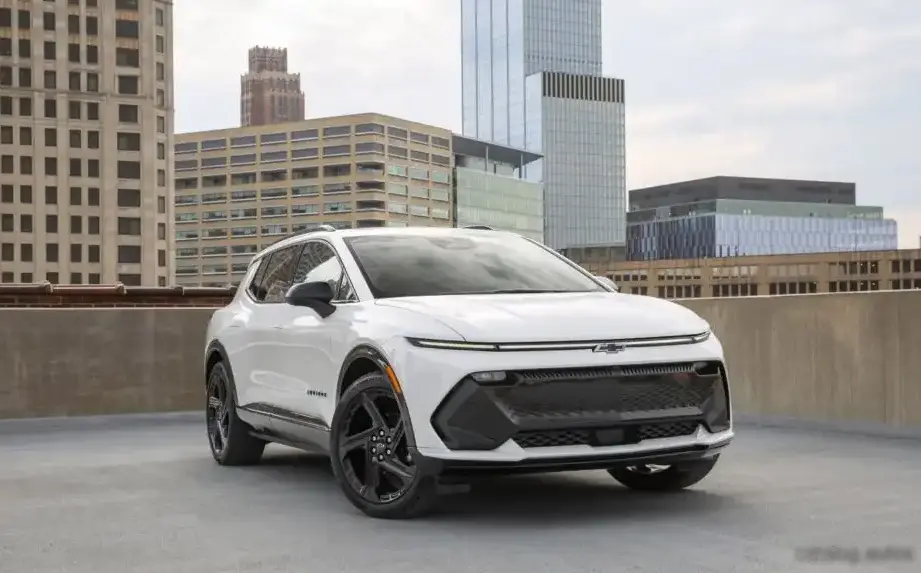
The Chevrolet Equinox III, produced from 2017 to 2021, represented a significant step forward for Chevrolet’s popular compact SUV. Within the Equinox III range, the 1.5i (173 Hp) Automatic variant occupied a crucial mid-range position, offering a balance of fuel efficiency, performance, and features aimed at a broad customer base. This model was primarily targeted at the North American market, where compact SUVs were experiencing a surge in popularity. It served as a key competitor to vehicles like the Honda CR-V, Toyota RAV4, and Ford Escape, offering a compelling alternative with its modern styling and technology.
Technical Specifications
| Brand | Chevrolet |
| Model | Equinox |
| Generation | Equinox III |
| Type (Engine) | 1.5i (173 Hp) Automatic |
| Start of production | 2017 |
| End of production | 2021 |
| Powertrain Architecture | Internal Combustion engine |
| Body type | SUV |
| Seats | 5 |
| Doors | 5 |
| Fuel consumption (urban) | 9 l/100 km (26.1 US mpg) |
| Fuel consumption (extra urban) | 7.3 l/100 km (32.2 US mpg) |
| Fuel Type | Petrol (Gasoline) |
| Weight-to-power ratio | 8.8 kg/Hp |
| Weight-to-torque ratio | 5.6 kg/Nm |
| Power | 173 Hp @ 5600 rpm |
| Power per litre | 116.1 Hp/l |
| Torque | 275 Nm @ 2500-4500 rpm (202.83 lb.-ft. @ 2500-4500 rpm) |
| Engine layout | Front, Longitudinal |
| Engine Model/Code | LYX |
| Engine displacement | 1490 cm3 (90.93 cu. in.) |
| Number of cylinders | 4 |
| Engine configuration | Inline |
| Cylinder Bore | 74 mm (2.91 in.) |
| Piston Stroke | 86.6 mm (3.41 in.) |
| Compression ratio | 10:1 |
| Number of valves per cylinder | 4 |
| Fuel injection system | Direct injection |
| Engine aspiration | Turbocharger, Intercooler |
| Valvetrain | DOHC-CVVT |
| Engine oil capacity | 4 l (4.23 US qt | 3.52 UK qt) |
| Coolant | 6.6 l (6.97 US qt | 5.81 UK qt) |
| Kerb Weight | 1531 kg (3375.28 lbs.) |
| Trunk (boot) space – minimum | 847 l (29.91 cu. ft.) |
| Trunk (boot) space – maximum | 1798 l (63.5 cu. ft.) |
| Fuel tank capacity | 56 l (14.79 US gal | 12.32 UK gal) |
| Length | 4651 mm (183.11 in.) |
| Width | 1844 mm (72.6 in.) |
| Height | 1661 mm (65.39 in.) |
| Wheelbase | 2725 mm (107.28 in.) |
| Front track | 1580 mm (62.2 in.) |
| Rear track | 1580 mm (62.2 in.) |
| Minimum turning circle | 11.4 m (37.4 ft.) |
| Drivetrain Architecture | Front wheel drive |
| Number of gears | 6 |
| Gearbox type | Automatic transmission Hydra-Matic |
| Front suspension | Independent, McPherson with coil spring and anti-roll bar |
| Rear suspension | Independent multi-link suspension |
| Front brakes | Ventilated discs |
| Rear brakes | Disc |
| Assisting systems | ABS (Anti-lock braking system) |
| Steering type | Steering rack and pinion |
| Power steering | Electric |
| Tires size | 225/65 R17 |
| Wheel rims size | 17 |
Powertrain & Engine Architecture
The heart of the Equinox III 1.5i Automatic is the LYX engine, a 1.5-liter turbocharged inline-four cylinder gasoline engine. This engine utilizes direct injection, a technology that improves fuel efficiency and power output by injecting fuel directly into the combustion chamber. The engine also features a double overhead camshaft (DOHC) valvetrain with continuously variable valve timing (CVVT), further optimizing engine performance across a wider RPM range. The turbocharger, coupled with an intercooler, provides a noticeable boost in power and torque, mitigating some of the limitations of a smaller displacement engine. The six-speed Hydra-Matic automatic transmission was specifically paired with this engine, offering smooth and responsive shifting. This transmission was chosen for its balance of efficiency and drivability, and its ability to handle the engine’s torque output.
Driving Characteristics
The 173 horsepower and 275 Nm (202.83 lb-ft) of torque delivered by the 1.5L turbo engine provided adequate performance for everyday driving. Acceleration was respectable, though not particularly sporty, with a 0-60 mph time estimated around 8.5-9.5 seconds. Compared to the available 2.0L turbo engine option, the 1.5L felt less powerful, especially when fully loaded or tackling steep inclines. However, the 1.5L’s strength lay in its fuel economy and smooth power delivery. The automatic transmission was well-tuned, providing seamless gear changes and contributing to a comfortable driving experience. The gear ratios were optimized for fuel efficiency, with a taller final drive compared to the more performance-oriented trims.
Equipment & Trim Levels
The 1.5i Automatic trim typically included standard features such as Chevrolet’s MyLink infotainment system with a 7-inch touchscreen, Apple CarPlay and Android Auto compatibility, a rearview camera, and keyless entry. Interior upholstery was generally cloth, with options for leather upgrades available. Commonly equipped safety features included ten airbags, stability control, and traction control. Optional extras included a sunroof, heated front seats, a power liftgate, and advanced safety features like blind-spot monitoring and rear cross-traffic alert. The trim level sat between the base L model and the higher-spec LT and Premier trims, offering a good balance of features for the price.
Chassis & Braking
The Equinox III utilized a unibody construction for improved rigidity and weight reduction. The front suspension employed an independent McPherson strut design, while the rear suspension featured an independent multi-link setup. This configuration provided a comfortable ride and decent handling characteristics. The 1.5i Automatic typically came equipped with ventilated front disc brakes and solid rear disc brakes. Anti-lock braking system (ABS) was standard. The suspension tuning was geared towards comfort rather than sporty handling, with softer springs and dampers. Stabilizer bars were present at both the front and rear to reduce body roll during cornering.
Market Reception & Comparison
The Equinox III 1.5i Automatic was generally well-received by automotive critics. It was praised for its comfortable ride, spacious interior, and user-friendly technology. However, some reviewers noted that the 1.5L engine could feel underpowered in certain situations. Fuel economy was a strong point, with the 1.5L consistently achieving EPA estimates of around 26 mpg city and 32 mpg highway. Compared to the 2.0L turbo, the 1.5L offered better fuel economy but less performance. Compared to competitors like the Honda CR-V and Toyota RAV4, the Equinox offered a competitive price point and a similar level of features.
Legacy
The LYX 1.5L turbo engine and the six-speed Hydra-Matic transmission proved to be relatively reliable powertrains. While some owners reported minor issues with the turbocharger or fuel injectors, these were not widespread. In the used car market, the Equinox III 1.5i Automatic remains a popular choice due to its affordability, fuel efficiency, and practicality. Its relatively simple engine design and readily available parts contribute to lower maintenance costs compared to some of its more complex competitors. The Equinox III, and specifically this 1.5L variant, helped solidify Chevrolet’s position in the competitive compact SUV segment.