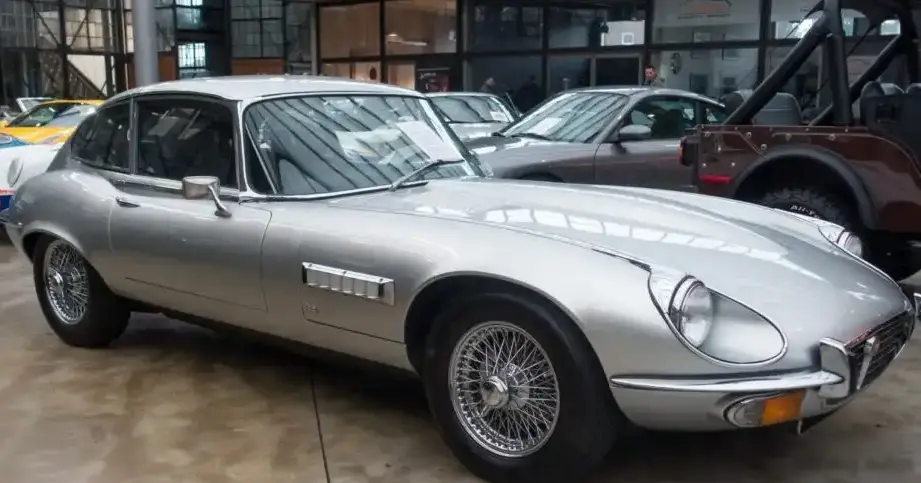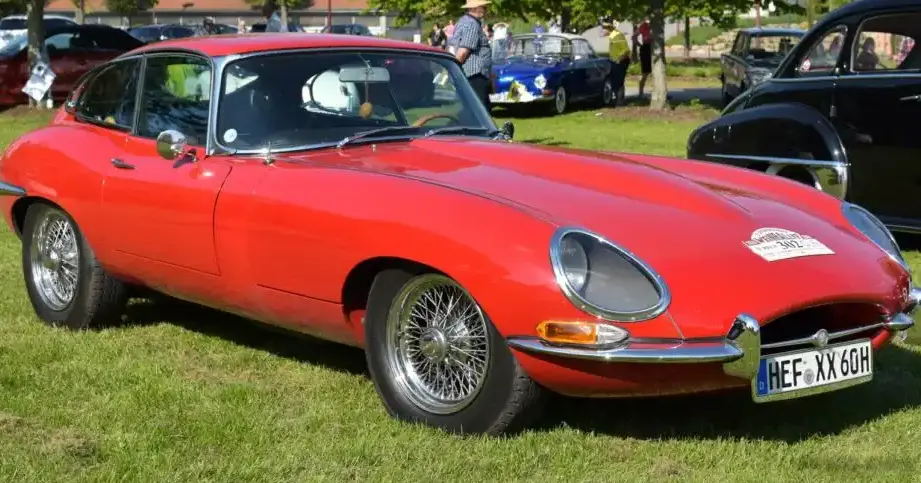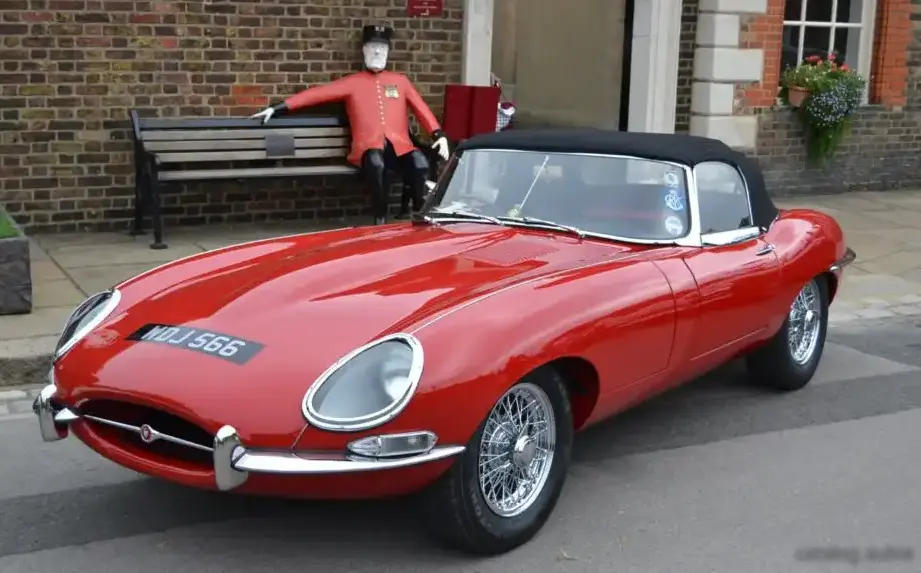
The Jaguar E-type Series 3 V12 Convertible, produced between 1971 and 1975, represents the final evolution of the iconic E-type lineage. This iteration, distinguished by its larger 5.3-liter V12 engine and revised styling, aimed to meet increasingly stringent American safety and emissions regulations while maintaining the E-type’s reputation for performance and style. It was the last of the classic E-types, marking a significant shift in design and engineering compared to the earlier Series 1 and Series 2 models. The Series 3 Convertible, while often debated by purists, offered a more refined and powerful driving experience, particularly appealing to the North American market where it found a substantial customer base.
Technical Specifications
| Brand | Jaguar |
| Model | E-type |
| Generation | E-type Convertible |
| Type (Engine) | V12 5.3 (Series3) (276 Hp) |
| Start of production | 1971 |
| End of production | 1975 |
| Powertrain Architecture | Internal Combustion engine |
| Body type | Cabriolet |
| Seats | 2 |
| Doors | 2 |
| Fuel Type | Petrol (Gasoline) |
| Power | 276 Hp |
| Engine aspiration | Naturally aspirated engine |
| Drivetrain | Rear wheel drive |
Powertrain & Engine Architecture
The heart of the Series 3 E-type Convertible is the Jaguar XK engine, specifically the 5.3-liter V12 variant. This engine, designated as the XK-V12, was a significant departure from the earlier inline-six engines that powered the first two series. It featured a 60-degree V configuration, all-aluminum construction, and a SOHC (Single Overhead Cam) valvetrain per bank. The engine produced 276 horsepower at 6,000 rpm and 304 lb-ft of torque at 3,600 rpm. Fuel delivery was managed by three SU carburetors, a system that, while effective, required careful tuning to maintain optimal performance. The V12’s design prioritized smoothness and refinement over outright peak power, offering a broad torque curve that made it well-suited for comfortable high-speed cruising. The engine was mated to a three-speed automatic transmission as standard, although a four-speed manual transmission was available as an option, though less common. The automatic transmission, a Borg-Warner unit, was chosen to appeal to the American market’s preference for convenience and ease of driving.
Driving Characteristics
The Series 3 E-type Convertible with the V12 engine and automatic transmission offered a distinctly different driving experience compared to its predecessors. While the earlier E-types were known for their nimble handling and responsive engines, the Series 3 felt more substantial and grand touring-oriented. The V12’s ample torque meant that strong acceleration was readily available across a wide range of engine speeds, making overtaking effortless. However, the added weight of the V12 engine and the automatic transmission did impact handling agility. The automatic transmission, while smooth, lacked the direct engagement and control offered by the manual gearbox. Gear ratios were optimized for cruising, providing relaxed highway performance but potentially feeling slightly less responsive in city driving. The power steering, standard equipment, made maneuvering at low speeds easier, but some drivers found it lacked feedback. Overall, the driving experience was one of refined power and comfortable cruising, rather than outright sporting performance.
Equipment & Trim Levels
The Series 3 E-type Convertible was generally well-equipped, reflecting its positioning as a luxury grand tourer. Standard features included leather upholstery, a wood-veneered dashboard, and a comprehensive instrument panel. The interior design was a departure from the earlier E-types, with a more modern and luxurious aesthetic. Power steering, as mentioned, was standard. Optional extras included air conditioning, a radio, and a limited-slip differential. Upholstery options extended beyond the standard leather, with Connolly leather being a popular choice. Exterior color options were extensive, allowing buyers to personalize their vehicles. The convertible top was manually operated, although some later models featured an optional power-operated top. Trim levels were relatively simple, with most variations stemming from the selection of optional equipment.
Chassis & Braking
The Series 3 E-type Convertible retained the fundamental chassis design of earlier models, featuring a monocoque steel construction. However, several modifications were made to accommodate the V12 engine and improve structural rigidity. The suspension system consisted of independent front suspension with double wishbones and torsion bars, and a live axle rear suspension with trailing arms and coil springs. Disc brakes were fitted to all four wheels, providing ample stopping power. However, the braking system lacked the anti-lock technology found on more modern vehicles. Stabilizer bars were fitted to both the front and rear axles to reduce body roll during cornering. The rear suspension geometry was revised to improve handling stability, but the overall handling characteristics remained more focused on comfort than outright sportiness.
Market Reception & Comparison
The Series 3 E-type Convertible received a mixed reception from critics and enthusiasts. While the V12 engine was praised for its smoothness and power, the revised styling, particularly the wider, lower front end and the lack of the iconic covered headlights, drew criticism from some purists. The automatic transmission was seen as a compromise by some, detracting from the E-type’s sporting heritage. Compared to the earlier Series 1 and Series 2 models, the Series 3 was generally considered less focused on driver engagement and more oriented towards comfortable cruising. Fuel economy, unsurprisingly, was relatively poor, even by the standards of the time. However, the Series 3 did offer improved performance and refinement compared to the earlier models, and it appealed to a broader audience, particularly in the North American market. Compared to contemporary grand tourers like the Mercedes-Benz SL, the E-type offered a more distinctive and arguably more stylish alternative.
Legacy
The Jaguar E-type Series 3 V12 Convertible represents the culmination of the E-type’s evolution. While it may not be as highly regarded by some enthusiasts as the earlier series, it remains a desirable and collectible classic car. The V12 engine, while complex, is generally considered reliable if properly maintained. Common issues include carburetor tuning, cooling system leaks, and electrical gremlins. The automatic transmission, while durable, can require occasional servicing. In the used car market today, well-maintained Series 3 Convertibles command significant prices, reflecting their rarity and historical significance. The Series 3 E-type Convertible stands as a testament to Jaguar’s engineering prowess and design flair, and it continues to captivate car enthusiasts around the world. Its blend of power, style, and luxury ensures its place as a true icon of the automotive world.