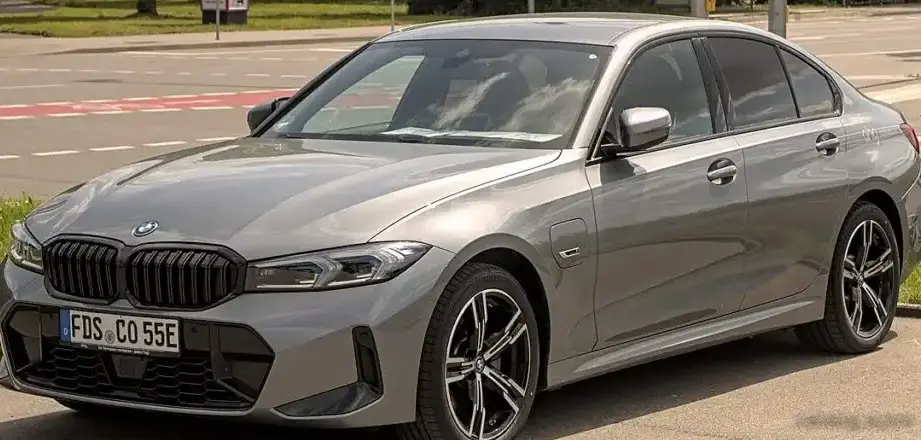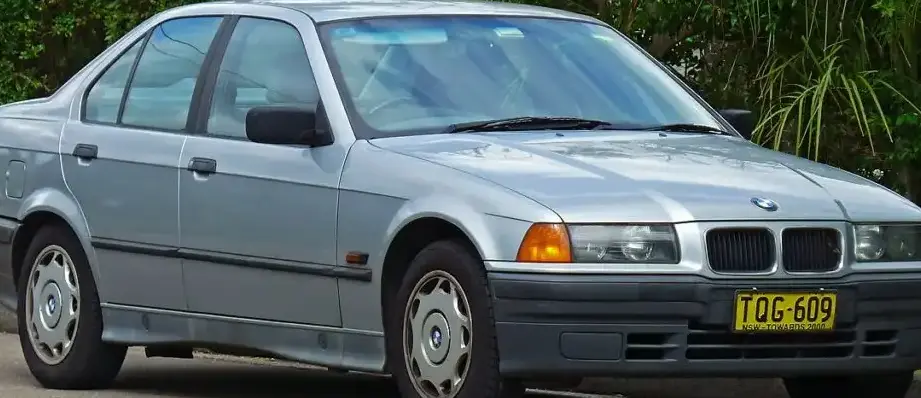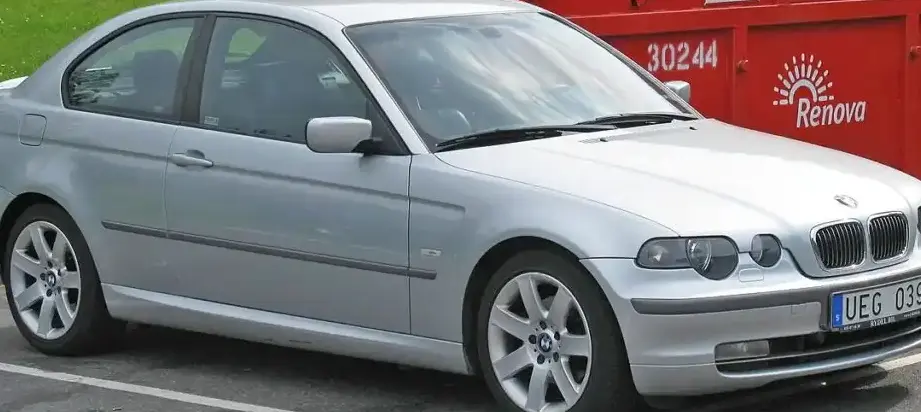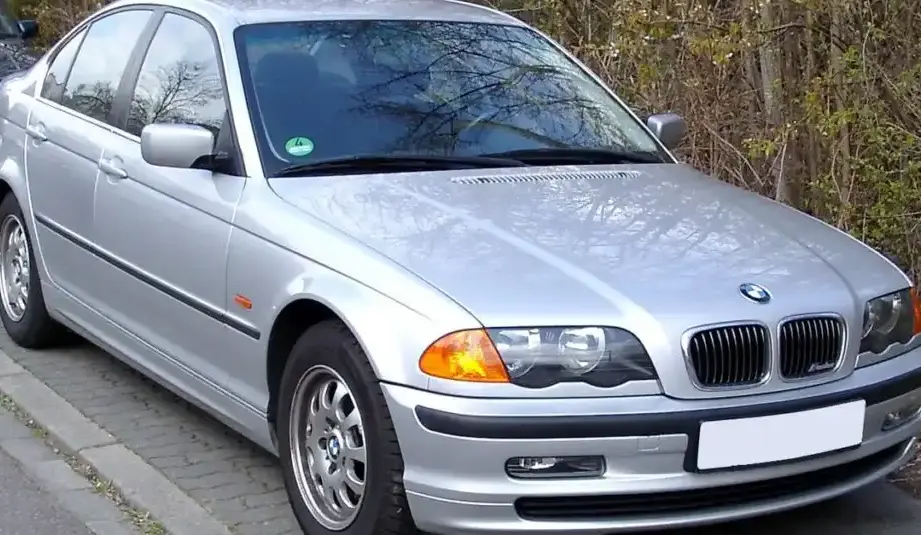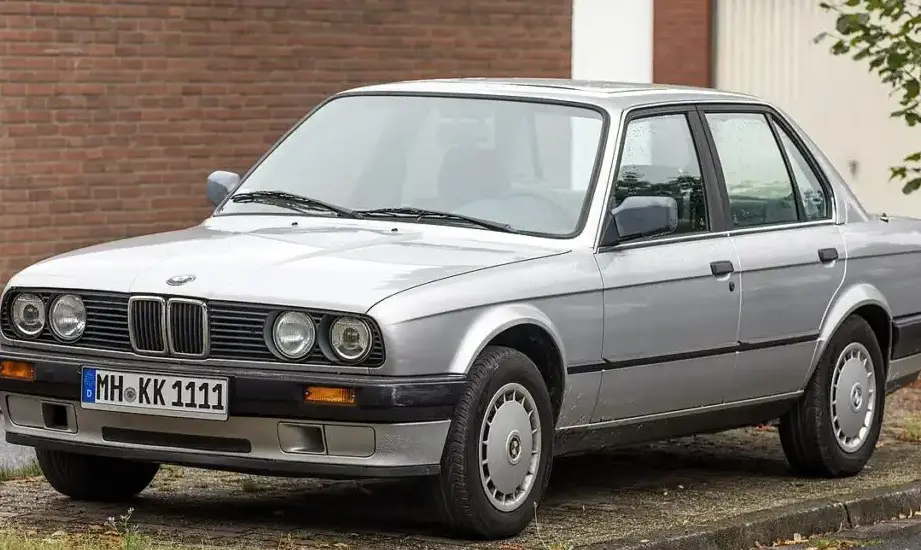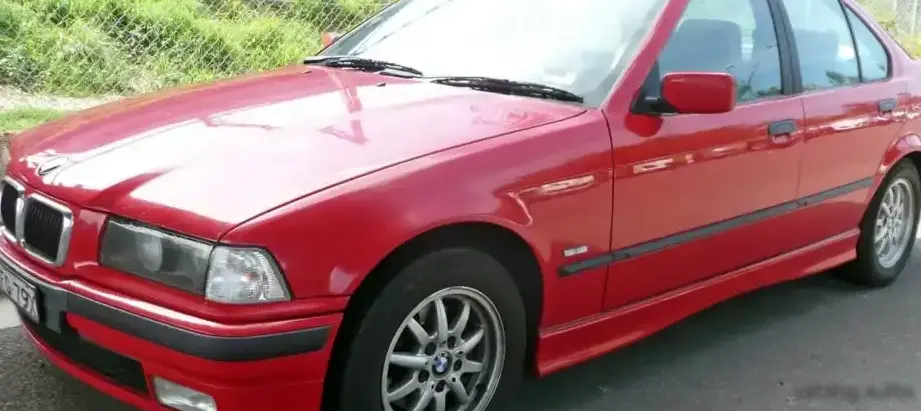
The BMW 3 Series Sedan (E36) 325tds Automatic, produced between 1993 and 1999, represents a distinctive offering within the broader E36 3 Series range. This variant combined a turbocharged diesel engine with a four-speed automatic transmission, primarily targeting European markets where fuel efficiency and comfortable long-distance cruising were highly valued. It occupied a middle ground in the 3 Series lineup, positioned above the entry-level 318i and below the performance-oriented 328i and 325i gasoline variants. The 325tds aimed to deliver a refined driving experience with respectable performance for its time, appealing to drivers who prioritized economy and comfort over outright speed.
Technical Specifications
| Brand | BMW |
| Model | 3 Series |
| Generation | 3 Series Sedan (E36) |
| Type (Engine) | 325tds (143 Hp) Automatic |
| Start of production | 1993 |
| End of production | 1999 |
| Powertrain Architecture | Internal Combustion engine |
| Body type | Sedan |
| Seats | 5 |
| Doors | 4 |
| Fuel consumption (urban) | 11 l/100 km (21.4 US mpg, 25.7 UK mpg, 9.1 km/l) |
| Fuel consumption (extra urban) | 6.5 l/100 km (36.2 US mpg, 43.5 UK mpg, 15.4 km/l) |
| Fuel consumption (combined) | 8.3 l/100 km (28.3 US mpg, 34 UK mpg, 12 km/l) |
| Fuel Type | Diesel |
| Acceleration 0 – 100 km/h | 11 sec |
| Acceleration 0 – 62 mph | 11 sec |
| Acceleration 0 – 60 mph | 10.5 sec |
| Maximum speed | 211 km/h (131.11 mph) |
| Weight-to-power ratio | 10 kg/Hp, 100.4 Hp/tonne |
| Weight-to-torque ratio | 5.5 kg/Nm, 182.5 Nm/tonne |
| Power | 143 Hp @ 4800 rpm |
| Power per litre | 57.2 Hp/l |
| Torque | 260 Nm @ 2200 rpm (191.77 lb.-ft. @ 2200 rpm) |
| Engine layout | Front, Longitudinal |
| Engine Model/Code | M51D25 |
| Engine displacement | 2498 cm3 (152.44 cu. in.) |
| Number of cylinders | 6 |
| Engine configuration | Inline |
| Cylinder Bore | 80 mm (3.15 in.) |
| Piston Stroke | 82.8 mm (3.26 in.) |
| Compression ratio | 22:1 |
| Number of valves per cylinder | 2 |
| Fuel injection system | Precombustion chamber injection |
| Engine aspiration | Turbocharger, Intercooler |
| Valvetrain | OHC |
| Engine oil capacity | 6.5 l (6.87 US qt | 5.72 UK qt) |
| Coolant capacity | 8.8 l (9.3 US qt | 7.74 UK qt) |
| Kerb Weight | 1425 kg (3141.59 lbs.) |
| Max. weight | 1810 kg (3990.37 lbs.) |
| Max load | 385 kg (848.78 lbs.) |
| Trunk (boot) space – minimum | 435 l (15.36 cu. ft.) |
| Fuel tank capacity | 65 l (17.17 US gal | 14.3 UK gal) |
| Length | 4433 mm (174.53 in.) |
| Width | 1698 mm (66.85 in.) |
| Height | 1393 mm (54.84 in.) |
| Wheelbase | 2700 mm (106.3 in.) |
| Front track | 1418 mm (55.83 in.) |
| Rear (Back) track | 1431 mm (56.34 in.) |
| Ride height (ground clearance) | 130 mm (5.12 in.) |
| Drivetrain Architecture | Rear wheel drive |
| Number of gears and type of gearbox | 5 gears, automatic transmission |
| Front suspension | Wishbone |
| Rear suspension | Coil spring |
| Front brakes | Ventilated discs |
| Rear brakes | Disc |
| Assisting systems | ABS (Anti-lock braking system) |
| Steering type | Steering rack and pinion |
| Power steering | Hydraulic Steering |
| Tires size | 205/60 R15 |
| Wheel rims size | 15 |
Powertrain & Engine Architecture
The heart of the 325tds is the BMW M51D25 engine, a 2.5-liter inline-six cylinder diesel. This engine utilized precombustion chamber injection, a system prevalent in European diesels of the period, offering a compromise between efficiency and reduced engine noise compared to direct injection systems. A turbocharger, coupled with an intercooler, boosted power output to 143 horsepower and 260 Nm (191.77 lb-ft) of torque. The engine’s torque curve was remarkably flat, delivering strong pulling power from relatively low engine speeds. The automatic transmission was a four-speed unit, specifically selected for its smoothness and suitability for long-distance travel. While it didn’t offer the sporty responsiveness of a manual gearbox, it complemented the engine’s characteristics, providing effortless cruising.
Driving Characteristics
The 325tds Automatic provided a distinctly different driving experience compared to its gasoline-powered counterparts. Acceleration from 0-60 mph took approximately 10.5 seconds, which was respectable for a diesel of the time, but slower than the 325i or 328i. However, the abundant low-end torque made overtaking at highway speeds relatively straightforward. The automatic transmission, while smooth, exhibited some delay during downshifts and lacked the driver engagement of a manual. The gear ratios were optimized for fuel economy and comfortable cruising, rather than outright performance. The overall sensation was one of relaxed, effortless progress, making it a popular choice for drivers who frequently undertook long journeys.
Equipment & Trim Levels
The 325tds Automatic typically came equipped with a reasonable level of standard features. These included power windows, central locking, and an upgraded stereo system compared to the base 318i. Interior upholstery was generally cloth, although leather was available as an optional upgrade. Air conditioning was a common option, as were alloy wheels. The dashboard layout was consistent with the E36 generation, featuring a functional and ergonomic design. Optional extras included a sunroof, heated seats, and a more sophisticated sound system. The trim level generally positioned itself in a mid-range category, offering a good balance of comfort and features without the higher price tag associated with the premium-spec models.
Chassis & Braking
The 325tds Automatic shared the E36 3 Series’ highly-regarded chassis. The front suspension utilized a MacPherson strut setup, while the rear employed a semi-trailing arm configuration. The suspension was tuned for comfort, providing a relatively compliant ride. Braking was managed by ventilated discs at the front and solid discs at the rear. Anti-lock Braking System (ABS) was standard, enhancing safety. Due to the added weight of the diesel engine and automatic transmission, the 325tds often featured slightly stiffer springs and dampers compared to the lighter gasoline models to maintain handling balance.
Market Reception & Comparison
The 325tds Automatic was generally well-received in European markets, particularly by those seeking a fuel-efficient and comfortable sedan. Critics praised the engine’s torque and refinement, as well as the smooth operation of the automatic transmission. However, some noted the lack of outright performance compared to the gasoline variants. Compared to the 325i, the tds offered significantly better fuel economy but slower acceleration. Against the 318i, the tds provided more power and torque, but at a higher price point. The 325tds was often viewed as a sensible and practical choice, appealing to a different demographic than the more performance-focused models.
Legacy
The M51D25 engine, found in the 325tds, proved to be a robust and reliable unit when properly maintained. While diesel engines of this era could be prone to issues like injector wear and turbocharger failure, the M51D25 generally held up well over time. Today, the 325tds Automatic is gaining popularity among enthusiasts, particularly those seeking a classic BMW with a unique character. Parts availability is generally good, although some specific components may be becoming increasingly difficult to source. The combination of a torquey diesel engine, comfortable ride, and classic BMW styling makes the 325tds Automatic a compelling option in the used car market.