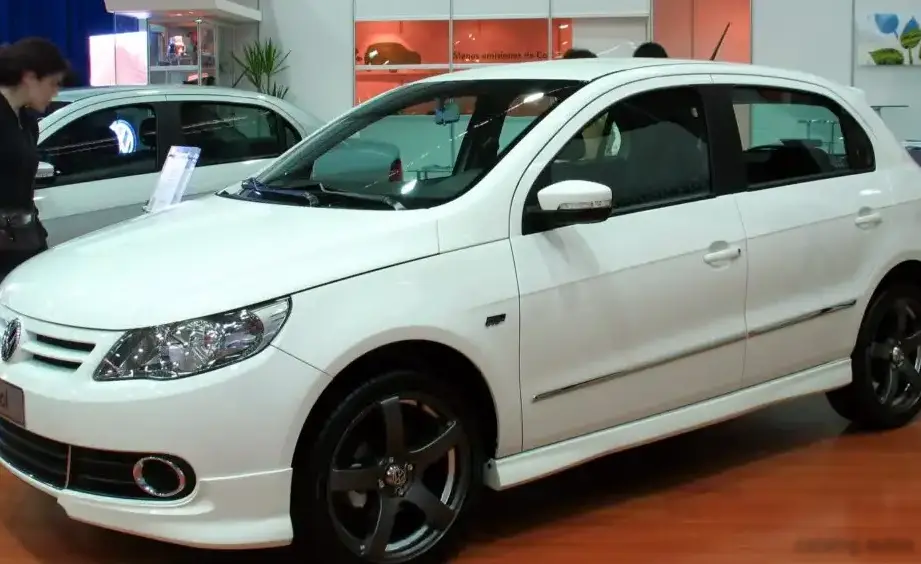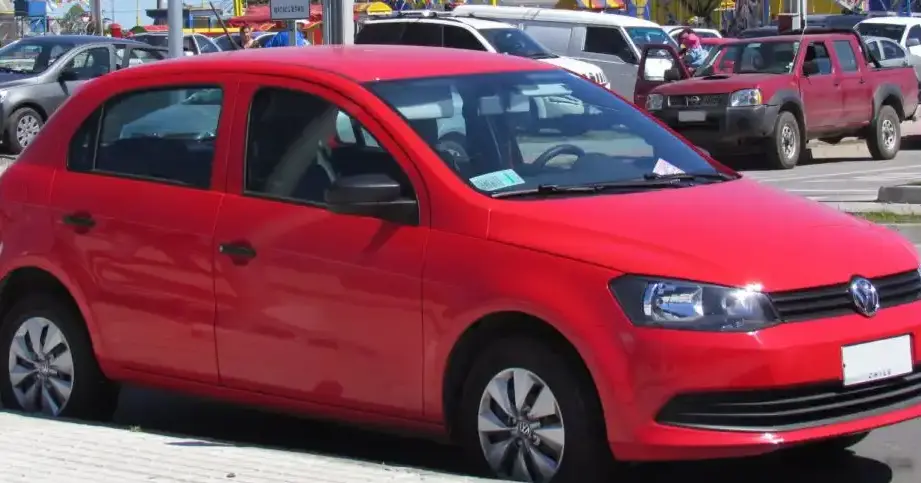
The Volkswagen Gol (G5) III, specifically the facelifted version introduced in 2013 with the 1.0 Total Flex engine producing 76 horsepower, represents a significant iteration of Volkswagen’s long-running Gol series. Produced from 2013 to 2016, this variant was primarily aimed at the Brazilian and South American markets, where the Gol consistently ranked as one of the best-selling vehicles. Positioned as an entry-level offering within the G5 generation, it provided affordable transportation with the flexibility of running on either gasoline or ethanol – a crucial feature in regions with established ethanol infrastructure. This model falls within the broader context of the Volkswagen PQ24 platform, also known as the 1HX0/A3 platform, shared with other VW models like the Fox and SpaceFox.
Technical Specifications
| Brand | Volkswagen |
| Model | Gol |
| Generation | Gol (G5) III (facelift 2013) |
| Type (Engine) | 1.0 Total Flex (76 Hp) |
| Start of production | 2013 |
| End of production | 2016 |
| Powertrain Architecture | Internal Combustion engine |
| Body type | Hatchback |
| Seats | 5 |
| Doors | 5 |
| Fuel Type | Petrol / Ethanol – E85 |
| Acceleration 0 – 100 km/h | 12.9 sec |
| Acceleration 0 – 62 mph | 12.9 sec |
| Acceleration 0 – 60 mph | 12.3 sec |
| Maximum speed | 165 km/h (102.53 mph) |
| Weight-to-power ratio | 12.5 kg/Hp, 80.3 Hp/tonne |
| Weight-to-torque ratio | 9.1 kg/Nm, 109.8 Nm/tonne |
| Power | 76 Hp @ 5250 rpm |
| Power per litre | 76.1 Hp/l |
| Torque | 104 Nm @ 3850 rpm (76.71 lb.-ft. @ 3850 rpm) |
| Engine layout | Front, Transverse |
| Engine Model/Code | CPBA |
| Engine displacement | 999 cm3 (60.96 cu. in.) |
| Number of cylinders | 4 |
| Engine configuration | Inline |
| Cylinder Bore | 67.1 mm (2.64 in.) |
| Piston Stroke | 70.6 mm (2.78 in.) |
| Compression ratio | 12.7:1 |
| Number of valves per cylinder | 2 |
| Fuel injection system | Multi-port manifold injection |
| Engine aspiration | Naturally aspirated engine |
| Engine oil capacity | 3.3 l (3.49 US qt | 2.9 UK qt) |
| Kerb Weight | 947 kg (2087.78 lbs.) |
| Trunk (boot) space – minimum | 285 l (10.06 cu. ft.) |
| Fuel tank capacity | 55 l (14.53 US gal | 12.1 UK gal) |
| Permitted trailer load with brakes (12%) | 200 kg (440.92 lbs.) |
| Permitted trailer load without brakes | 200 kg (440.92 lbs.) |
| Length | 3895 mm (153.35 in.) |
| Width | 1656 mm (65.2 in.) |
| Width including mirrors | 1893 mm (74.53 in.) |
| Height | 1464 mm (57.64 in.) |
| Wheelbase | 2465 mm (97.05 in.) |
| Front track | 1429 mm (56.26 in.) |
| Rear (Back) track | 1417 mm (55.79 in.) |
| Ride height (ground clearance) | 163 mm (6.42 in.) |
| Drag coefficient (Cd) | 0.34 |
| Minimum turning circle (turning diameter) | 10.8 m (35.43 ft.) |
| Drivetrain Architecture | The Internal combustion engine (ICE) drives the front wheels of the vehicle. |
| Drive wheel | Front wheel drive |
| Number of gears and type of gearbox | 5 gears, manual transmission |
| Front suspension | Independent, type McPherson with coil spring and anti-roll bar |
| Rear suspension | Independent coil spring |
| Front brakes | Ventilated discs |
| Rear brakes | Drum |
| Assisting systems | ABS (Anti-lock braking system) |
| Steering type | Steering rack and pinion |
| Power steering | Electric Steering |
| Tires size | 175/70 R14; 185/60 R14 |
| Wheel rims size | 5J x 14; 6J x 14 |
Powertrain & Engine Architecture
The heart of this Gol variant is the CPBA engine, a 1.0-liter inline four-cylinder engine designed for “Total Flex” capability. This means it can operate seamlessly on gasoline, ethanol (E85), or any blend of the two. The CPBA utilizes a multi-point fuel injection system, a relatively simple and reliable setup for the time. The engine features a single overhead camshaft (SOHC) with two valves per cylinder. Its 12.7:1 compression ratio is optimized for both gasoline and ethanol, though ethanol’s higher octane rating allows for slightly more efficient combustion. The 76 horsepower and 104 Nm (76.71 lb-ft) of torque are modest figures, but sufficient for urban driving and lighter loads. The engine’s relatively simple design contributes to its durability and ease of maintenance. The standard transmission for this model was a five-speed manual, chosen for its affordability and efficiency. While an automatic transmission was offered on other Gol trims, it wasn’t paired with the 1.0-liter engine due to the powertrain’s limited torque output.
Driving Characteristics
The 1.0-liter Gol with a manual transmission delivers a driving experience focused on economy and practicality. Acceleration is leisurely, with a 0-60 mph time around 12.3 seconds. The engine feels strained at higher speeds, and highway overtaking requires careful planning. The five-speed manual transmission is well-matched to the engine’s characteristics, allowing drivers to keep the engine in its optimal power band. Gear ratios are relatively tall, prioritizing fuel efficiency over outright performance. Compared to the more powerful 1.6-liter versions of the Gol, this variant feels significantly slower, but it offers a noticeable improvement in fuel economy. The suspension is tuned for comfort, providing a reasonably smooth ride on typical Brazilian road surfaces. However, handling is not particularly sporty, with noticeable body roll in corners.
Equipment & Trim Levels
The 1.0 Total Flex Gol typically came with a basic level of equipment, reflecting its position as an entry-level model. Standard features generally included power steering, air conditioning (often optional), and a basic audio system. Interior upholstery was typically cloth, with a simple dashboard layout. Optional extras included power windows, central locking, and alloy wheels. Safety features were also basic, typically limited to ABS brakes and dual front airbags. Higher trim levels of the Gol G5, such as the Trend and Power versions, offered more features and a more refined interior, but at a higher price point.
Chassis & Braking
The Gol G5 utilizes a McPherson strut front suspension with a coil spring and anti-roll bar, providing a reasonable balance of comfort and handling. The rear suspension employs an independent coil spring setup. Braking duties are handled by ventilated discs at the front and drum brakes at the rear. The drum brakes on the rear were a cost-saving measure common in entry-level vehicles in this market segment. The ABS system provides enhanced braking performance and stability, particularly on slippery surfaces. The steering is a rack and pinion system with electric power assistance, offering light and easy steering feel.
Market Reception & Comparison
The 1.0 Total Flex Gol was well-received in Brazil and other South American markets as an affordable and practical transportation solution. Critics praised its fuel efficiency and the flexibility of running on either gasoline or ethanol. However, its modest performance was often noted. Compared to the 1.6-liter Gol, the 1.0-liter version offered significantly lower running costs but at the expense of performance. The 1.6-liter models were favored by drivers who frequently traveled on highways or carried heavier loads. The 1.0-liter Gol’s main competitors included other entry-level hatchbacks from Fiat and Chevrolet.
Legacy
The CPBA 1.0-liter engine, while not known for its blistering performance, has proven to be a relatively reliable and durable powertrain. The Gol G5, in general, enjoys a good reputation for reliability, and well-maintained examples are still common on the roads today. In the used car market, the 1.0 Total Flex variant remains an attractive option for budget-conscious buyers seeking a simple and economical vehicle. Its affordability and low running costs continue to make it a popular choice, particularly in regions where ethanol is readily available and competitively priced. The Gol’s enduring popularity in South America is a testament to its practicality and value.