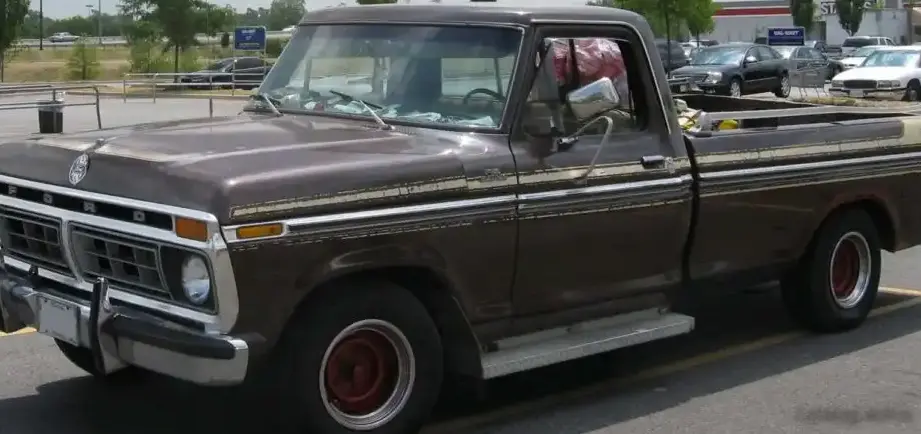
The Ford F-Series F-150 VI Regular Cab, specifically equipped with the 7.5-liter 460 cubic inch V8 engine producing 245 horsepower, represents a significant iteration in the long and storied history of Ford’s full-size pickup trucks. Produced for the 1975 and 1976 model years, this variant occupied a middle ground within the F-150 lineup, offering a balance between capability and affordability. It was part of the sixth generation of the F-Series (1973-1979), a generation known for its increased size, improved comfort, and a wider range of available options compared to its predecessors. This particular configuration catered to buyers needing substantial towing and hauling capacity without the expense of the higher-trim models.
Technical Specifications
| Brand | Ford |
| Model | F-Series F-100/F-150 |
| Generation | F-Series F-150 VI Regular Cab |
| Type (Engine) | 7.5 460 V8 (245 Hp) |
| Start of production | 1975 |
| End of production | 1976 |
| Powertrain Architecture | Internal Combustion engine |
| Body type | Pick-up |
| Seats | 3 |
| Doors | 2 |
| Fuel Type | Petrol (Gasoline) |
| Power | 245 Hp |
| Power per litre | 32.5 Hp/l |
| Engine displacement | 7538 cm3 / 460 cu. in. |
| Number of cylinders | 8 |
| Engine configuration | V-engine |
| Piston Stroke | 97.79 mm / 3.85 in. |
| Number of valves per cylinder | 4 |
| Fuel injection system | Carburettor |
| Engine aspiration | Naturally aspirated engine |
| Max. weight | 2744 kg / 6049.48 lbs. |
| Trunk (boot) space – minimum | 1852-2084 l / 65.4 – 73.6 cu. ft. |
| Length | 5215 mm / 205.31 in. |
| Wheelbase | 3378 mm / 132.99 in. |
| Wading depth | 665 mm / 26.18 in. |
| Drivetrain Architecture | The Internal combustion engine (ICE) drives the rear wheels of the vehicle. |
| Drive wheel | Rear wheel drive |
| Number of gears and type of gearbox | 3 gears, manual transmission |
| Front suspension | Independent coil spring, Transverse stabilizer |
| Rear suspension | Leaf spring |
| Front brakes | Disc |
| Rear brakes | Drum |
| Power steering | Electric Steering |
| Tires size | 215/75 R15; 225/75 R15 |
| Wheel rims size | 7J x 15 |
Powertrain & Engine Architecture
The heart of this F-150 variant is the 460 cubic inch (7.5-liter) V8 engine. This engine, a Ford mainstay for many years, is a robust, large-displacement powerplant known for its substantial torque output. The 1975-1976 iteration produced 245 horsepower, delivered through a two-barrel carburetor. The engine featured a cast iron block and cylinder heads, and a conventional pushrod valvetrain with two valves per cylinder. The 460 was a longitudinal engine, meaning it was mounted lengthwise in the chassis. The three-speed manual transmission was the standard offering for this configuration, providing a direct connection to the rear wheels. While an automatic transmission was available as an option, the manual gearbox was favored by those prioritizing control and potentially, fuel economy (though fuel economy was not a primary concern for truck buyers of this era).
Driving Characteristics
The 460 V8, even with its 245 horsepower, delivered a significant amount of low-end torque. This made the F-150 capable of hauling heavy loads and towing trailers with relative ease. The three-speed manual transmission, while simple, offered a reasonable spread of gears for both work and highway driving. However, it wasn’t known for quick acceleration. Compared to the smaller six-cylinder engines available in the F-150, the 460 provided a much more relaxed driving experience, especially when loaded. Compared to later fuel-injected versions of the 460, this carbureted version required more frequent tuning and was more susceptible to variations in altitude and temperature. The manual transmission, while offering more driver control, demanded more effort than the available automatic, particularly in stop-and-go traffic.
Equipment & Trim Levels
The F-150 VI Regular Cab with the 460 V8 typically fell into a mid-range trim level. Standard features included a basic vinyl interior, a simple dashboard layout with essential gauges, and a sturdy steel bed. Options included upgraded interior trim, a radio, and various convenience items like a heater and defroster. The Regular Cab configuration offered a bench seat for up to three occupants. The exterior trim was relatively basic, with minimal chrome accents. The focus was on functionality and durability rather than luxury.
Chassis & Braking
The F-150 VI utilized a body-on-frame construction, providing a robust and durable platform. The front suspension consisted of independent coil springs with a transverse stabilizer bar, offering a reasonable ride quality for a truck of its size. The rear suspension employed leaf springs, designed to handle heavy loads. Braking was accomplished with disc brakes on the front wheels and drum brakes on the rear. Power steering was available, making maneuvering the large truck easier, especially at low speeds. Tire sizes typically ranged from 215/75 R15 to 225/75 R15, providing a balance between ride comfort and load-carrying capacity.
Market Reception & Comparison
The 1975-1976 F-150 with the 460 V8 was generally well-received by truck buyers who needed a powerful and capable workhorse. Critics praised the engine’s torque and the truck’s overall durability. However, the carbureted engine’s fuel economy was a common complaint, especially as gasoline prices began to rise in the mid-1970s. Compared to the smaller inline-six and 302 V8 options, the 460 offered significantly more power but at the cost of fuel efficiency. The manual transmission version was favored by those who prioritized control and cost savings, while the automatic transmission appealed to buyers seeking convenience.
Legacy
The 460 V8 engine, in all its iterations, became a legendary powerplant in Ford trucks. While the carbureted versions are less common today due to emissions regulations and the advent of fuel injection, they remain popular among enthusiasts and restorers. The 1975-1976 F-150 with the 460 V8 is now a classic truck, sought after by collectors and those who appreciate its rugged simplicity and enduring capability. Reliability is generally good, provided the engine has been properly maintained. Common issues include carburetor problems, valve guide wear, and oil leaks. Parts availability is still relatively good, although some specific components may be difficult to find. Today, these trucks represent a piece of American automotive history, embodying the spirit of hard work and dependability.