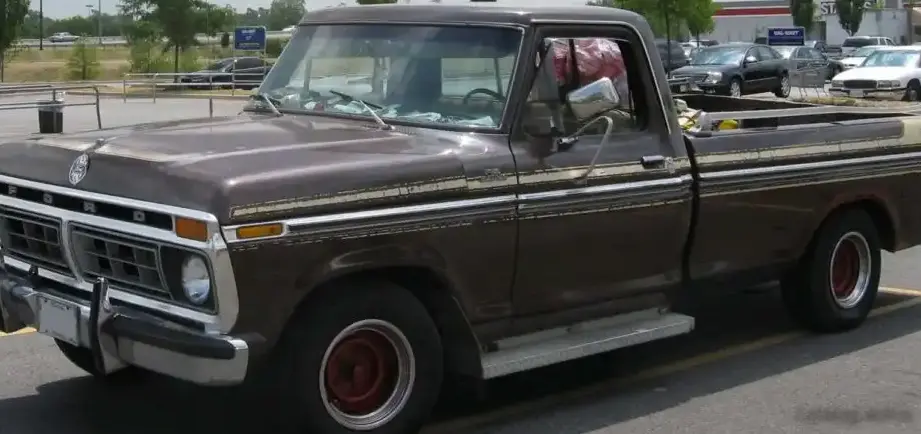
The Ford F-Series F-150 VI Regular Cab, equipped with the 7.5-liter 460 cubic inch V8 engine and a three-speed automatic transmission, represents a significant iteration in the long and storied history of Ford’s full-size pickup trucks. Produced for the 1975 and 1976 model years, this configuration occupied a middle ground within the F-150 lineup, offering a balance between capability and affordability. It was part of the sixth generation of the F-Series (1973-1979), a generation known for its increased size, improved comfort, and a wider range of available options compared to its predecessors. This particular variant aimed to provide buyers with the robust power of the 460 V8 without the higher cost associated with some of the more luxurious trim packages.
Technical Specifications
| Brand | Ford |
| Model | F-Series F-100/F-150 |
| Generation | F-Series F-150 VI Regular Cab |
| Type (Engine) | 7.5 460 V8 (245 Hp) Automatic |
| Start of production | 1975 |
| End of production | 1976 |
| Powertrain Architecture | Internal Combustion engine |
| Body type | Pick-up |
| Seats | 3 |
| Doors | 2 |
| Fuel Type | Petrol (Gasoline) |
| Power | 245 Hp |
| Power per litre | 32.5 Hp/l |
| Engine displacement | 7538 cm3 / 460 cu. in. |
| Number of cylinders | 8 |
| Engine configuration | V-engine |
| Piston Stroke | 97.79 mm / 3.85 in. |
| Number of valves per cylinder | 4 |
| Fuel injection system | Carburettor |
| Engine aspiration | Naturally aspirated engine |
| Max. weight | 2744 kg / 6049.48 lbs. |
| Trunk (boot) space – minimum | 1852-2084 l / 65.4 – 73.6 cu. ft. |
| Length | 5215 mm / 205.31 in. |
| Wheelbase | 3378 mm / 132.99 in. |
| Wading depth | 665 mm / 26.18 in. |
| Drivetrain Architecture | The Internal combustion engine (ICE) drives the rear wheels of the vehicle. |
| Drive wheel | Rear wheel drive |
| Number of gears and type of gearbox | 3 gears, automatic transmission Cruise-O-Matic |
| Front suspension | Independent coil spring, Transverse stabilizer |
| Rear suspension | Leaf spring |
| Front brakes | Disc |
| Rear brakes | Drum |
| Power steering | Electric Steering |
| Tires size | 215/75 R15; 225/75 R15 |
| Wheel rims size | 7J x 15 |
Powertrain & Engine Architecture
The heart of this F-150 variant is Ford’s 460 cubic inch (7.5-liter) V8 engine. This engine, internally designated as the 385 series, was a mainstay of Ford’s truck and large car lineup for many years. The 1975-1976 version produced 245 horsepower, a figure that, while seemingly modest by modern standards, provided ample torque for hauling and towing. The engine utilized a conventional carbureted fuel system, a common feature for the time, and a two-valve-per-cylinder configuration. The engine’s robust cast iron block and deep-skirted design contributed to its durability. The three-speed Cruise-O-Matic automatic transmission was the standard offering, providing smooth, if not particularly quick, shifts. This transmission was known for its reliability, but its relatively wide gear ratios weren’t optimized for fuel economy. The Cruise-O-Matic featured a torque converter design, typical of the era, which multiplied engine torque at lower speeds for improved pulling power.
Driving Characteristics
Behind the wheel, the F-150 with the 460 V8 and automatic transmission delivered a driving experience focused on usability and strength. Acceleration was adequate, but the emphasis was clearly on low-end torque. The automatic transmission, while convenient, did rob some of the engine’s potential, especially when compared to the available manual transmissions. The wide gear ratios meant that the engine often operated at higher RPMs during highway cruising, contributing to a noticeable level of engine noise. The truck’s substantial weight and leaf spring rear suspension provided a comfortable, albeit somewhat bouncy, ride when unloaded. When hauling or towing, the suspension performed admirably, maintaining stability and control. The power steering, while not as precise as modern systems, made maneuvering the large truck relatively easy. The overall driving experience was characteristic of full-size trucks of the period – prioritizing capability and durability over sporty handling or refined comfort.
Equipment & Trim Levels
The F-150 VI Regular Cab with the 460 V8 typically fell into the mid-range of available trim levels. Standard features included a basic vinyl interior, a simple dashboard layout with essential gauges, and a sturdy metal bed. Optional extras included upgraded interior trim, air conditioning, a radio, and various towing packages. The “Custom” trim package was a popular upgrade, adding features like chrome exterior trim, improved upholstery, and a more refined interior. The base models were fairly spartan, reflecting their work-oriented purpose, while the upgraded trims offered a greater degree of comfort and convenience. Features like a tilt steering wheel, upgraded sound systems, and even cruise control were available as options, allowing buyers to tailor the truck to their specific needs and preferences.
Chassis & Braking
The F-150’s chassis was a traditional body-on-frame design, providing a robust and durable platform. The front suspension utilized independent coil springs and a transverse stabilizer bar, offering a reasonable level of ride comfort and handling. The rear suspension employed leaf springs, which were well-suited for carrying heavy loads. Braking duties were handled by disc brakes at the front and drum brakes at the rear. While adequate for the time, the braking system lacked the sophistication of modern anti-lock braking systems. Power steering was standard, making the truck easier to maneuver, especially at low speeds. The frame itself was constructed from heavy-gauge steel, designed to withstand the stresses of regular use and heavy loads.
Market Reception & Comparison
The 1975-1976 Ford F-150 with the 460 V8 and automatic transmission was generally well-received by buyers seeking a capable and reliable work truck. Critics praised the engine’s torque and durability, but noted that the automatic transmission and carbureted fuel system weren’t particularly fuel-efficient. Compared to the smaller six-cylinder and 302 V8 engines, the 460 offered significantly more power, making it ideal for demanding tasks. However, it also came with a higher price tag and increased fuel consumption. Compared to the later fuel-injected versions of the 460, the carbureted models were less refined and required more frequent maintenance. Chevrolet and Dodge offered competing trucks with similar engine and transmission options, but the Ford F-150 maintained a strong position in the market due to its reputation for reliability and build quality.
Legacy
The 1975-1976 Ford F-150 460 V8 Automatic holds a respected place among classic Ford truck enthusiasts. The 460 engine, in particular, is known for its longevity and relative simplicity, making it a popular choice for restoration projects. While fuel economy is poor by modern standards, the engine’s robust construction and readily available parts supply ensure that these trucks can remain on the road for many years to come. Today, well-maintained examples command a reasonable price in the used car market, appealing to collectors and those seeking a classic American workhorse. The combination of a large displacement V8 and a three-speed automatic remains a symbol of a bygone era of truck design, prioritizing power and durability over efficiency and refinement. The enduring popularity of these trucks is a testament to Ford’s engineering and the enduring appeal of classic American trucks.