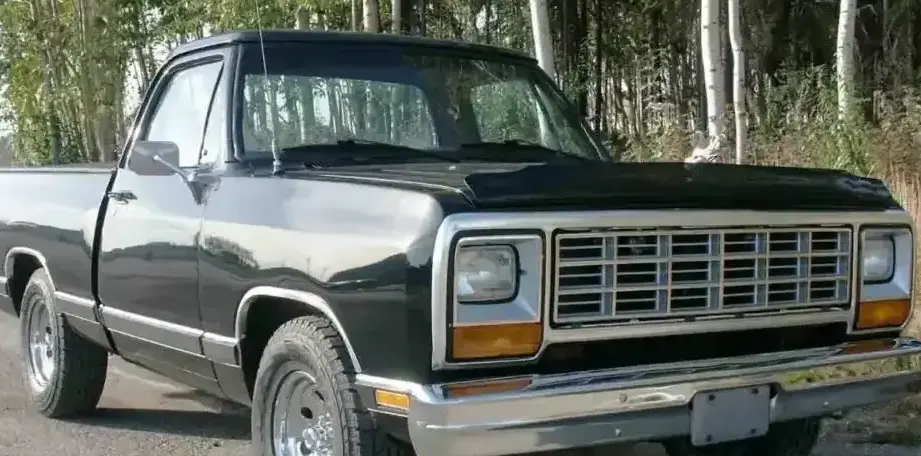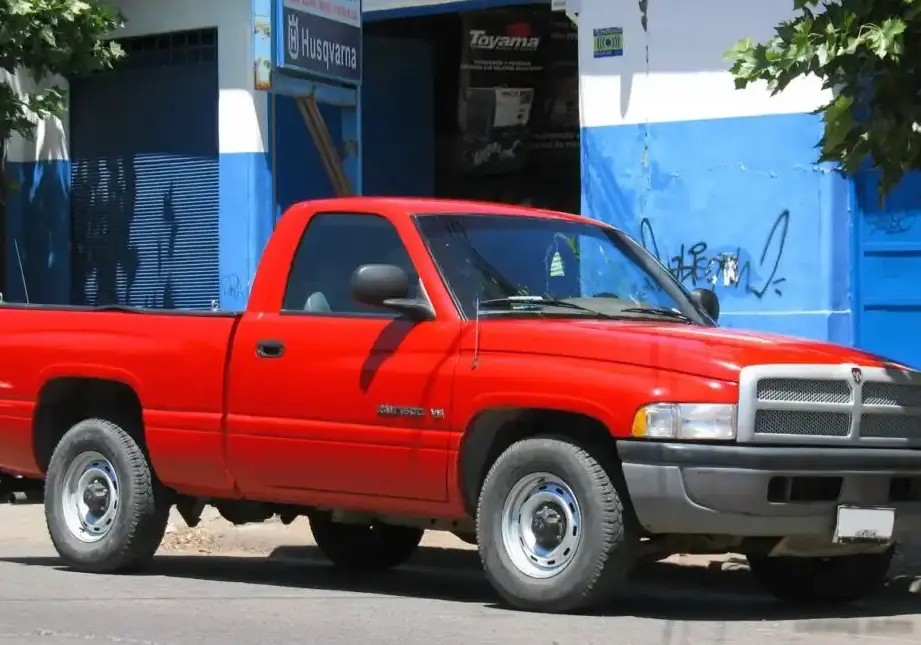
The Dodge Ram 1500 Regular Cab Short Bed (BR/BE) with the 5.2-liter V8 engine, producing 220 horsepower, represents a significant iteration in Dodge’s full-size pickup truck lineage. Produced from 1994 through 1998, this configuration occupied a middle ground within the second generation of Ram trucks (1994-2002), offering a balance between capability and affordability. It served as a workhorse for many American consumers, bridging the gap between the base models and the more powerful, often luxury-oriented, trims. This particular variant was a mainstay in the American pickup market during a period of increasing competition from Ford and Chevrolet.
Technical Specifications
| Brand | Dodge |
| Model | RAM |
| Generation | Ram 1500 Regular Cab Short Bed (BR/BE) |
| Type (Engine) | 5.2 V8 (220 Hp) |
| Start of production | 1994 |
| End of production | 1998 |
| Powertrain Architecture | Internal Combustion engine |
| Body type | Pick-up |
| Seats | 3 |
| Doors | 2 |
| Fuel Type | Petrol (Gasoline) |
| Power | 220 Hp @ 4400 rpm |
| Power per litre | 42.2 Hp/l |
| Torque | 407 Nm @ 3200 rpm / 300.19 lb.-ft. @ 3200 rpm |
| Engine layout | Front, Longitudinal |
| Engine Model/Code | 318 Magnum |
| Engine displacement | 5211 cm3 / 317.99 cu. in. |
| Number of cylinders | 8 |
| Engine configuration | V-engine |
| Cylinder Bore | 99.31 mm / 3.91 in. |
| Piston Stroke | 84.07 mm / 3.31 in. |
| Compression ratio | 9.1:1 |
| Number of valves per cylinder | 2 |
| Fuel injection system | Multi-port manifold injection |
| Engine aspiration | Naturally aspirated engine |
| Valvetrain | OHV |
| Engine oil capacity | 4.7 l / 4.97 US qt | 4.14 UK qt |
| Coolant | 19 l / 20.08 US qt | 16.72 UK qt |
| Max. weight | 2903 kg / 6400.02 lbs. |
| Fuel tank capacity | 98 l / 25.89 US gal | 21.56 UK gal |
| Permitted trailer load with brakes (12%) | 2585 kg / 5698.95 lbs. |
| Length | 5077 mm / 199.88 in. |
| Width | 2017 mm / 79.41 in. |
| Height | 1826 mm / 71.89 in. |
| Wheelbase | 3023 mm / 119.02 in. |
| Minimum turning circle (turning diameter) | 12.4 m / 40.68 ft. |
| Approach angle | 25.2° |
| Departure angle | 23.8° |
| Ramp-over (brakeover) angle | 18.4° |
| Drivetrain Architecture | The Internal combustion engine (ICE) drives the rear wheels of the vehicle. |
| Drive wheel | Rear wheel drive |
| Number of gears and type of gearbox | 5 gears, manual transmission |
| Front suspension | Independent coil spring, Transverse stabilizer |
| Rear suspension | Leaf spring |
| Front brakes | Disc |
| Rear brakes | Drum |
| Assisting systems | ABS (Anti-lock braking system) |
| Steering type | Steering rack and pinion |
| Power steering | Hydraulic Steering |
| Tires size | 225/75 R16 |
| Wheel rims size | 7J x 16 |
Powertrain & Engine Architecture
The heart of this Ram 1500 variant is the 318 Magnum 5.2-liter V8 engine. This engine, a member of the LA series small-block V8 family, had been a staple of Mopar vehicles for decades. It featured a cast iron block and cylinder heads, with a two-barrel carburetor feeding the engine. The 318 Magnum utilized a hydraulic roller camshaft, a significant upgrade over previous LA series engines, contributing to improved performance and reliability. Fuel delivery was managed by a multi-port fuel injection system, enhancing efficiency and reducing emissions compared to carbureted predecessors. The engine’s OHV (Overhead Valve) valvetrain, while traditional, was known for its durability and ease of maintenance. The 5.2L engine was typically paired with a 5-speed manual transmission, although an optional 4-speed automatic transmission was available. The automatic transmission, a Chrysler A727 derivative, was a robust unit, but its four-speed configuration meant slightly higher engine speeds at highway cruising compared to more modern transmissions.
Driving Characteristics
The 220 horsepower and 300 lb-ft of torque provided by the 5.2L V8 offered adequate performance for everyday driving and light-duty hauling. While not a performance-oriented truck, the 318 Magnum delivered a usable amount of power for towing trailers, hauling materials, and navigating various terrains. The manual transmission provided a more engaging driving experience and allowed for better control, especially when towing. However, the automatic transmission, while convenient, resulted in a slight decrease in fuel economy and responsiveness. The rear-wheel-drive configuration offered a traditional truck feel, but could be challenging in slippery conditions without proper weight distribution or traction control. The short bed configuration contributed to a tighter turning radius, making it more maneuverable in urban environments.
Equipment & Trim Levels
The Ram 1500 Regular Cab Short Bed with the 5.2L V8 typically came standard with basic amenities, reflecting its position as a value-oriented work truck. Standard features included a vinyl bench seat, basic instrumentation, and manual windows and locks. Air conditioning and an upgraded stereo system were common options. Higher trim levels, such as the SLT or Sport, added features like cloth upholstery, power windows and locks, and a more refined interior. The short bed configuration was popular among those who needed a versatile truck for both work and personal use, offering a good balance between cargo space and maneuverability.
Chassis & Braking
The Ram 1500’s chassis featured a body-on-frame construction, providing a robust and durable platform. The front suspension utilized independent coil springs and a transverse stabilizer bar, offering a relatively comfortable ride. The rear suspension employed leaf springs, which were well-suited for hauling heavy loads. Braking duties were handled by disc brakes in the front and drum brakes in the rear. An Anti-lock Braking System (ABS) was available as an option, enhancing safety and control during emergency braking situations. The steering system utilized a rack-and-pinion setup with hydraulic power assist, providing responsive and precise steering.
Market Reception & Comparison
The Dodge Ram 1500 with the 5.2L V8 was generally well-received by consumers and critics alike. It offered a compelling combination of power, reliability, and affordability. Compared to the base V6 models, the 5.2L V8 provided a significant performance boost, making it a popular choice for those who needed to tow or haul heavy loads. However, it wasn’t as fuel-efficient as the V6 options. Compared to the higher-output 5.9L V8, the 5.2L offered a more economical option, albeit with less power. The Ram 1500 faced stiff competition from the Ford F-150 and Chevrolet Silverado, but its distinctive styling and robust construction helped it maintain a strong presence in the market.
Legacy
The 318 Magnum 5.2L V8 proved to be a remarkably durable and reliable engine. Many examples are still on the road today, a testament to its robust design and construction. While not known for exceptional fuel economy, the engine’s simplicity and ease of maintenance have made it a favorite among enthusiasts and mechanics. In the used car market, Ram 1500s equipped with the 5.2L V8 are often sought after for their affordability and dependability. They represent a classic American pickup truck, offering a blend of capability, comfort, and character that continues to appeal to a wide range of buyers. The BR/BE generation Ram 1500, particularly with this engine, holds a nostalgic appeal for many, representing a simpler era of truck design and functionality.