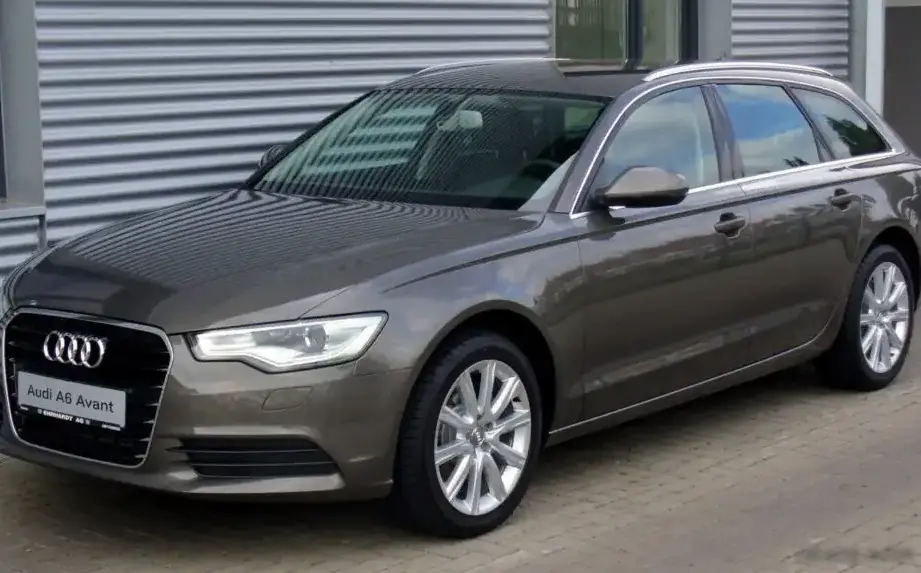
The Audi A6 Avant (4G, C7) 3.0 TDI V6 quattro S tronic represents a compelling blend of performance, practicality, and luxury within the C7 generation A6 lineup, produced between 2011 and 2014. Positioned as a premium offering, this variant catered to buyers seeking a spacious, capable wagon with strong diesel power and the added security of Audi’s quattro all-wheel-drive system. It occupied a higher tier within the A6 Avant range, sitting above the 2.0 TDI models and below the performance-oriented S6 variant. The C7 A6 Avant, built on the Volkswagen Group’s MLB platform (shared with vehicles like the Porsche Macan), aimed to deliver a refined driving experience and advanced technology in a practical estate body style.
Technical Specifications
| Brand | Audi |
| Model | A6 |
| Generation | A6 Avant (4G, C7) |
| Type (Engine) | 3.0 TDI V6 (245 Hp) quattro S tronic |
| Start of production | 2011 |
| End of production | 2014 |
| Powertrain Architecture | Internal Combustion engine |
| Body type | Station wagon (estate) |
| Seats | 5 |
| Doors | 5 |
| Fuel consumption (urban) | 7.2 l/100 km (32.7 US mpg, 39.2 UK mpg, 13.9 km/l) |
| Fuel consumption (extra urban) | 5.2 l/100 km (45.2 US mpg, 54.3 UK mpg, 19.2 km/l) |
| Fuel consumption (combined) | 5.9 l/100 km (39.9 US mpg, 47.9 UK mpg, 16.9 km/l) |
| CO2 emissions | 156 g/km |
| Fuel Type | Diesel |
| Acceleration 0 – 100 km/h | 6.3 sec |
| Acceleration 0 – 62 mph | 6.3 sec |
| Acceleration 0 – 60 mph | 6 sec |
| Maximum speed | 243 km/h (150.99 mph) |
| Emission standard | Euro 5 |
| Weight-to-power ratio | 7.3 kg/Hp, 136.9 Hp/tonne |
| Weight-to-torque ratio | 3.1 kg/Nm, 324 Nm/tonne |
| Power | 245 Hp @ 4000-4500 rpm |
| Power per litre | 82.6 Hp/l |
| Torque | 580 Nm @ 1750-2500 rpm (427.79 lb.-ft. @ 1750-2500 rpm) |
| Engine layout | Front, Longitudinal |
| Engine Model/Code | CDUC, CDUD, CKVB, CKVC |
| Engine displacement | 2967 cm3 (181.06 cu. in.) |
| Number of cylinders | 6 |
| Engine configuration | V-engine |
| Cylinder Bore | 83 mm (3.27 in.) |
| Piston Stroke | 91.4 mm (3.6 in.) |
| Compression ratio | 16.8:1 |
| Number of valves per cylinder | 4 |
| Fuel injection system | Diesel Commonrail |
| Engine aspiration | Turbocharger, Intercooler |
| Valvetrain | DOHC |
| Engine oil capacity | 6.4 l (6.76 US qt | 5.63 UK qt) |
| Coolant | 11.5 l (12.15 US qt | 10.12 UK qt) |
| Kerb Weight | 1790 kg (3946.27 lbs.) |
| Max. weight | 2420 kg (5335.19 lbs.) |
| Max load | 630 kg (1388.91 lbs.) |
| Trunk (boot) space – minimum | 565 l (19.95 cu. ft.) |
| Trunk (boot) space – maximum | 1680 l (59.33 cu. ft.) |
| Fuel tank capacity | 75 l (19.81 US gal | 16.5 UK gal) |
| Max. roof load | 100 kg (220.46 lbs.) |
| Permitted trailer load without brakes | 750 kg (1653.47 lbs.) |
| Permitted towbar download | 85 kg (187.39 lbs.) |
| Length | 4926 mm (193.94 in.) |
| Width | 1874 mm (73.78 in.) |
| Width including mirrors | 2086 mm (82.13 in.) |
| Height | 1468 mm (57.8 in.) |
| Wheelbase | 2912 mm (114.65 in.) |
| Front track | 1627 mm (64.06 in.) |
| Rear (Back) track | 1618 mm (63.7 in.) |
| Front overhang | 912 mm (35.91 in.) |
| Rear overhang | 1102 mm (43.39 in.) |
| Ride height (ground clearance) | 117 mm (4.61 in.) |
| Drag coefficient (Cd) | 0.26 |
| Minimum turning circle (turning diameter) | 11.9 m (39.04 ft.) |
| Drive wheel | All wheel drive (4×4) |
| Number of gears and type of gearbox | 7 gears, automatic transmission S tronic |
| Front suspension | Independent multi-link suspension |
| Rear suspension | Independent on trapezoidal lever |
| Front brakes | Ventilated discs |
| Rear brakes | Ventilated discs |
| Assisting systems | ABS (Anti-lock braking system) |
| Steering type | Steering rack and pinion |
| Power steering | Electric Steering |
| Tires size | 225/55 R17 |
| Wheel rims size | 8J x 17 |
Powertrain & Engine Architecture
At the heart of the A6 Avant 3.0 TDI quattro S tronic lies the 3.0-liter V6 turbodiesel engine, identifiable by engine codes such as CDUC, CDUD, CKVB, and CKVC. This engine is a member of Audi’s long-running TDI family, known for its robust construction and fuel efficiency. The engine utilizes a common rail direct injection system, delivering fuel at extremely high pressures for optimized combustion. A single turbocharger, often with variable geometry turbine (VGT) technology, provides forced induction, boosting power and torque. The engine features a double overhead camshaft (DOHC) valvetrain with four valves per cylinder, enhancing breathing and overall performance. The S tronic transmission is a 7-speed dual-clutch transmission (DCT) offering rapid, smooth shifts and contributing to the car’s overall efficiency. This transmission allows for both fully automatic operation and manual gear selection via steering wheel-mounted paddles or the gear selector.
Driving Characteristics
The 245 horsepower and 427.79 lb-ft of torque produced by the 3.0 TDI engine, coupled with the S tronic transmission and quattro all-wheel drive, deliver a refined and capable driving experience. Acceleration from 0-60 mph takes approximately 6 seconds, making it a brisk performer for a wagon. The S tronic transmission provides quick and seamless gear changes, enhancing responsiveness. The quattro system ensures excellent traction in all weather conditions, providing a surefooted feel. Compared to the lower-powered 2.0 TDI variants, the 3.0 TDI offers significantly more power and torque, resulting in effortless cruising and strong overtaking ability. While not as overtly sporty as the S6, the 3.0 TDI strikes a good balance between performance and comfort. The gear ratios are tuned for a blend of acceleration and fuel economy, with taller gears for relaxed highway cruising.
Equipment & Trim Levels
The A6 Avant 3.0 TDI quattro S tronic typically came well-equipped as standard. Features included leather upholstery, tri-zone automatic climate control, a multi-function steering wheel, and an Audi Concert audio system. Optional extras were plentiful, including the Audi Navigation Plus system with MMI touch, advanced driver-assistance systems like adaptive cruise control and lane assist, and premium sound systems from Bang & Olufsen. Interior trim options ranged from wood veneers to brushed aluminum accents. Exterior features often included 17-inch alloy wheels, although larger sizes were available as options. Xenon plus headlights were a common upgrade, providing superior illumination.
Chassis & Braking
The C7 A6 Avant features an independent suspension setup at all four corners. The front suspension utilizes a multi-link design, while the rear employs a trapezoidal link setup. This configuration provides a comfortable ride and good handling characteristics. The 3.0 TDI models typically featured larger brakes than the entry-level variants, with ventilated discs at all four wheels. Anti-lock braking system (ABS) and electronic stability control (ESC) were standard safety features. The quattro all-wheel-drive system distributes power between the front and rear axles as needed, optimizing traction and stability.
Market Reception & Comparison
The Audi A6 Avant 3.0 TDI quattro S tronic was generally well-received by automotive critics. It was praised for its refined driving experience, spacious interior, and strong performance. Fuel economy was also a strong point, with combined figures around 39.9 US mpg. Compared to rivals like the BMW 5 Series Touring and Mercedes-Benz E-Class Estate, the A6 Avant was often seen as offering a more technologically advanced and stylish package. The 3.0 TDI engine was considered a good compromise between power and efficiency, although some critics noted that the ride could be slightly firm with larger wheels. Reliability was generally good, although diesel particulate filter (DPF) issues could occur with infrequent long-distance driving.
Legacy
The Audi A6 Avant (4G, C7) 3.0 TDI V6 quattro S tronic remains a desirable used car today. The 3.0 TDI engine, when properly maintained, is known for its longevity and durability. The S tronic transmission is generally reliable, although regular servicing is essential. These vehicles offer a compelling combination of practicality, performance, and luxury, making them a popular choice for buyers seeking a premium estate car. However, potential buyers should be aware of the potential for DPF issues and the cost of maintaining a complex vehicle like the A6 Avant.