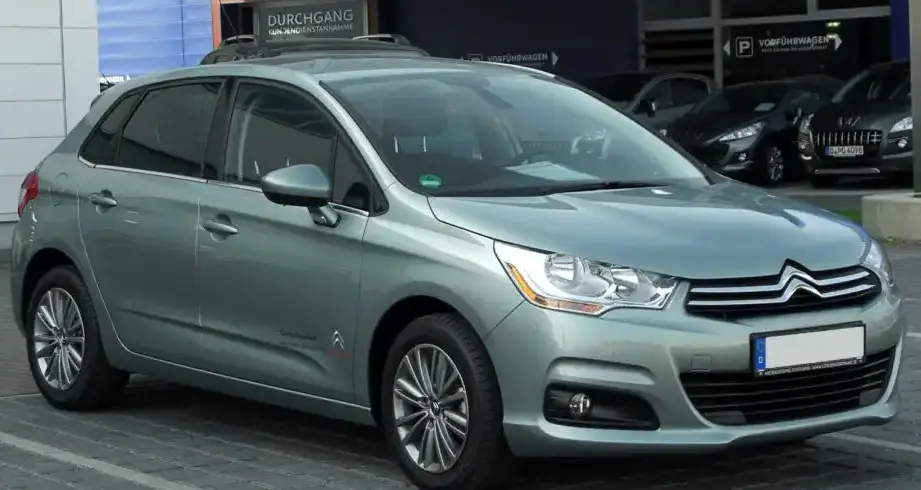
The Citroen C4 II Hatchback 1.6 VTi (120 hp) VTR+ represents a mid-range offering within the second generation of Citroen’s popular C4 compact hatchback, produced between 2011 and 2014. Positioned as a balance between affordability and features, this variant aimed to appeal to buyers seeking a comfortable and reasonably efficient family car. It was part of the larger B-segment hatchback market in Europe, competing with vehicles like the Ford Focus, Volkswagen Golf, and Peugeot 308. The C4 II, built on the PSA Peugeot Citroën EMP2 platform (shared with the Peugeot 308), represented a significant departure from its predecessor, offering a more refined driving experience and a more modern interior.
Technical Specifications
| Brand | Citroen |
| Model | C4 |
| Generation | C4 II Hatchback (Phase I, 2010) |
| Type (Engine) | 1.6 VTi (120 Hp) VTR+ |
| Start of production | 2011 |
| End of production | 2014 |
| Powertrain Architecture | Internal Combustion engine |
| Body type | Hatchback |
| Seats | 5 |
| Doors | 5 |
| Fuel consumption (urban) | 8.8 l/100 km (26.7 US mpg, 32.1 UK mpg, 11.4 km/l) |
| Fuel consumption (extra urban) | 4.7 l/100 km (50 US mpg, 60.1 UK mpg, 21.3 km/l) |
| Fuel consumption (combined) | 6.2 l/100 km (37.9 US mpg, 45.6 UK mpg, 16.1 km/l) |
| CO2 emissions | 143 g/km |
| Fuel Type | Petrol (Gasoline) |
| Acceleration 0 – 100 km/h | 10.8 sec |
| Acceleration 0 – 62 mph | 10.8 sec |
| Acceleration 0 – 60 mph | 10.3 sec |
| Maximum speed | 193 km/h (119.92 mph) |
| Emission standard | Euro 5 |
| Weight-to-power ratio | 10 kg/Hp, 99.6 Hp/tonne |
| Weight-to-torque ratio | 7.5 kg/Nm, 132.8 Nm/tonne |
| Power | 120 Hp @ 6000 rpm |
| Power per litre | 75.1 Hp/l |
| Torque | 160 Nm @ 4250 rpm (118.01 lb.-ft. @ 4250 rpm) |
| Engine layout | Front, Transverse |
| Engine Model/Code | 5FS EP6C |
| Engine displacement | 1598 cm3 (97.52 cu. in.) |
| Number of cylinders | 4 |
| Engine configuration | Inline |
| Cylinder Bore | 77 mm (3.03 in.) |
| Piston Stroke | 85.8 mm (3.38 in.) |
| Compression ratio | 11:1 |
| Number of valves per cylinder | 4 |
| Fuel injection system | Multi-port manifold injection |
| Engine aspiration | Naturally aspirated engine |
| Valvetrain | DOHC |
| Engine oil capacity | 4.25 l (4.49 US qt | 3.74 UK qt) |
| Kerb Weight | 1205 kg (2656.57 lbs.) |
| Max. weight | 1765 kg (3891.16 lbs.) |
| Max load | 560 kg (1234.59 lbs.) |
| Trunk (boot) space – minimum | 380 l (13.42 cu. ft.) |
| Trunk (boot) space – maximum | 1183 l (41.78 cu. ft.) |
| Fuel tank capacity | 60 l (15.85 US gal | 13.2 UK gal) |
| Permitted trailer load with brakes (8%) | 1524 kg (3359.84 lbs.) |
| Permitted trailer load with brakes (12%) | 1300 kg (2866.01 lbs.) |
| Permitted trailer load without brakes | 640 kg (1410.96 lbs.) |
| Permitted towbar download | 75 kg (165.35 lbs.) |
| Length | 4329 mm (170.43 in.) |
| Width | 1789 mm (70.43 in.) |
| Width including mirrors | 2050 mm (80.71 in.) |
| Height | 1489-1502 mm (58.62 – 59.13 in.) |
| Wheelbase | 2608 mm (102.68 in.) |
| Front track | 1522-1536 mm (59.92 – 60.47 in.) |
| Rear (Back) track | 1515-1529 mm (59.65 – 60.2 in.) |
| Front overhang | 935 mm (36.81 in.) |
| Rear overhang | 786 mm (30.94 in.) |
| Drag coefficient (Cd) | 0.30 |
| Minimum turning circle (turning diameter) | 10.7 m (35.1 ft.) |
| Drivetrain Architecture | The Internal combustion engine (ICE) drives the front wheels of the vehicle. |
| Drive wheel | Front wheel drive |
| Number of gears and type of gearbox | 5 gears, manual transmission |
| Front suspension | Independent, type McPherson with coil spring and anti-roll bar |
| Rear suspension | Semi-independent, coil spring |
| Front brakes | Ventilated discs |
| Rear brakes | Disc |
| Assisting systems | ABS (Anti-lock braking system) |
| Steering type | Steering rack and pinion |
| Tires size | 205/55 R16; 225/45 R17 |
| Wheel rims size | 16; 17 |
INTRODUCTION
The Citroen C4 II 1.6 VTi 120 hp VTR+ was introduced as a key variant in the C4 II range, beginning in 2011. It aimed to provide a balance between performance, fuel economy, and equipment levels. The VTR+ trim sat in the middle of the C4 II lineup, offering more features than the base ‘Attraction’ trim but falling short of the fully-equipped ‘Exclusive’ model. This model was primarily sold in Europe, where Citroen held a strong market presence, and was designed to appeal to families and individuals seeking a comfortable and practical hatchback.
Powertrain & Engine Architecture
At the heart of the C4 II 1.6 VTi VTR+ lies the PSA-developed 5FS EP6C 1.6-liter inline-four cylinder petrol engine. This engine is a naturally aspirated unit featuring multi-point fuel injection and a double overhead camshaft (DOHC) valvetrain with four valves per cylinder. The engine code ‘EP6’ is common across several PSA group vehicles. It produces 120 horsepower at 6000 rpm and 160 Nm (118 lb-ft) of torque at 4250 rpm. The engine’s design prioritizes fuel efficiency and smooth operation over outright performance. The engine is paired with a five-speed manual transmission, which was the standard offering for this variant. This transmission is known for its relatively light shift action, but isn’t particularly sporty in feel.
Driving Characteristics
The 1.6 VTi engine, coupled with the five-speed manual gearbox, delivers adequate performance for everyday driving. Acceleration from 0-100 km/h (0-62 mph) takes around 10.8 seconds, and the top speed is approximately 193 km/h (120 mph). However, it’s not a particularly quick car. The engine feels somewhat strained when pushed hard, and the lack of turbocharging means that peak torque is only available at higher engine speeds. Compared to the more powerful 1.6 THP turbocharged engine offered in other C4 II variants, the 1.6 VTi feels noticeably less responsive. The gear ratios are fairly well-spaced, but the engine lacks the low-end grunt of a diesel or turbocharged petrol unit. The focus is on providing a comfortable and refined driving experience, with a relatively quiet cabin and a compliant suspension setup.
Equipment & Trim Levels
The VTR+ trim level included a generous amount of standard equipment. Key features included air conditioning, a CD stereo with auxiliary input, electric front windows, electric door mirrors, and a height-adjustable driver’s seat. Safety features such as ABS, ESP (Electronic Stability Program), and front and side airbags were also standard. The interior typically featured cloth upholstery, with a dark grey color scheme being common. Optional extras included alloy wheels, a panoramic sunroof, rear parking sensors, and a more advanced audio system. The dashboard layout was functional and user-friendly, with a clear instrument cluster and logically arranged controls.
Chassis & Braking
The C4 II utilizes a McPherson strut front suspension and a semi-independent torsion beam rear suspension. This setup provides a good balance between ride comfort and handling. The front suspension incorporates a stabilizer bar to reduce body roll during cornering. Braking duties are handled by ventilated discs at the front and solid discs at the rear. ABS (Anti-lock Braking System) is standard, providing enhanced braking performance in emergency situations. The steering is a rack and pinion system, offering reasonable precision and feedback.
Market Reception & Comparison
The C4 II 1.6 VTi VTR+ was generally well-received by automotive critics. It was praised for its comfortable ride, spacious interior, and good value for money. However, some reviewers criticized the engine for its lack of power and refinement compared to competitors. Fuel economy was considered to be reasonable, but not class-leading. Compared to the diesel-powered C4 II variants, the 1.6 VTi offered lower running costs in terms of fuel, but higher maintenance costs due to the potential for timing chain wear. The 1.6 THP turbocharged petrol engine provided significantly more performance, but at a higher price point.
Legacy
The Citroen C4 II 1.6 VTi VTR+ remains a relatively common sight on European roads today. The 5FS EP6C engine, while generally reliable, is known for potential issues with the timing chain, particularly on higher-mileage examples. Regular oil changes and preventative maintenance are crucial to ensure long-term reliability. In the used car market, this variant offers an affordable and practical option for buyers seeking a comfortable and well-equipped hatchback. Its relatively simple mechanical design makes it easier and cheaper to maintain compared to more complex modern vehicles.